 Indietro
Bacterial Genetics: Mutations and Regulation of Gene Expression
Guida di studio - Note intelligenti
 Appunti personalizzati basati sui tuoi materiali, ampliati con definizioni chiave, esempi e contesto.
Bacterial Genetics: Mutations and Regulation of Gene Expression
Central Dogma of Molecular Biology
The central dogma describes the flow of genetic information in cells, from DNA to RNA to protein. This process is fundamental to all living organisms and is the basis for gene expression and regulation.
DNA Replication: The process by which DNA is copied before cell division.
Transcription: The synthesis of RNA from a DNA template.
Translation: The synthesis of proteins from an mRNA template.
Types of Mutations and Their Effects
Mutations are permanent changes in the DNA sequence. They can affect the encoded protein and cellular function in various ways, depending on the type and location of the mutation.
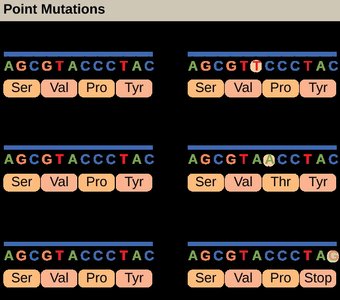
Point Mutation: A single base in DNA is substituted with another.
Missense Mutation: Changes one amino acid in the resulting protein, potentially altering function.
Nonsense Mutation: Converts a codon for an amino acid into a STOP codon, resulting in a truncated protein.
Silent Mutation: No change in protein sequence due to redundancy in the genetic code.
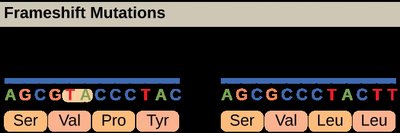
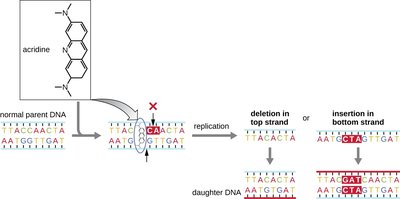
Insertion/Deletion: Addition or removal of nucleotides. If not a multiple of three, causes a frameshift mutation.
Frameshift Mutation: Alters the reading frame, potentially changing many amino acids and creating early STOP codons.
Example: Point mutations can result in missense, nonsense, or silent changes, while frameshift mutations can drastically alter protein structure.
Mutagens and Mutation Frequency
Mutations can occur spontaneously or be induced by mutagens. Spontaneous mutations arise from errors during DNA replication, while mutagens are environmental agents that increase mutation rates.
Spontaneous Mutation: Occurs at a rate of 1 per 1,000,000,000 base pairs.
Mutagen: An agent (chemical or radiation) that induces mutations.
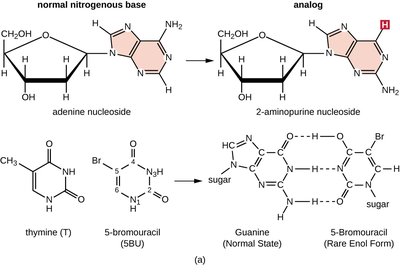
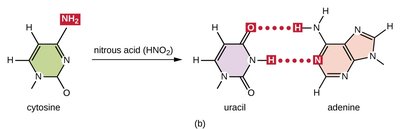
Chemical Mutagens: Include nucleoside analogs, base-altering chemicals, and intercalating agents.
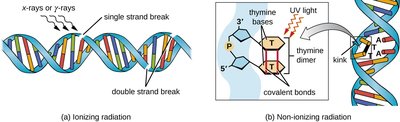
Radiation: Ionizing (X-rays, gamma rays) breaks DNA; nonionizing (UV light) forms thymine dimers.
Mutation Repair Mechanisms
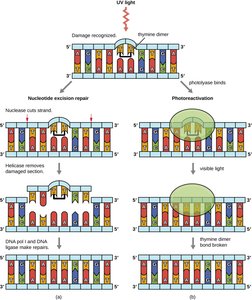
Cells have mechanisms to repair DNA damage and maintain genetic integrity. Two major repair systems are nucleotide excision repair and photoreactivation.
Nucleotide Excision Repair: Removes damaged DNA and replaces it using DNA polymerase and ligase.
Photoreactivation: Photolyase enzyme breaks thymine dimers formed by UV light.
Identifying Mutations and Mutagenic Compounds
Mutations can be detected using positive and negative selection, as well as specialized tests like the Ames test.
Positive Selection: Mutant cells gain a trait (e.g., antibiotic resistance).
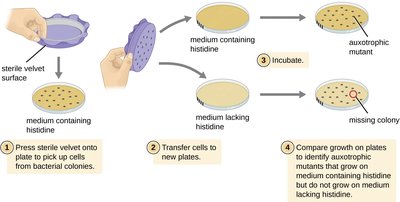
Negative Selection (Replica Plating): Mutant cells lose a trait (e.g., auxotrophy for an amino acid).
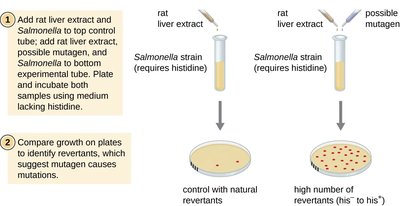
Ames Test: Detects mutagenic compounds by measuring the reversion rate in auxotrophic bacteria.
Regulation of Bacterial Gene Expression
Operon Theory
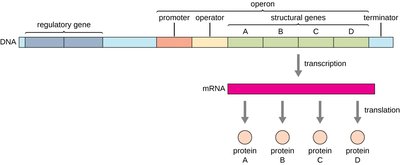
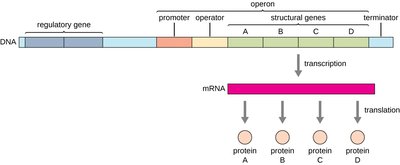
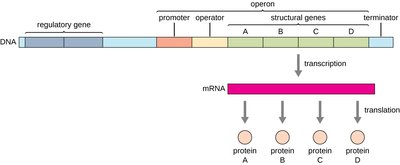
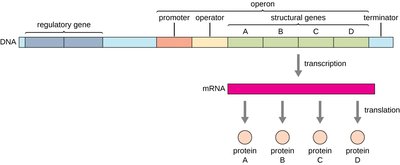
Bacterial gene expression is regulated at the transcriptional level, often through operons. An operon is a cluster of genes transcribed together under the control of a single promoter.
Regulatory Gene: Encodes a transcription factor (repressor or activator).
Promoter: Site where RNA polymerase binds to initiate transcription.
Operator: Site where the repressor binds to block transcription.
Structural Genes: Encode proteins with related functions.
Repressible Operon: trp Operon
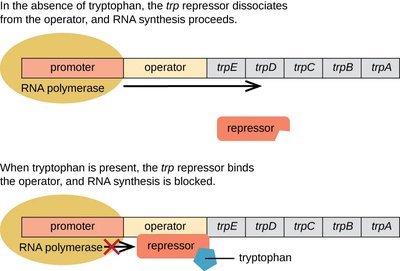
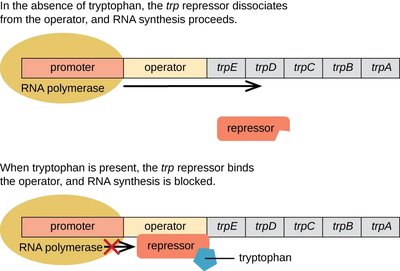
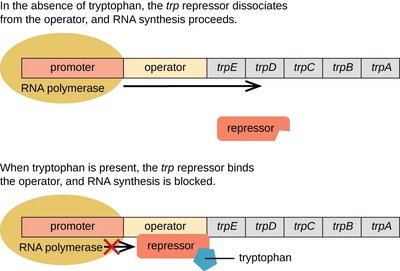
The trp operon is a repressible operon involved in the synthesis of tryptophan. It is transcribed unless tryptophan is present, which acts as a corepressor.
When tryptophan is absent: Repressor is inactive, operon is transcribed, tryptophan is produced.
When tryptophan is present: Tryptophan binds to repressor, activating it; repressor binds operator, blocking transcription.
Inducible Operon: lac Operon
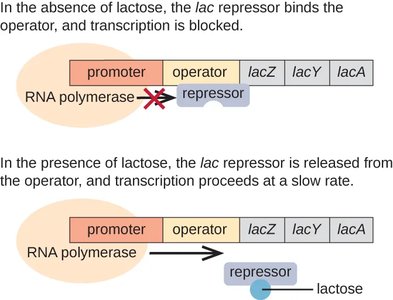
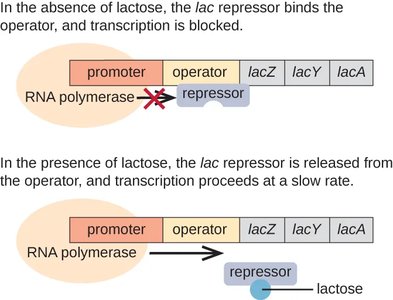
The lac operon is an inducible operon required for lactose metabolism. It is transcribed only when lactose is present, which acts as an inducer.
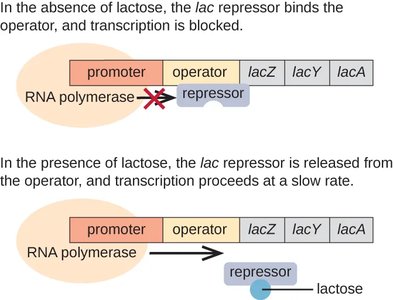
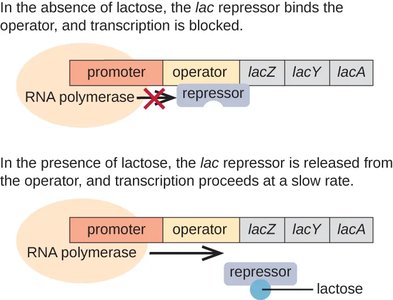
When lactose is absent: Repressor is active, binds operator, blocks transcription.
When lactose is present: Allolactose binds repressor, inactivating it; operon is transcribed at low level.
Catabolite Repression (lac Operon)
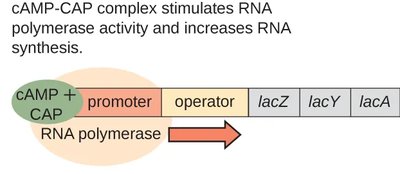
Catabolite repression is the inhibition of metabolism of alternative carbon sources when glucose is present. The lac operon is transcribed at high levels only when lactose is present and glucose is absent.
High glucose: Low cAMP, CAP inactive, low transcription of lac operon.
Low glucose: High cAMP, CAP active, high transcription of lac operon.
Cells preferentially use glucose over lactose.
Summary Table: Types of Mutations
Mutation Type | Effect on Protein |
|---|---|
Missense | One amino acid changed |
Nonsense | Early STOP codon |
Silent | No change in protein |
Frameshift | Multiple amino acids changed, possible early STOP |
Key Terms
Mutagen: Agent that induces mutations.
Operon: Cluster of genes under single promoter control.
Inducer: Molecule that activates transcription.
Corepressor: Molecule that represses transcription.
Catabolite Repression: Preferential use of glucose over other sugars.
Equations and Genetic Code
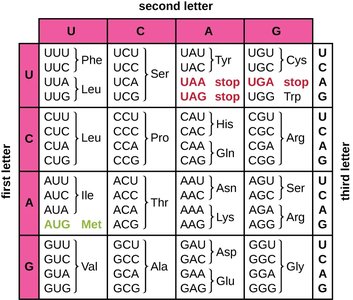
Genetic code is used to translate mRNA codons into amino acids.
Example Applications
UV Mutagenesis Lab: Use UV light to induce mutations in Serratia marcescens.
Bacterial Transformation Lab: Use transformation to give bacteria new traits.
Additional info: These notes expand brief points into full academic explanations and include relevant images to reinforce understanding of mutation types and operon regulation.
