 Indietro
Bacterial Sex: Mechanisms of Genetic Variation in Bacteria
Guida di studio - Note intelligenti
 Appunti personalizzati basati sui tuoi materiali, ampliati con definizioni chiave, esempi e contesto.
Bacterial Genetic Variation and Horizontal Gene Transfer
Introduction to Bacterial Genetic Variation
Bacteria are capable of exchanging genetic material through several mechanisms, collectively known as horizontal gene transfer (HGT). These processes are distinct from vertical gene transfer, which involves the transmission of genetic material from parent to offspring. HGT plays a crucial role in bacterial evolution, adaptation, and the spread of traits such as antibiotic resistance.
Patterns of DNA Synthesis in Bacteria
Chromosomal Structure and Replication
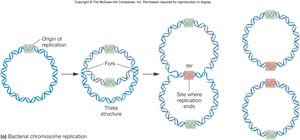
Bacterial chromosomes are typically circular and replicate bidirectionally from a single origin of replication. The replication fork is the region where DNA is unwound and synthesis occurs. The entire unit of replication, including the origin, is called a replicon. In contrast, eukaryotic chromosomes are linear and have multiple origins of replication.
Replicon: The DNA segment replicated as a single unit, usually the entire bacterial chromosome.
Supercoiling: Bacterial chromosomes are highly compacted by supercoiling.
Plasmids and Genetic Architecture
Plasmids: Structure and Function
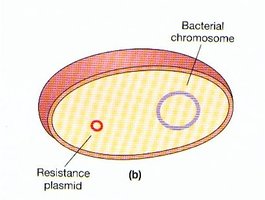
Plasmids are small, circular, extrachromosomal DNA molecules that replicate independently of the bacterial chromosome. They often carry genes that confer advantageous traits, such as antibiotic resistance or virulence factors. Bacterial cells may harbor multiple plasmids, each present in several copies.
Resistance (R) plasmids: Plasmids carrying antibiotic resistance genes.
F (fertility) plasmid: Plasmid responsible for conjugation and gene transfer.
Bacterial Cell Structure
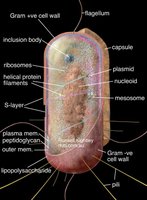
Bacteria lack a true nucleus and instead have a nucleoid region where the chromosome is located. The cell may also contain plasmids, a capsule, pili, and other structures relevant to genetic exchange and pathogenicity.
Mechanisms of Horizontal Gene Transfer
Overview of Gene Transfer Methods
Bacteria can exchange genetic material through three primary mechanisms:
Transformation: Uptake of free DNA from the environment.
Conjugation: Direct transfer of DNA from one cell to another via cell-to-cell contact.
Transduction: Transfer of DNA mediated by bacteriophages (viruses that infect bacteria).
Transformation
Definition and Process
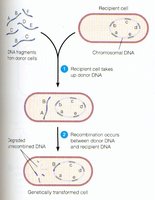
Transformation is the process by which a bacterial cell takes up free DNA fragments from its environment. Cells capable of taking up DNA are termed competent. The incorporated DNA may recombine with the host chromosome, leading to genetic variation.
Facilitated by DNA-binding proteins on the cell wall.
Important for genetic engineering and biotechnology.
Discovery: Griffith's Experiment
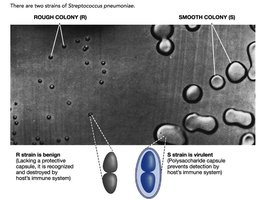
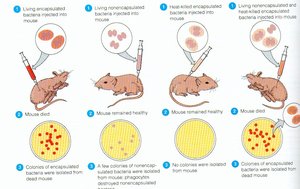
Griffith's 1928 experiment with Streptococcus pneumoniae demonstrated transformation. He showed that non-virulent (rough, R) strains could acquire virulence by taking up DNA from heat-killed virulent (smooth, S) strains, leading to the discovery of the "transforming principle." The capsule, a polysaccharide layer, is associated with virulence and is genetically encoded.
Conjugation
Definition and Mechanism
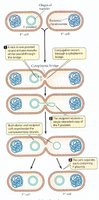
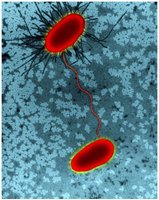
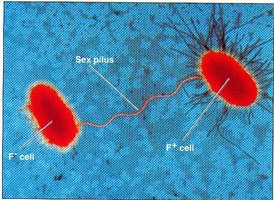
Conjugation is the transfer of DNA from a donor to a recipient bacterium via direct cell-to-cell contact, typically mediated by a sex pilus. The process is unidirectional and involves the transfer of plasmids or chromosomal DNA.
F+ cells: Contain the F plasmid and can initiate conjugation.
F- cells: Lack the F plasmid and act as recipients.
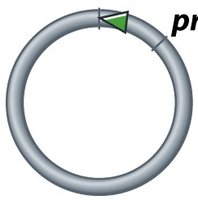
Hfr cells: Have the F plasmid integrated into their chromosome, allowing transfer of chromosomal genes.
F' plasmids: F plasmids that have excised from the chromosome, carrying additional bacterial genes.
Genetic Outcomes of Conjugation
Conjugation can result in the transfer of plasmids (F, F', R) or chromosomal genes (Hfr). The process is essential for the spread of antibiotic resistance and other traits.
Transferred DNA can recombine with the recipient's genome.
Order of gene transfer can be used to map bacterial chromosomes.
Medical Significance
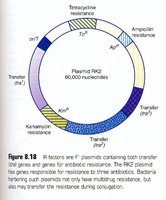
Conjugation is a major mechanism for the spread of antibiotic resistance genes (R factors) and virulence traits among bacteria. Multidrug-resistant (MDR) bacteria often carry F' plasmids with multiple resistance genes.
Transduction
Definition and Mechanism
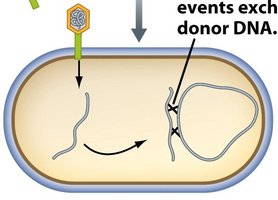
Transduction is the process by which bacterial DNA is transferred from one cell to another by a bacteriophage. During the viral replication cycle, bacterial DNA may be mistakenly packaged into a phage particle and delivered to a new host cell, where it can recombine with the recipient genome.
Generalized transduction: Any bacterial gene can be transferred.
Specialized transduction: Only specific genes near the prophage integration site are transferred.
Summary Table: Mechanisms of Horizontal Gene Transfer
Mechanism | Agent | DNA Source | Requirement | Significance |
|---|---|---|---|---|
Transformation | Free DNA | Environment | Competent cells | Genetic engineering, natural variation |
Conjugation | Plasmid (F, F', R) | Donor cell | Cell-to-cell contact, pilus | Antibiotic resistance, virulence |
Transduction | Bacteriophage | Donor cell (via phage) | Phage infection | Gene mapping, genetic diversity |
Horizontal Gene Transfer in Evolution
Significance in Bacteria and Archaea
Horizontal gene transfer is a driving force in the evolution of bacteria and archaea, enabling rapid adaptation to new environments, acquisition of new metabolic capabilities, and increased virulence. Genes can be transferred within or between species, contributing to ecological and evolutionary diversity.
