 Indietro
Biochemical Testing in Microbiology: Reduction Potential, Nutrient Utilization, Decarboxylation, and Deamination
Guida di studio - Note intelligenti
 Appunti personalizzati basati sui tuoi materiali, ampliati con definizioni chiave, esempi e contesto.
Biochemical Testing in Microbiology
Introduction to Biochemical Testing
Biochemical tests are essential tools in microbiology for identifying and differentiating microorganisms based on their metabolic properties. These tests often assess the ability of bacteria to utilize specific nutrients, reduce compounds, or produce characteristic enzymes. The following sections cover key biochemical tests relevant to the study of microbial metabolism and identification.
Reduction Potential Tests
Oxidase Test
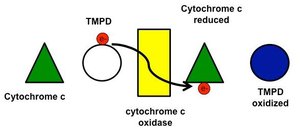
The oxidase test detects the presence of cytochrome c oxidase, an enzyme involved in the electron transport chain. This test is particularly useful for distinguishing between members of the Enterobacteriaceae (oxidase-negative) and Pseudomonadaceae (oxidase-positive) families.
Principle: Cytochrome c oxidase catalyzes the transfer of electrons from TMPD (a chromogenic reducing agent) to cytochrome c. TMPD turns blue when oxidized, indicating a positive result.
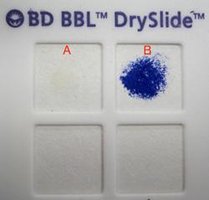
Procedure: Bacterial colonies are placed on paper saturated with TMPD. A color change within 20 seconds indicates a positive reaction.
Interpretation: Blue color = positive (cytochrome c oxidase present); no color change = negative.
Application: Differentiates Pseudomonas (positive) from Escherichia (negative).
Nitrate Reduction Test
Principle and Biochemical Pathway
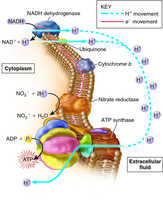
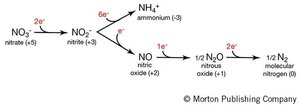
The nitrate reduction test determines the ability of bacteria to reduce nitrate (NO3-) to nitrite (NO2-) or other nitrogenous compounds via anaerobic respiration. This test is commonly used to differentiate Gram-negative bacteria.
Pathway: Nitrate can be reduced to nitrite, nitric oxide, nitrous oxide, nitrogen gas, or ammonium, depending on the organism's enzymatic capabilities.
Key Enzymes: Nitrate reductase, nitrite reductase, and other nitrogen cycle enzymes.
Test Procedure and Interpretation
Step 1: Inoculate nitrate broth and incubate.
Step 2: Add nitrate reagents A and B to detect nitrite. Red color indicates nitrate reduction to nitrite (positive result).
Step 3: If no color change, add powdered zinc. Zinc reduces any remaining nitrate to nitrite, producing a red color (indicating a true negative for nitrate reduction by the organism).
Step 4: If still no color change after zinc, nitrate was reduced beyond nitrite (to N2 or NH4+), indicating a positive result for complete reduction.
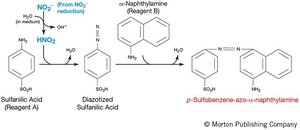
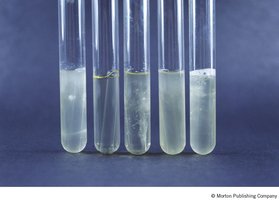
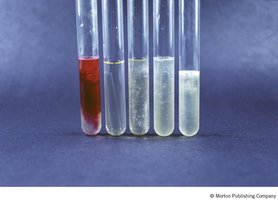
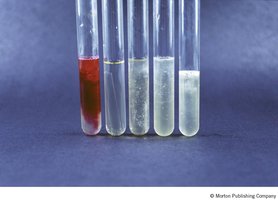
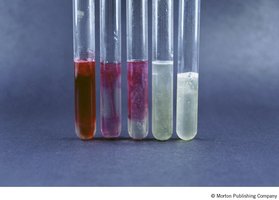
Summary Table: Nitrate Reduction Test Results
Test Result | Interpretation |
|---|---|
Red after A & B | Nitrate reduced to nitrite |
No color after A & B, red after zinc | No nitrate reduction |
No color after A & B and zinc | Nitrate reduced beyond nitrite (to N2 or NH4+) |
Citrate Utilization Test
Principle and Application
The citrate test determines whether an organism can use citrate as its sole carbon source. This is part of the IMViC series of tests for differentiating Enterobacteriaceae.
Enzyme: Citrate permease transports citrate into the cell for metabolism.
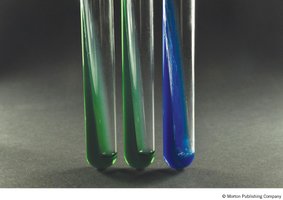
Indicator: Bromophenol blue turns from green (pH < 6.9) to blue (pH > 7.6) as ammonia is produced, raising the pH.
Interpretation: Blue color indicates positive citrate utilization; green indicates negative.
Decarboxylase Tests
Principle and Application
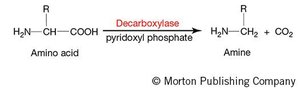
Decarboxylase tests detect the ability of bacteria to decarboxylate specific amino acids, producing alkaline amines. These tests are useful for differentiating Enterobacteriaceae.
Enzyme: Decarboxylase removes the carboxyl group from amino acids, forming an amine and CO2.
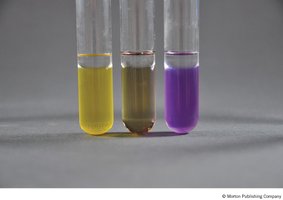
Indicator: Bromocresol purple is yellow at pH < 5.2 (acidic) and purple at pH > 6.8 (alkaline).
Procedure: Mineral oil overlay promotes anaerobic conditions and glucose fermentation, creating an acidic environment to induce decarboxylase activity.
Interpretation: Purple color indicates positive decarboxylation; yellow indicates negative.
Phenylalanine Deaminase Test
Principle and Application
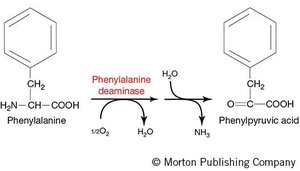
This test detects the ability of bacteria to deaminate phenylalanine, producing phenylpyruvic acid and ammonia. It is used to identify genera such as Morganella, Proteus, and Providencia within the Enterobacteriaceae.
Enzyme: Phenylalanine deaminase removes the amino group from phenylalanine.
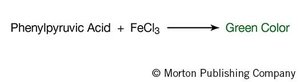
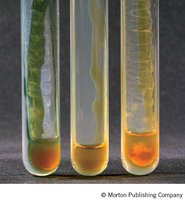
Detection: Phenylpyruvic acid reacts with ferric chloride (FeCl3) to produce a green color.
Interpretation: Green color indicates positive deamination; no color change indicates negative.
Summary Table: Key Biochemical Tests
Test | Substrate | Enzyme | Positive Result | Indicator |
|---|---|---|---|---|
Oxidase | Cytochrome c | Cytochrome c oxidase | Blue color | TMPD |
Nitrate Reduction | Nitrate | Nitrate reductase | Red color (after reagents or zinc) | Nitrate reagents A & B, zinc |
Citrate Utilization | Citrate | Citrate permease | Blue color | Bromophenol blue |
Decarboxylase | Amino acid | Decarboxylase | Purple color | Bromocresol purple |
Phenylalanine Deaminase | Phenylalanine | Phenylalanine deaminase | Green color | Ferric chloride |
Lab Applications and Procedures
Summary of Laboratory Steps
Perform oxidase test using DrySlide for Escherichia coli and Alcaligenes faecalis.
Inoculate nitrate broths with controls and test organisms; incubate and test for nitrate reduction.
Inoculate Simmons citrate slants for citrate utilization testing.
Inoculate lysine decarboxylase broths with mineral oil overlay for decarboxylase testing.
Inoculate phenylalanine deaminase slants for deamination testing.
Note: Proper controls and incubation times are essential for accurate interpretation of results.
