 Indietro
Biofilms and Dynamics of Microbial Growth: Study Notes for Microbiology
Guida di studio - Note intelligenti
 Appunti personalizzati basati sui tuoi materiali, ampliati con definizioni chiave, esempi e contesto.
Biofilms
Microbial Communities and Biofilm Structure
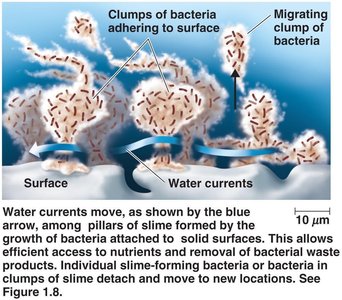
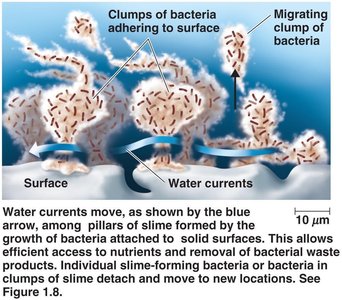
Biofilms are complex microbial communities where microorganisms seldom live in isolated, single-species colonies. Instead, they form slime or hydrogels, creating pillar-like structures on solid surfaces. These structures allow efficient access to nutrients and removal of waste products, and facilitate the detachment and migration of bacteria to new locations.
Biofilm Matrix: Mainly composed of polysaccharides, with some DNA and proteins.
Quorum Sensing: The matrix enables cell density-dependent gene expression via signaling chemicals called inducers.
Biofilm Structure: Not a uniform monolayer, but pillar-like formations.
Attachment: Biofilms start when planktonic (free-swimming) bacteria attach to solid surfaces such as rocks, teeth, or mucous membranes.
Biofilm Function and Resistance
Biofilm communities may consist of a single species or a diverse group of microorganisms. These communities share nutrients and provide shelter from harmful factors, making them highly resistant to microbicides and responsible for many nosocomial infections.
Complex Tasks: Microorganisms in biofilms can cooperate to perform tasks such as digestion in animal tracts or sewage treatment.
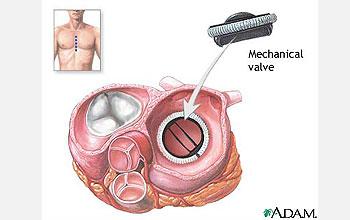
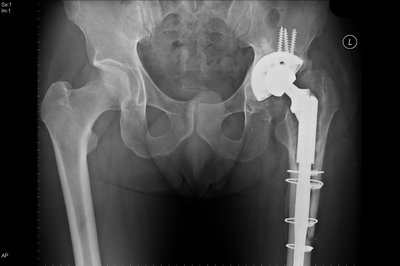
Medical Relevance: Biofilms are implicated in infections related to hip replacements, catheters, and mechanical heart valves.
Dynamics of Microbial Growth
Physical Requirements for Microbial Growth
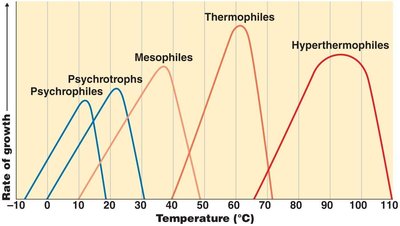
Microbial growth is governed by physical requirements such as temperature, pH, and osmotic pressure. Each species has a characteristic temperature range, known as its cardinal temperatures:
Minimal Growth Temperature: Lowest temperature for growth.
Optimal Growth Temperature: Temperature at which reproduction is most rapid.
Maximal Growth Temperature: Highest temperature for growth.
Bacteria are grouped based on their preferred temperature range:
Psychrotrophs: 0°C to 20–30°C (cause food spoilage)
Mesophiles: 25–40°C (most common type)
Thermophiles: 50–60°C (grow in hot springs)
Some bacteria, termed thermoduric, can survive boiling but do not grow at high temperatures. Many spore-forming bacteria (e.g., Bacillus subtilis) can withstand boiling for extended periods.
pH and Osmotic Pressure
Microbial enzymes and growth are affected by pH. Microbes are classified by their pH growth range:
Acidophiles: Optimum pH 0.0–5.5
Neutrophiles: Optimum pH 5.5–8.0
Alkalophiles: Optimum pH 8.5–11.5
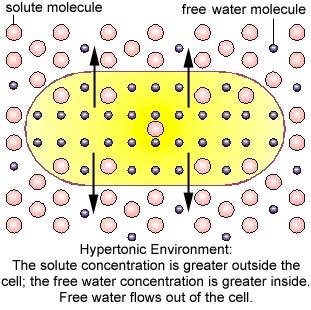
Osmotic pressure and water availability are crucial for bacterial growth. Bacteria are separated from their environment by a selectively permeable plasma membrane.
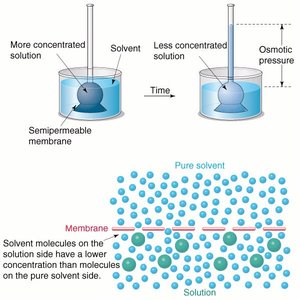
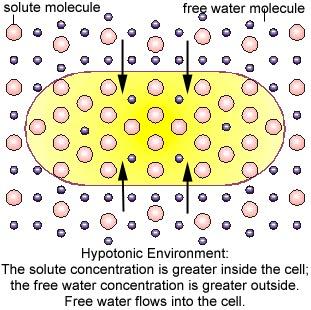
Hypotonic Solution: Water enters the cell; most bacteria are protected by rigid cell walls.
Hypertonic Solution: Water leaves the cell, causing plasmolysis.
Isotonic Solution: Equal flow of water in and out of the cell.
Chemical Requirements for Microbial Growth
Microbes require various chemical elements for growth:
Carbon: Structural backbone for organic compounds; chemoheterotrophs use organic sources, autotrophs use CO2.
Nitrogen: Essential for amino acids and proteins; bacteria may decompose proteins, use NH4+, NO3–, or fix N2.
Sulfur: Needed for certain amino acids (cysteine, methionine), thiamine, biotin.
Phosphorus: Required for DNA, RNA, ATP, and membranes; PO43– is a source.
Trace Elements: Needed in small amounts, usually as enzyme cofactors.
Organic Growth Factors: Essential compounds (vitamins, amino acids, purines, pyrimidines) that the organism cannot synthesize.
Oxygen Requirements
Oxygen can be toxic to some microbes. Microorganisms are classified based on their oxygen requirements:
Obligate Aerobes: Require oxygen; neutralize toxic forms with catalase and superoxide dismutase.
Facultative Anaerobes: Grow better with oxygen but can grow without it; neutralize toxic forms.
Obligate Anaerobes: Harmed by oxygen; lack neutralizing enzymes.
Aerotolerant Anaerobes: Not affected by oxygen; partially neutralize toxic forms.
Microaerophiles: Require low oxygen concentrations; produce lethal levels of toxic oxygen if exposed to atmospheric levels.
Enzymatic reactions for neutralizing toxic oxygen forms:
Superoxide Dismutase:
Catalase:
Peroxidase:
Growing Microbes in the Laboratory
Culturing Techniques and Media
Microbes are grown in the lab using various culture media. Key terms:
Sterile: No living microbes present.
Inoculum: Introduction of microbes into medium.
Culture: Microbes growing in/on culture medium.
Agar: Complex polysaccharide used as a solidifying agent; liquefies at 100°C, solidifies at ~40°C.
Types of media:
Chemically Defined Media: Exact chemical composition is known.
Complex Media: Made from extracts and digests of yeasts, meat, or plants; nutrient content varies.
Reducing Media: Used for anaerobic bacteria; contains chemicals to remove O2.
Selective Media: Suppresses unwanted microbes and encourages desired ones (e.g., Mannitol Salt Agar).
Differential Media: Distinguishes colonies of different microbes (e.g., Eosin Methylene Blue).
Enrichment Culture: Encourages growth of desired microbes by providing essential nutrients and excluding inhibitors.
Pure Cultures and Colony Isolation
Scientists prefer to work with pure cultures, which contain only one species or strain. Colonies arise from a single cell or spore and are often called colony-forming units (CFUs). The streak plate method is commonly used to isolate pure cultures.
Growth of Bacterial Cultures
Binary Fission and Growth Curve
Bacteria divide by binary fission, and their growth can be calculated in base 2. The bacterial growth curve consists of four distinct stages:
Lag Phase: Bacteria acclimatize to the environment; no division.
Log Phase: Rapid cell division.
Stationary Phase: Growth rate slows; rate of growth equals rate of death.
Death Phase: Nutrients exhausted; bacteria die off.
Generation Time
Generation time is the period during the log phase when the number of bacteria doubles. The equation for generation time is:
Equation:
Example: If OD doubles from 0.1 at 10 min to 0.2 at 20 min, and min, min, then min.
