 Indietro
Case Study Lab Report: Identifying an Infectious Disease and Pathogen in a Hospitalized Patient
Guida di studio - Note intelligenti
 Appunti personalizzati basati sui tuoi materiali, ampliati con definizioni chiave, esempi e contesto.
Q1. What general type of infectious disease does this patient have based on the case description?
Background
Topic: Clinical Diagnosis of Infectious Diseases
This question tests your ability to interpret clinical symptoms and patient history to determine the general category of infectious disease, such as urinary tract infection, sepsis, or pneumonia, before knowing the specific causative organism.
Key Terms:
Infectious disease: An illness caused by pathogenic microorganisms, such as bacteria, viruses, fungi, or parasites.
Septicemia: A serious bloodstream infection that can lead to sepsis.
Urinary tract infection (UTI): Infection in any part of the urinary system.
Step-by-Step Guidance
Review the patient's symptoms: fever, chills, confusion, low blood pressure, increased heart and respiratory rate, and erythema/tenderness at the catheter site.
Consider the patient's risk factors: prolonged ICU stay, indwelling devices (catheter, central line), diabetes, and recent stroke.
Analyze the laboratory findings: elevated WBC count (with left shift), cloudy urine with leukocyte esterase and nitrites, and slightly elevated creatinine.
Think about which types of infections are common in hospitalized patients with these risk factors and symptoms.
Use the information to narrow down to a general type of infection, but do not specify the exact organism yet.
Try solving on your own before revealing the answer!
Final Answer:
The patient most likely has a bloodstream infection (septicemia/sepsis) secondary to a urinary tract infection (UTI) or catheter-related infection. The combination of fever, hypotension, elevated WBC, and evidence of infection at the catheter site supports this diagnosis.
These findings are consistent with sepsis, often originating from a UTI or central line infection in hospitalized patients with indwelling devices.
Q2. How do the patient's history, predisposing factors, signs, and symptoms contribute to your initial diagnosis?
Background
Topic: Clinical Reasoning and Risk Assessment in Infectious Disease
This question asks you to connect the patient's medical history, risk factors, and clinical presentation to the likely diagnosis, using evidence-based reasoning.
Key Terms:
Predisposing factors: Conditions or behaviors that increase the risk of disease (e.g., diabetes, indwelling catheters).
Signs: Objective evidence of disease (e.g., fever, hypotension).
Symptoms: Subjective experiences reported by the patient (e.g., confusion, chills).
Step-by-Step Guidance
Identify the relevant aspects of the patient's history (e.g., diabetes, ICU stay, use of catheters and central lines).
List the signs and symptoms presented (e.g., fever, chills, confusion, low blood pressure, increased heart and respiratory rate, erythema at catheter site).
Explain how each risk factor increases susceptibility to infection (e.g., diabetes impairs immune response, catheters provide a route for bacteria).
Connect the clinical findings to common complications in hospitalized patients (e.g., sepsis from catheter-associated infections).
Support your reasoning with a reference from a reliable medical source (e.g., CDC, Medscape).
Try solving on your own before revealing the answer!
Final Answer:
The patient's prolonged ICU stay, use of indwelling devices, and diabetes are significant risk factors for hospital-acquired infections. The presence of fever, hypotension, and confusion are classic signs of sepsis. Erythema and tenderness at the catheter site suggest a possible source of infection. According to the CDC, patients with indwelling catheters and underlying conditions like diabetes are at increased risk for sepsis and urinary tract infections (CDC, 2023). Reference: Centers for Disease Control and Prevention. (2023). Catheter-associated Urinary Tract Infections (CAUTI). https://www.cdc.gov/hai/ca_uti/uti.html
Q3. List and define any medical terms used in the case study that describe the patient’s signs and symptoms.
Background
Topic: Medical Terminology in Clinical Cases
This question tests your understanding of medical vocabulary, especially terms that may be unfamiliar to non-medical readers.
Key Terms:
Erythematous: Redness of the skin, often due to inflammation or infection.
Leukocyte esterase: An enzyme found in white blood cells, its presence in urine suggests infection.
Nitrites: Compounds produced by certain bacteria in the urine, indicating bacterial infection.
Left shift: An increase in immature white blood cells (bands), indicating infection or inflammation.
Serum creatinine: A blood test marker for kidney function; elevation may indicate kidney stress or damage.
Indwelling catheter: A tube inserted into the body to drain fluids, which can be a source of infection.
Step-by-Step Guidance
Identify all medical terms in the case study related to signs and symptoms.
Look up and write clear, concise definitions for each term.
Focus on terms that may not be familiar to the general public.
Try solving on your own before revealing the answer!
Final Answer:
Erythematous: Redness of the skin due to increased blood flow, often from infection or inflammation.
Leukocyte esterase: An enzyme indicating the presence of white blood cells in urine, suggesting infection.
Nitrites: Chemicals produced by bacteria in urine, indicating a bacterial urinary tract infection.
Left shift: An increase in immature white blood cells, often seen in response to infection.
Serum creatinine: A measure of kidney function; elevated levels can indicate kidney impairment.
Indwelling catheter: A tube placed in the body for drainage, which can increase infection risk.
Q4. List each lab test result provided in the case study and explain how the result of each test helps you to diagnose this patient’s disease.
Background
Topic: Interpretation of Laboratory Results in Infectious Disease Diagnosis
This question tests your ability to interpret common laboratory findings (CBC, urinalysis, etc.) and relate them to clinical diagnosis.
Key Terms and Concepts:
WBC count: Indicates immune response; elevation suggests infection.
Leukocyte esterase and nitrites in urine: Suggest urinary tract infection.
Serum creatinine: Assesses kidney function; elevation may indicate sepsis-related kidney stress.
Step-by-Step Guidance
List each laboratory test result from the case study (WBC count, urinalysis, serum creatinine).
Explain what each result means in the context of infection (e.g., high WBC = infection, nitrites = bacterial UTI).
Connect each result to the patient’s clinical presentation and possible diagnosis.
Refer to relevant appendices or resources for interpretation if needed.
Try solving on your own before revealing the answer!
Final Answer:
WBC count (16,500/µL, left shift): Indicates an active infection or inflammation, supporting the diagnosis of sepsis.
Serum creatinine (slightly elevated): Suggests possible kidney involvement, which can occur in severe infections or sepsis.
Urinalysis (cloudy urine, trace leukocyte esterase, nitrites): Indicates a urinary tract infection, likely caused by bacteria that reduce nitrates to nitrites.
These results together support a diagnosis of sepsis, likely secondary to a urinary tract infection.
Q5. Microbiological lab tests you performed to identify the pathogen
Background
Topic: Microbiological Identification of Bacterial Pathogens
This question tests your understanding of laboratory techniques used to identify bacteria, including Gram stain, oxidase test, selective media, and biochemical tests.
Key Terms and Tests:
Gram stain: Differentiates bacteria by cell wall structure (Gram-positive vs. Gram-negative).
Oxidase test: Detects cytochrome c oxidase enzyme.
MacConkey agar: Selective for Gram-negative bacteria; differentiates lactose fermenters.
Cetrimide agar: Selective for Pseudomonas species.
EnteroPluri-Test: Multi-test system for identifying Enterobacteriaceae.
Step-by-Step Guidance
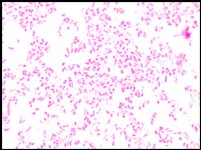
Review the Gram stain result: Note the color, shape, and arrangement of the bacteria.
Interpret the oxidase test result: Determine if the organism produces cytochrome oxidase.
Analyze the MacConkey agar result: Assess growth and color to determine Gram status and lactose fermentation.
Consider the Cetrimide agar result: Note if the test was performed and why it may have been excluded.
Summarize the EnteroPluri-Test results: Use the test outcomes to generate a code and identify the organism.
Try solving on your own before revealing the answer!
Final Answer:
Gram stain: Gram-negative, single rod-shaped (bacillus) bacteria, narrowing the possibilities to Gram-negative rods such as Enterobacteriaceae or Pseudomonas.
Oxidase test: Negative, indicating the organism does not possess cytochrome oxidase, which helps exclude Pseudomonas and supports Enterobacteriaceae.
MacConkey agar: Growth observed (Gram-negative), but colorless colonies indicate non-lactose fermenter.
Cetrimide agar: Not performed, as the oxidase-negative result ruled out Pseudomonas.
EnteroPluri-Test: The test results and code identified the organism as Serratia marcescens.
Q6. What infectious disease does the patient have, and what bacterial species is responsible?
Background
Topic: Final Clinical and Microbiological Diagnosis
This question asks you to synthesize all clinical and laboratory data to provide a final diagnosis, including the specific disease and causative organism.
Key Terms:
Sepsis: Life-threatening organ dysfunction caused by a dysregulated host response to infection.
Serratia marcescens: A Gram-negative, non-lactose fermenting bacillus in the Enterobacteriaceae family, often associated with hospital-acquired infections.
Step-by-Step Guidance
Review all clinical, laboratory, and microbiological findings from previous questions.
Identify the most likely infectious disease based on the patient’s presentation and test results.
Use the EnteroPluri-Test identification to determine the specific bacterial species responsible.
Combine this information to state the final diagnosis (disease and organism).
Try solving on your own before revealing the answer!
Final Answer:
The patient has sepsis (bloodstream infection) secondary to a urinary tract infection, caused by Serratia marcescens. This organism is a Gram-negative, non-lactose fermenting bacillus commonly associated with hospital-acquired infections, especially in patients with indwelling devices.
