 Indietro
Cell Chemistry: Foundations for Microbiology
Guida di studio - Note intelligenti
 Appunti personalizzati basati sui tuoi materiali, ampliati con definizioni chiave, esempi e contesto.
Cell Chemistry
Atomic Structure and Elements
Atoms are the fundamental units of matter, composed of a nucleus containing protons and neutrons, surrounded by electrons in defined energy levels called electron shells. The arrangement of these subatomic particles determines the chemical properties of each element.
Element: A pure substance consisting of only one type of atom.
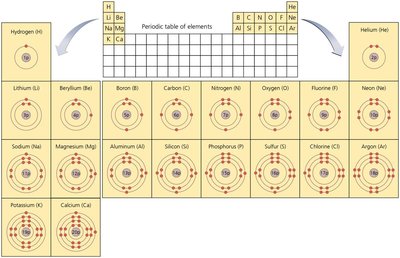
Atomic Number: Number of protons in the nucleus; defines the element.
Atomic Mass: Sum of protons, neutrons, and electrons (electrons contribute minimally to mass).
Electronegativity: The tendency of an atom to attract electrons in a chemical bond.
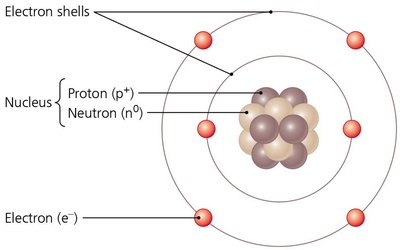
Bohr Model: Illustrates electrons in discrete shells around the nucleus, with chemical reactivity largely determined by the outermost (valence) shell.
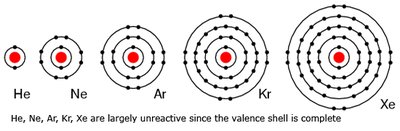
Noble Gases: Elements with complete valence shells (e.g., He, Ne, Ar, Kr, Xe) are chemically inert due to their stability.
Chemical Bonds
Chemical bonds are forces that hold atoms together within molecules or between molecules. The type of bond formed depends on the electronegativity of the atoms involved and their electron configurations.
Ionic Bonds: Formed when electrons are transferred from one atom to another, resulting in oppositely charged ions (cations and anions) that attract each other.
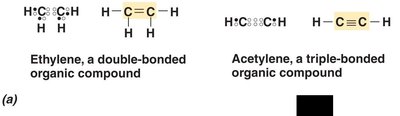
Covalent Bonds: Formed when atoms share electrons to fill their valence shells. Can be single, double, or triple bonds, with increasing bond strength and decreasing flexibility.
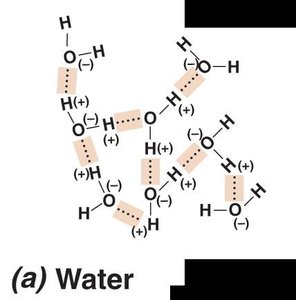
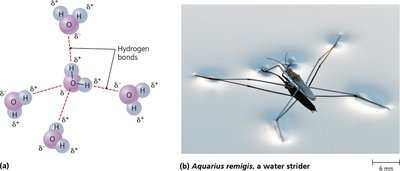
Hydrogen Bonds: Weak attractions between a hydrogen atom (covalently bonded to an electronegative atom) and another electronegative atom.
Hydrophobic Interactions: Nonpolar molecules cluster together in aqueous solutions to minimize disruption of hydrogen bonding among water molecules.
Van der Waals Forces: Weak attractions due to transient dipoles in molecules.
Ionic Bonds
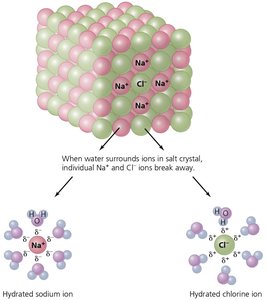
Ionic bonds occur between atoms with large differences in electronegativity. One atom donates an electron (becoming a cation), and the other accepts it (becoming an anion). The resulting electrostatic attraction forms an ionic compound, often a crystalline salt.
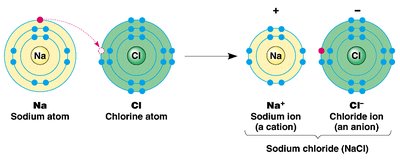
In water, ionic compounds dissociate into their constituent ions, which are stabilized by interactions with water molecules (hydration shells).
Covalent Bonds
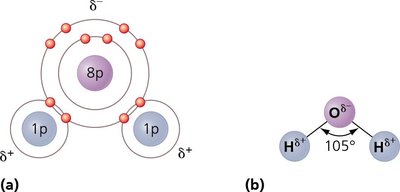
Covalent bonds involve the sharing of electron pairs between atoms. The number of shared pairs determines whether the bond is single, double, or triple. Covalent bonds can be:
Nonpolar: Electrons are shared equally (e.g., O2, N2).
Polar: Electrons are shared unequally, creating partial positive and negative charges (e.g., H2O).
Hydrogen Bonds and Weak Interactions
Hydrogen bonds are weak but crucial for the structure and function of biological molecules. They occur when a hydrogen atom covalently bonded to an electronegative atom (like O or N) is attracted to another electronegative atom.
Stabilize protein and nucleic acid structures.
Responsible for many unique properties of water.
Functional Groups in Organic Molecules
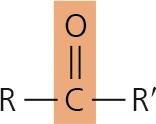
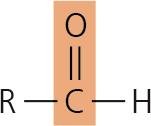
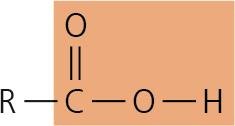
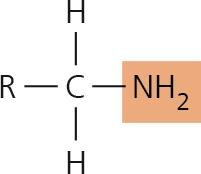
Functional groups are specific groups of atoms within molecules that confer characteristic chemical properties and reactivity. Common functional groups include hydroxyl, carbonyl, carboxyl, amino, ester, sulfhydryl, and phosphate groups.
Structure | Name | Class of Compounds |
|---|---|---|
–OH | Hydroxyl | Alcohols, monosaccharides, amino acids |
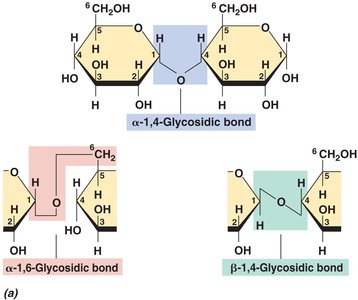
–O– | Ether | Disaccharides, polysaccharides |
–C=O (internal) | Ketone | Carbohydrates |
–C=O (terminal) | Aldehyde | Carbohydrates |
–COOH | Carboxyl | Amino acids, proteins, fatty acids |
–NH2 | Amino | Amino acids, proteins |
–COOR' | Ester | Fats, waxes |
–SH | Sulfhydryl | Amino acids, proteins |
–CH2–O–PO3H2 | Organic phosphate | Phospholipids, nucleotides, ATP |
Macromolecules and Their Monomers
Cells contain a variety of macromolecules, each with specific monomeric building blocks:
Carbohydrates: Monosaccharides (simple sugars) are the monomers; polysaccharides are polymers.
Lipids: Fatty acids and glycerol are the main building blocks; can form triglycerides, phospholipids, and sterols.
Proteins: Polymers of amino acids linked by peptide bonds.
Nucleic Acids: Polymers of nucleotides (DNA and RNA).
Water, Salts, Acids, Bases, and Buffers
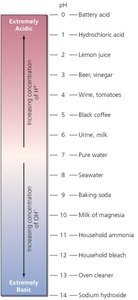
Water is the most abundant molecule in cells, essential for life due to its polarity, hydrogen bonding, high specific heat, and solvent properties. Salts are ionic compounds that dissociate in water, forming electrolytes crucial for cellular function. Acids donate protons (H+), bases accept protons, and buffers help maintain stable pH in cells.
Carbohydrates
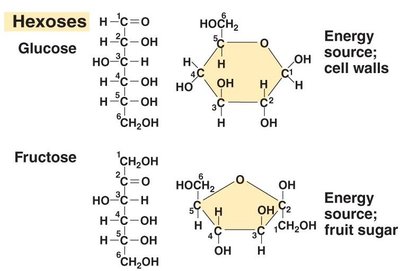
Carbohydrates are organic molecules with the general formula (CH2O)n. They serve as energy sources, structural components, and recognition molecules.
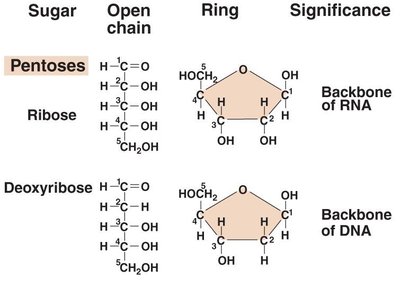
Monosaccharides: Simple sugars (e.g., glucose, fructose, ribose, deoxyribose).
Disaccharides: Two monosaccharides joined by a glycosidic bond.
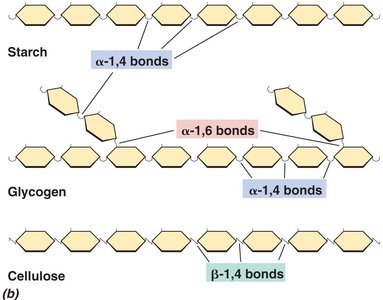
Polysaccharides: Long chains of monosaccharides (e.g., starch, cellulose, glycogen).
Lipids
Lipids are hydrophobic molecules, including fats, oils, phospholipids, and sterols. They are essential for membrane structure, energy storage, and signaling.
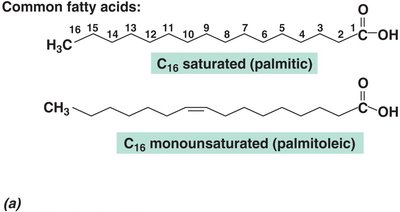
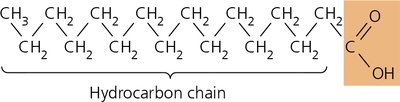
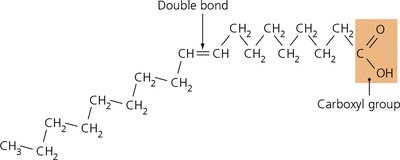
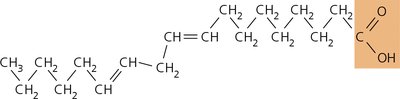
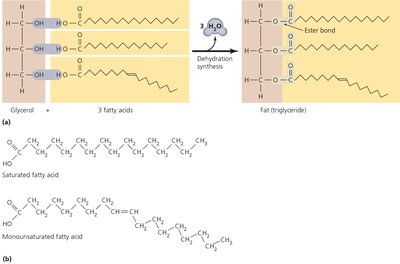
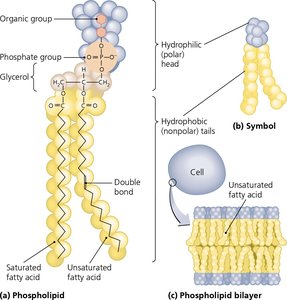
Fatty Acids: Long hydrocarbon chains with a terminal carboxyl group; can be saturated (no double bonds) or unsaturated (one or more double bonds).
Triglycerides: Three fatty acids esterified to glycerol; main energy storage form.
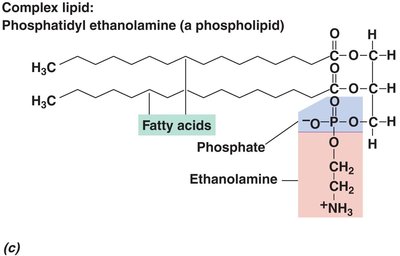
Phospholipids: Glycerol, two fatty acids, phosphate group, and an additional group; amphipathic, forming the basis of cell membranes.
Sterols and Hopanoids: Structural lipids in membranes.

Nucleic Acids
Nucleic acids (DNA and RNA) are polymers of nucleotides, which consist of a pentose sugar, a nitrogenous base, and a phosphate group. They store and transmit genetic information and participate in cellular energy transfer (e.g., ATP).
DNA: Double-stranded, stores genetic information.
RNA: Single-stranded, involved in protein synthesis and gene regulation.
Nucleotides: Also serve as energy carriers (e.g., ATP) and signaling molecules.
Proteins
Proteins are polymers of amino acids linked by peptide bonds. They serve structural, enzymatic, regulatory, and transport functions in cells.
Primary Structure: Linear sequence of amino acids.
Secondary Structure: Local folding (α-helix, β-sheet) stabilized by hydrogen bonds.
Tertiary Structure: Overall 3D shape, stabilized by various interactions (hydrogen bonds, ionic bonds, hydrophobic interactions, disulfide bridges).
Quaternary Structure: Arrangement of multiple polypeptide subunits.
Denaturation: Loss of structure and function due to environmental stress (e.g., heat, pH).
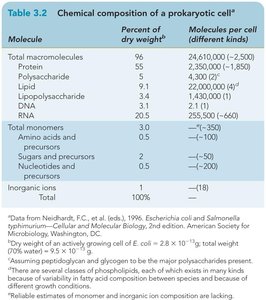
Summary Table: Chemical Composition of a Prokaryotic Cell
Molecule | Percent of dry weight | Molecules per cell (different kinds) |
|---|---|---|
Protein | 55 | 2,641,000 (1,800–2,500) |
Polysaccharide | 5 | 1,850 (20) |
Lipid | 9.1 | 2,400,000 (10) |
Lipopolysaccharide | 3.4 | 1,400 (1) |
DNA | 3.1 | 1 (1) |
RNA | 20.5 | 25,500 (5–660) |
Amino acids and precursors | 0.5 | ~500 |
Sugars and precursors | 0.5 | ~50 |
Nucleotides and precursors | 0.5 | ~200 |
Inorganic ions | 1 | ~18 |
Additional info: This guide provides foundational knowledge for understanding the chemical basis of cellular structure and function, essential for further study in microbiology, biochemistry, and molecular biology.
