 Indietro
Chapter 1: The Microbial World – Foundations of Microbiology
Guida di studio - Note intelligenti
 Appunti personalizzati basati sui tuoi materiali, ampliati con definizioni chiave, esempi e contesto.
The Microbial World
Introduction to Microorganisms
Microorganisms, or microbes, are life forms too small to be seen by the human eye and require a microscope for observation. They are classified into prokaryotic (before nucleus), eukaryotic (true nucleus), and viruses (non-cellular entities requiring a host for replication).
Prokaryotic microbes: Include Bacteria, Cyanobacteria, and Archaea.
Eukaryotic microbes: Include Fungi (yeasts and molds), Protists, some Animals (e.g., helminths), and Plants (e.g., algae).
Viruses: Not free-living cells; consist of DNA or RNA surrounded by a protein coat, sometimes with an envelope.
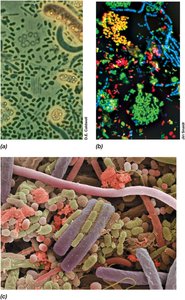
Microorganisms in Earth's Biosphere
Microorganisms are the oldest form of life and constitute a major fraction of Earth's biomass. They impact human life through infectious diseases, food and water safety, soil fertility, animal health, and fuel production.
Pathogens: Organisms that cause disease.
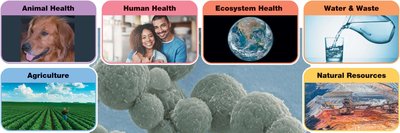
Applications: Microbes are essential in animal health, human health, ecosystem health, water and waste management, agriculture, food production, biotechnology, industry, and bioenergy.

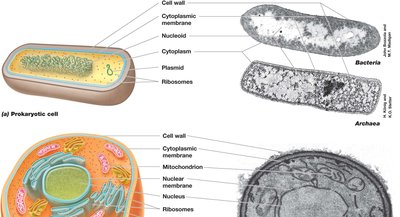
Structure and Activities of Microbial Cells
Basic Cell Structure
All cells share fundamental structural features:
Cytoplasmic (cell) membrane: Phospholipid bilayer separating the cytoplasm from the environment.
Cytoplasm: Aqueous mixture of macromolecules, small organics, ions, and ribosomes.
Ribosomes: Protein-synthesizing structures (70S in bacteria, 80S in eukaryotes).
Cell walls: Provide structural strength; composition varies (peptidoglycan in bacteria, pseudopeptidoglycan in archaea, chitin in fungi, cellulose in plants).

Genetic Material and Genomes
Microbial cells contain genetic material organized as genomes:
Eukaryotic DNA: Linear chromosomes within a nucleus; large genomes.
Prokaryotic DNA: Typically a single circular chromosome in the nucleoid region; may have plasmids for special properties (e.g., antibiotic resistance).
Cell Activities
Microbial cells perform various activities essential for survival and adaptation:
Metabolism: Chemical transformation of nutrients; includes aerobic, anaerobic, and facultative anaerobic processes.
Enzymes: Protein catalysts for biochemical reactions.
Transcription and Translation: DNA information is transcribed to RNA and translated to protein.
DNA Replication: Copying the genome for cell division.
Motility: Movement via flagella (bacteria) or cilia/flagella (eukaryotes).
Differentiation: Formation of specialized cells (e.g., endospores in bacteria, spores in fungi).
Intercellular Communication: Chemical signaling (quorum sensing).
Evolution: Genetic changes passed to offspring over time.
Cell Size and Morphology
Size Range and Shapes
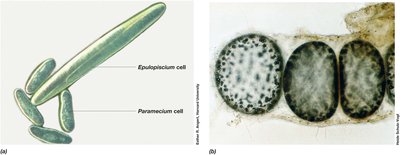
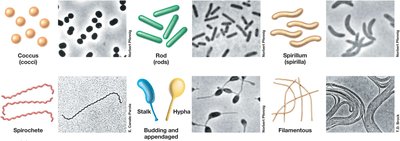
Microbial cells vary widely in size and shape (morphology):
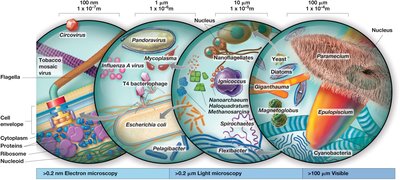
Prokaryotes: 0.2 µm to 600+ µm in diameter; most are 0.5–10 µm long.
Eukaryotes: Typically 5–100 µm in length.
Organism | Size (µm) | Morphology | Characteristics |
|---|---|---|---|
Thiomargarita namibiensis | 750 | Cocci in chains | Sulfur chemolithotroph |
Epulopiscium fishelsonia | 80 × 600 | Rods with tapered ends | Chemoorganotroph |
Escherichia coli | 1 × 2 | Rods | Chemoorganotroph |
Mycoplasma pneumoniae | 0.2 | Pleomorphic | Pathogenic bacterium |
Ultra-small bacteria | <0.2 | Variable | Uncultured, groundwater |
Introduction to Microbial Life
Three Domains of Life
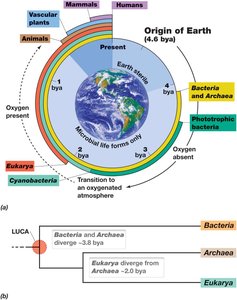
All cellular life is classified into three domains: Bacteria, Archaea, and Eukarya.
Bacteria: Prokaryotes, usually undifferentiated single cells, 0.5–10 µm long.
Archaea: Prokaryotes, often extremophiles, lack known parasites or pathogens.
Eukarya: Includes plants, animals, fungi, and protists; first were unicellular.
Viruses
Viruses are obligate parasites that replicate only within host cells. They are not cells and do not carry out metabolism. Viral genomes may be DNA or RNA, and viruses are classified by structure, genome composition, and host specificity.
Microorganisms and the Biosphere
History of Life on Earth
Earth is approximately 4.6 billion years old. The first cells appeared between 3.8 and 4.3 billion years ago. Early atmosphere was anoxic, supporting only anaerobic metabolisms. Cyanobacteria introduced oxygenic photosynthesis about 2.6 billion years ago.
Microbial Contribution to Biomass and Ecology
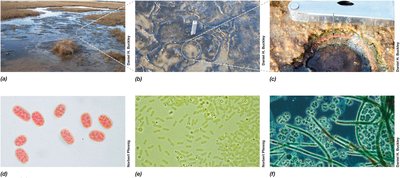
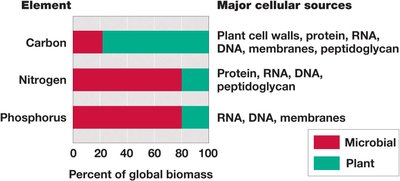
Microbial cells contribute significantly to global biomass, especially in carbon, nitrogen, and phosphorus cycles. Extremophiles thrive in harsh environments such as hot springs, glaciers, high salt, acidity, alkalinity, and pressure.
Descriptive Term | Habitat | Domain | Genus, Species | Extreme Condition |
|---|---|---|---|---|
Hyperthermophile | Undersea hydrothermal vents | Archaea | Methanopyrus kandleri | High temperature |
Psychrophile | Sea ice | Bacteria | Psychromonas ingrahamii | Low temperature |
Acidophile | Acidic hot springs | Archaea | Picrophilus oshimae | Low pH |
Alkaliphile | Soda lakes | Archaea | Natronobacterium gregoryi | High pH |
Barophile | Deep ocean sediments | Bacteria | Moritella yayanosii | High pressure |
Halophile | Salterns | Archaea | Halobacterium salinarum | High salt |
Impact of Microorganisms on Human Society
Microorganisms as Disease Agents
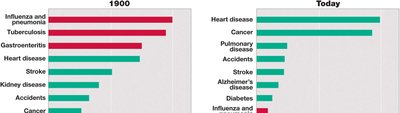
Microorganisms can be both beneficial and harmful. Pathogens cause infectious diseases, but most microbes are beneficial, contributing to vaccination, antibiotic therapy, water treatment, and food safety.

Microorganisms in Agriculture and Nutrition
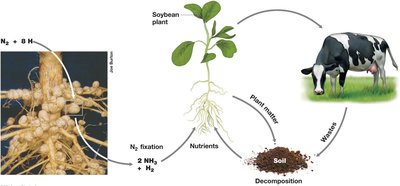
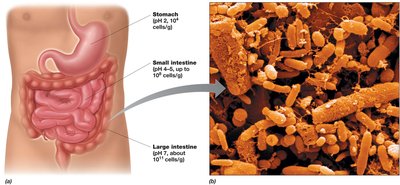
Microbes play vital roles in agriculture, such as nitrogen fixation, cellulose degradation in ruminants, and digestion of complex carbohydrates in the human gut microbiome. They also synthesize vitamins and nutrients.
Microorganisms and Food
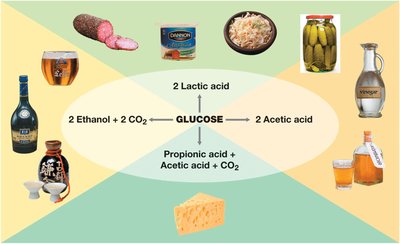
Microbes can cause food spoilage and foodborne diseases but also improve food safety and preservation through fermentation, producing dairy products, sauerkraut, kimchi, pickles, chocolate, coffee, bread, and alcohol.
Microorganisms and Industry
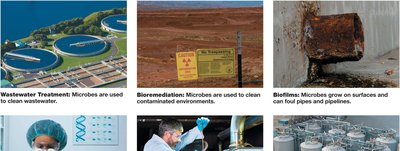
Industrial microbiology utilizes microbes for pharmaceuticals, brewing, biotechnology, biofuels, wastewater treatment, bioremediation, and biofilms.

Microscopy and Discovery of Microorganisms
Light Microscopy
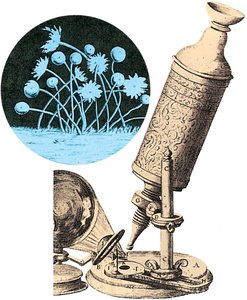
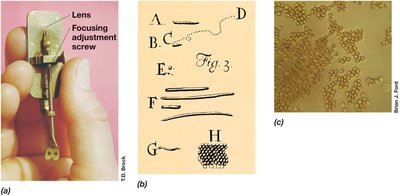
Microbiology began with the invention of the microscope. Robert Hooke first described microbes, and Antonie van Leeuwenhoek was the first to observe bacteria. Light microscopes use visible light to illuminate samples, with magnification and resolution as key properties.
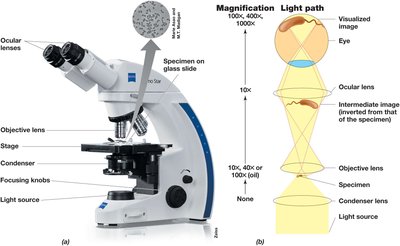
Types of Light Microscopy
Bright-field: Visualizes specimens by contrast differences.
Phase-contrast: Amplifies refractive index differences; good for live cells.
Dark-field: Light from sides; only scattered light reaches lens; excellent for motility.
Fluorescence: Visualizes specimens that emit light; used in diagnostics and ecology.
Staining Techniques
Staining increases contrast for bright-field microscopy. Basic dyes bind to negatively charged cell components. Differential stains, such as Gram stain, distinguish between gram-positive (purple-violet) and gram-negative (red/pink) bacteria based on cell wall structure.
Gram Stain Steps: Crystal violet (primary stain), Gram's iodine (mordant), ethanol (decolorizer), safranin (counterstain).
Advanced Microscopy
Confocal Scanning Laser Microscopy (CSLM): Generates 3D images using a laser and computer.
Electron Microscopy: Uses electrons for imaging; includes Transmission Electron Microscopy (TEM) for internal structures and Scanning Electron Microscopy (SEM) for surface visualization.
Microbial Cultivation and Pure Cultures
Aseptic Technique and Pure Cultures
Aseptic technique ensures sterile media and solutions. Pure cultures contain only one type of microorganism. Enrichment culture techniques isolate microbes with specific metabolic traits.
Historical Foundations of Microbiology
Pasteur and Spontaneous Generation
Louis Pasteur disproved spontaneous generation using the swan-necked flask experiment, showing that life does not arise from nonliving material. He also developed vaccines and contributed to food preservation and sterilization methods.
Koch and Infectious Disease
Robert Koch established the germ theory of infectious disease, identified causative agents of major diseases, and formulated Koch's postulates to link microbes to disease. He developed solid media for pure cultures and was awarded the Nobel Prize.
Molecular Basis of Life
Genetics and Molecular Biology
Bacteria are excellent models for studying molecular biology, genetics, and biochemistry. Key discoveries include genetic transfer in bacteria, DNA as genetic material, and the structure of DNA.
Woese and the Tree of Life
Phylogenetic Classification
Ribosomal RNA (rRNA) analysis enabled the construction of the universal tree of life, revealing three domains: Bacteria, Archaea, and Eukarya. Carl Woese discovered Archaea and used rRNA sequences to infer evolutionary relationships.
Summary and Study Recommendations
Review vocabulary and key concepts.
Practice with study guides, quizzes, and assignments.
Compare and contrast prokaryotic and eukaryotic microorganisms.
Understand Gram stain procedures and their significance.
