 Indietro
Chapter 12: The Eukaryotes – Fungi, Algae, Protozoa, and Helminths
Guida di studio - Note intelligenti
 Appunti personalizzati basati sui tuoi materiali, ampliati con definizioni chiave, esempi e contesto.
Fungi: Characteristics and Structure
Defining Characteristics of Fungi
Fungi are a diverse group of eukaryotic organisms that play essential roles in decomposition, symbiosis, and disease.
Mycology: The study of fungi.
Chemoheterotrophs: Obtain energy and carbon from organic compounds.
Decomposers: Break down organic matter, recycling nutrients.
Symbiosis: Many plants rely on symbiotic fungi (mycorrhizae) for mineral and water absorption.
Cell Structure: Eukaryotic cells with sterols in membranes; cell walls contain glucans, mannans, and chitin (not peptidoglycan).
Metabolism: Limited to heterotrophic; aerobic or facultative anaerobic.
Comparison: Fungi vs. Bacteria
Cell Type: Fungi are eukaryotic; bacteria are prokaryotic.
Cell Wall: Fungi have chitin, glucans, and mannans; bacteria have peptidoglycan.
Spores: Fungi produce sexual and asexual spores; bacteria produce endospores (not for reproduction).
Structure of Fungal Hyphae
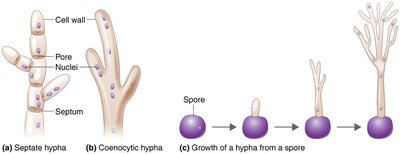
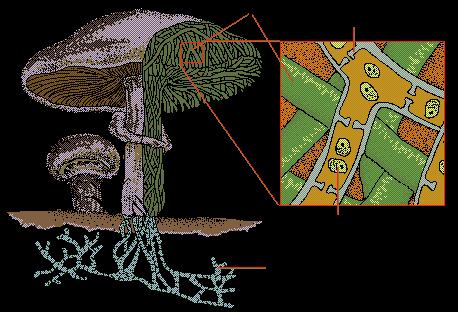
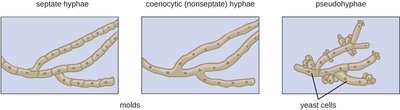
Fungi grow as multicellular filaments called hyphae, which form a network called mycelium.
Septate hyphae: Have cross-walls (septa) dividing cells.
Coenocytic hyphae: Lack septa, forming a continuous cytoplasm.
Growth: Occurs at hyphal tips.
Aerial and Vegetative Hyphae
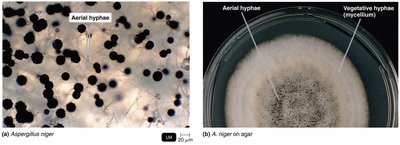
Vegetative hyphae: Absorb nutrients.
Aerial hyphae: Involved in reproduction, producing spores.
Yeasts: Structure and Reproduction
Characteristics of Yeasts
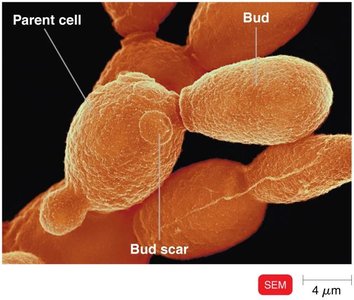
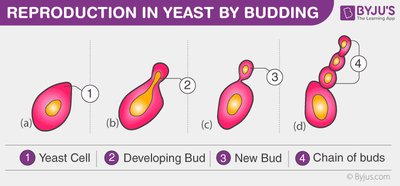
Yeasts are unicellular fungi, typically spherical or oval, and can grow aerobically or anaerobically.
Budding yeasts: Divide unevenly, forming a bud that may break off or remain attached (pseudo-hypha).
Fission yeasts: Divide evenly.
Pathogenic Yeasts: Candida albicans
Candida albicans: Opportunistic pathogen, common in human gut flora.
Can cause oral and vaginal yeast infections when overgrown.
Dimorphic Fungi
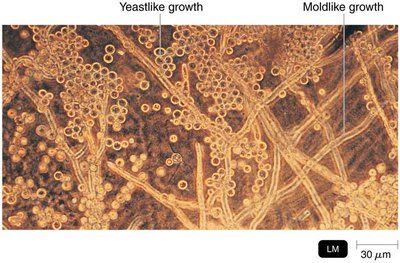
Can grow as yeast (at 37°C) or mold (at 25°C).
Pathogenic species often exhibit dimorphism.
Fungal Reproduction and Life Cycle
Asexual and Sexual Reproduction
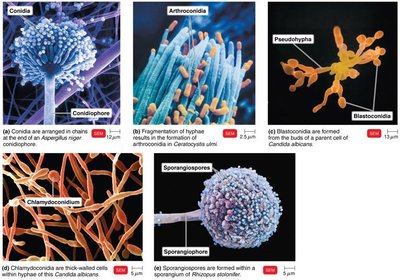
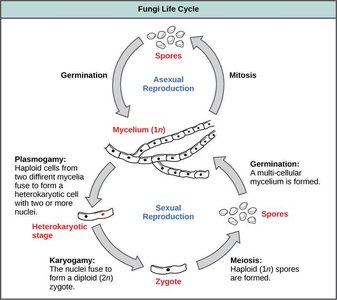
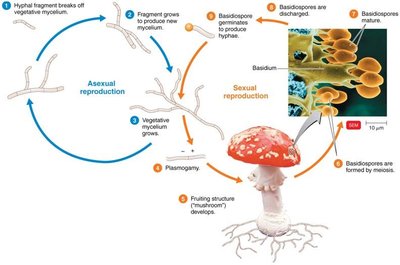
Fungi reproduce by forming spores, either asexually (mitosis) or sexually (fusion of nuclei).
Asexual spores: Conidiospore, arthroconidia, blastoconidia, chlamydoconidium, sporangiospore.
Sexual spores: Formed by plasmogamy, karyogamy, and meiosis.
Major Fungal Phyla
Zygomycota (Conjugation Fungi)
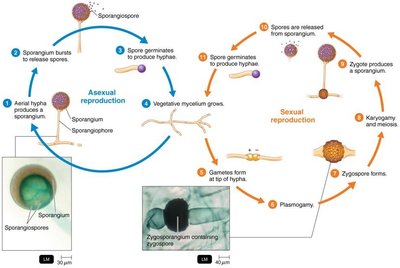
Saprophytic molds with coenocytic hyphae.
Asexual spores: Sporangiospores.
Sexual spores: Zygospores (fusion of nuclei).
Microsporidia
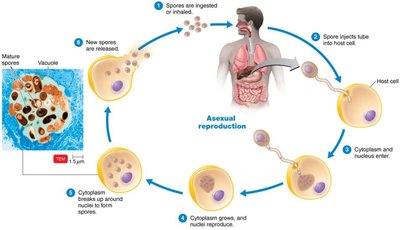
Obligate intracellular parasites.
No mitochondria; sexual reproduction likely occurs in host.
Ascomycota (Sac Fungi)
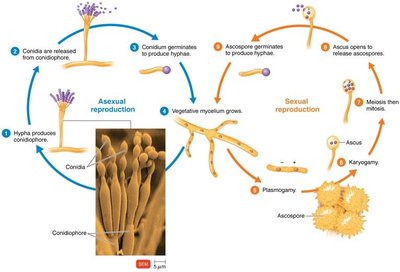
Septate hyphae; produce conidiospores (asexual) and ascospores (sexual).
Teleomorphic (sexual and asexual) and anamorphic (asexual only) forms.
Basidiomycota (Club Fungi)
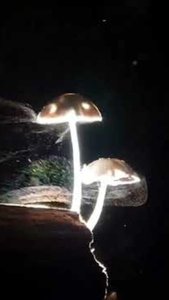
Septate hyphae; produce mushrooms.
Conidiospores (asexual) and basidiospores (sexual, formed on basidium).
Fungal Diseases (Mycoses)
Types of Mycoses
Systemic: Deep within the body.
Subcutaneous: Beneath the skin.
Cutaneous: Affect hair, skin, nails.
Superficial: Localized, e.g., hair shafts.
Opportunistic: Pathogenic in compromised hosts.
Pathogenic Fungi Table
Phylum | Growth Characteristics | Asexual Spore Types | Human Pathogens | Habitat | Type of Mycosis |
|---|---|---|---|---|---|
Ascomycota | Blank | Conidia | Aspergillus, Claviceps purpurea | Ubiquitous, Grasses | Systemic, Toxin ingestion |
Ascomycota | Dimorphic | Blank | Blastomyces, Histoplasma | Unknown, Soil | Systemic |
Ascomycota | Septate hyphae, affinity for keratin | Conidia | Microsporum | Soil, animals | Cutaneous |
Anamorphs | Septate hyphae, Dimorphic | Conidia | Epidermophyton, Sporothrix, Stachybotrys | Soil, humans | Cutaneous, Subcutaneous |
Anamorphs | Blank | Arthroconidia | Coccidioides immitis | Soil | Systemic |
Anamorphs | Yeastlike, pseudohyphae | Chlamydoconidia | Candida albicans | Human normal microbiota | Cutaneous, systemic, mucocutaneous |
Anamorphs | Unicellular | None | Pneumocystis | Human lungs | Systemic |
Economic Effects of Fungi
Saccharomyces cerevisiae: Used in bread, wine, and hepatitis B vaccine production.
Trichoderma: Produces cellulase for fruit juice clarification.
Taxomyces: Source of taxol, a cancer drug.
Entomophaga: Biocontrol agent against gypsy moths.
Coniothyrium minitans: Kills crop-destroying fungi.
Paecilomyces: Used to control termites.
Lichens: Structure and Function
Characteristics and Nutritional Needs
Lichens are mutualistic associations between a fungus and a green alga or cyanobacterium.
Neither partner can exist alone.
Secrete organic acids to break down substrates for nutrients.
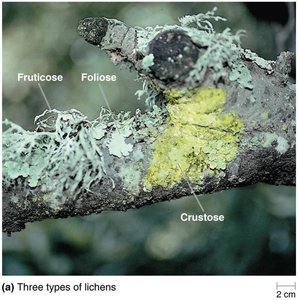
Three morphologies: crustose (encrusted), foliose (leaflike), fruticose (fingerlike).
Structure of Lichen Thallus
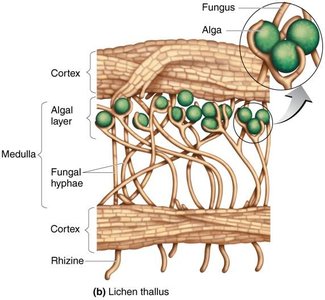
Medulla: Hyphae grown around algal cells.
Rhizines: Holdfasts anchoring the lichen.
Cortex: Protective coating over algal layer.
Alga: Produces carbohydrates via photosynthesis.
Fungus: Provides structure and protection.
Economic Importance of Lichens
Source of dyes, antimicrobial compounds, litmus (pH indicator), and food for herbivores.
Environmental indicators due to sensitivity to air pollution.
Algae: Characteristics and Roles
Defining Characteristics
Algae are unicellular or multicellular photoautotrophs, mostly aquatic, lacking roots, stems, and leaves.
Not considered plants.
Require water for growth and reproduction.
Table: Characteristics of Selected Algae
Type | Super Clade | Phylum | Color | Cell Wall | Cell Arrangement | Pigments | Sexual Reproduction | Storage Material | Pathogenicity |
|---|---|---|---|---|---|---|---|---|---|
Brown Algae | SAR | Phaeophyta | Brownish | Cellulose, alginic acid | Multicellular | Chlorophyll a, c, xanthophylls | Yes | Carbohydrate | None |
Diatoms | SAR | Bacillariophyta | Brownish | Pectin, silica | Unicellular | Chlorophyll a, c, carotene, xanthophylls | Yes | Oil | Toxins |
Dinoflagellates | SAR | Dinoflagellata | Brownish | Cellulose | Unicellular | Chlorophyll a, c, carotene, xanthins | In a few | Starch | Toxins |
Water Molds | SAR | Oomycota | Colorless, white | Cellulose | Multicellular | None | Yes | None | Parasitic |
Red Algae | Archaeplastida | Rhodophyta | Reddish | Cellulose | Multicellular | Chlorophyll a, d, phycobiliproteins | Yes | Glucose polymer | A few produce toxins |
Green Algae | Archaeplastida | Chlorophyta | Green | Cellulose | Unicellular, multicellular | Chlorophyll a, b | Yes | Starch | None |
Roles of Algae in Nature
Fix CO2 into organic molecules.
Produce 80% of Earth's O2.
Algal blooms can release toxins or deplete oxygen.
Oil production and symbiosis with animals.
Protozoa: Characteristics and Diseases
Defining Characteristics
Protozoa are unicellular eukaryotes with animal-like nutrition, inhabiting water and soil, and exhibiting complex life cycles.
Move by pseudopods, flagella, or cilia.
Some cause human diseases (e.g., malaria, amebic dysentery).
Helminths: Parasitic Worms
Characteristics of Helminths
Helminths are multicellular eukaryotic animals specialized for parasitism.
May lack digestive system; reduced nervous system and locomotion.
Complex reproductive system.
Two phyla: Platyhelminthes (flatworms) and Nematoda (roundworms).
Life Cycle
Dioecious: Separate male and female.
Monoecious: Both reproductive systems in one animal.
Platyhelminths
Trematodes (flukes): Flat, leaf-shaped, absorb food through cuticle.
Cestodes (tapeworms): Scolex for attachment, proglottids with reproductive organs.
Nematodes
Roundworms, cylindrical, complete digestive system.
Dioecious; males have spicules.
Free-living and parasitic forms.
Arthropods as Vectors
Defining Arthropod Vector
Arthropods are animals with segmented bodies, hard exoskeletons, and jointed legs. Vectors are arthropods that transmit pathogens.
Mechanical transmission: Pathogen transferred without development in vector.
Biological transmission: Pathogen multiplies in vector and is transmitted by biting.
Definitive host: Microbe's sexual reproduction occurs in vector.
Table: Important Arthropod Vectors of Human Diseases
Class | Order | Vector | Disease |
|---|---|---|---|
Arachnida | Mites and ticks | Dermacentor, Ixodes, Ornithodorus | Rocky Mountain spotted fever, Lyme disease, relapsing fever |
Insecta | Sucking lice, fleas, true flies | Pediculus, Xenopsylla, Chrysops, Aedes, Anopheles, Culex, Glossina | Epidemic typhus, plague, tularemia, dengue, malaria, encephalitis, trypanosomiasis |
Insecta | True bugs | Triatoma | Chagas disease |
Summary
This chapter covers the defining characteristics, structure, reproduction, and classification of fungi, algae, protozoa, and helminths, as well as their roles in nature, disease, and economic importance. It also discusses arthropod vectors and their significance in transmitting human diseases.
