 Indietro
Characterizing and Classifying Prokaryotes: Structured Study Notes
Guida di studio - Note intelligenti
 Appunti personalizzati basati sui tuoi materiali, ampliati con definizioni chiave, esempi e contesto.
Characterizing and Classifying Prokaryotes
General Characteristics of Prokaryotic Organisms
Prokaryotes are the most diverse group of cellular microbes, thriving in a wide range of habitats. Only a few prokaryotes are capable of colonizing humans and causing disease. They exist in a variety of shapes, which are important for identification and classification.
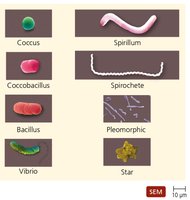
Morphology: Prokaryotic cells display several shapes, including coccus, bacillus, spirillum, spirochete, vibrio, pleomorphic, and star-shaped forms.
Diversity: Their morphological diversity reflects adaptation to different environments.
Habitat: Prokaryotes can be found in soil, water, extreme environments, and as symbionts or pathogens.
Endospores
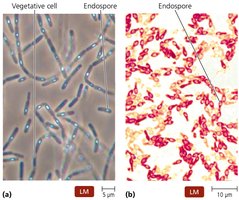
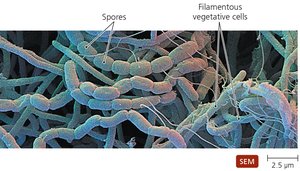
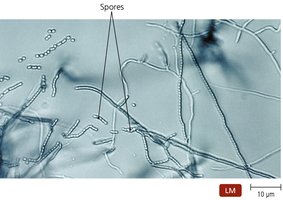
Endospores are highly resistant, dormant structures produced by certain Gram-positive bacteria, such as Bacillus and Clostridium. They serve as a defensive strategy against unfavorable conditions.
Formation: Each vegetative cell forms one endospore, which can later germinate into a new vegetative cell.
Importance: Endospores are a concern for food processors, health care professionals, and governments due to their resistance to heat, chemicals, and radiation.
Reproduction of Prokaryotic Cells
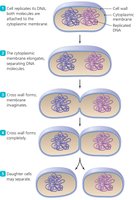
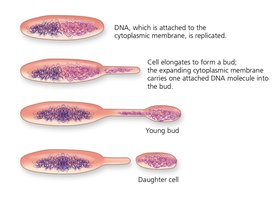
All prokaryotes reproduce asexually, employing several methods. The most common is binary fission, but other methods include snapping division and budding.
Binary Fission: The cell replicates its DNA, elongates, forms a cross wall, and separates into two daughter cells.
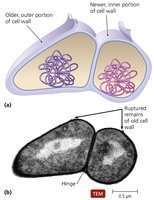
Snapping Division: A variation of binary fission where the inner cell wall layer forms a hinge, causing the cell to snap apart.
Budding: The cell forms a bud that grows and eventually separates as a new cell.
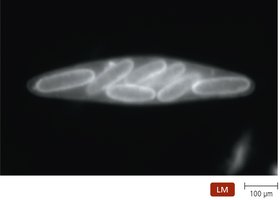
Viviparity in Epulopiscium
Some prokaryotes, such as Epulopiscium, reproduce by viviparity, where live offspring emerge from the body of the dead mother cell. This is a unique method among prokaryotes.
Arrangements of Prokaryotic Cells
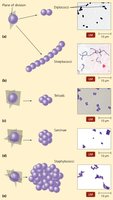
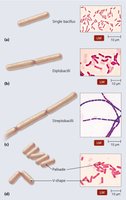
The arrangement of prokaryotic cells is determined by the planes in which cells divide and whether daughter cells remain attached after division. These arrangements are important for identification.
Cocci: Can form diplococci, streptococci, tetrads, sarcinae, and staphylococci.
Bacilli: Can form single bacilli, diplobacilli, streptobacilli, and palisades.
Modern Prokaryotic Classification
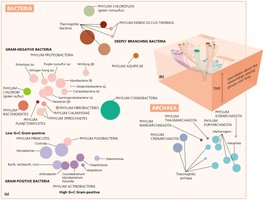
Prokaryotes are classified based on genetic relatedness, particularly ribosomal RNA (rRNA) sequences. The three domains of life are Archaea, Bacteria, and Eukarya.
Domains: Archaea, Bacteria, and Eukarya.
Taxonomy: Modern taxonomy relies on molecular data, especially rRNA gene sequences.
Survey of Archaea
General Features of Archaea
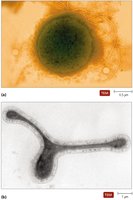
Archaea are prokaryotes distinct from bacteria, with unique cell wall and membrane characteristics. They are not known to cause disease.
Cell Wall: Lack true peptidoglycan.
Membrane Lipids: Contain branched hydrocarbon chains.
Genetic Code: AUG codon codes for methionine.
Phyla: Crenarchaeota and Euryarchaeota.
Reproduction: Binary fission, budding, or fragmentation.
Shapes: Cocci, bacilli, spirals, or pleomorphic.
Extremophiles
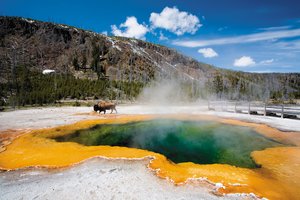
Extremophiles are archaea that require extreme conditions, such as high temperature, pH, or salinity, to survive. The most prominent extremophiles are thermophiles and halophiles.
Thermophiles
Definition: Require temperatures above 45°C; hyperthermophiles require over 80°C.
Genera: Thermococcus and Pyrodictium.
Halophiles
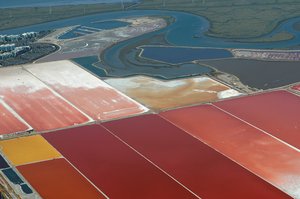
Definition: Inhabit highly saline environments, requiring >9% NaCl.
Pigmentation: Many produce red or orange pigments for protection from sunlight.
Example: Halobacterium salinarium.
Methanogens
Methanogens are archaea that produce methane gas by converting carbon dioxide, hydrogen gas, and organic acids. They are a major source of environmental methane and play a role in carbon cycling.
Habitat: Found in sediments and animal colons.
Environmental Impact: Responsible for producing trillions of tons of methane buried in ocean mud.
Survey of Bacteria
Deeply Branching and Phototrophic Bacteria
Deeply Branching Bacteria
These bacteria are believed to resemble the earliest forms of life. They are autotrophic and inhabit environments similar to early Earth.
Examples: Aquifex (earliest branch), Deinococcus (outer membrane like Gram-negatives, but stains Gram-positive).
Phototrophic Bacteria
Phototrophic bacteria contain photosynthetic lamellae and are mostly autotrophic. They are divided into five groups based on pigments and electron sources:
Blue-green bacteria (cyanobacteria)
Green sulfur bacteria
Green nonsulfur bacteria
Purple sulfur bacteria
Purple nonsulfur bacteria
Cyanobacteria
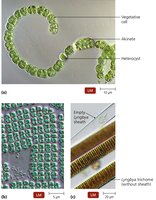
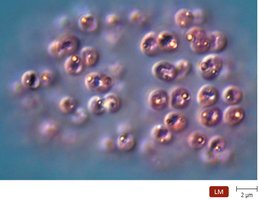
Cyanobacteria are Gram-negative phototrophs that played a key role in transforming Earth's atmosphere to contain oxygen. Some species perform nitrogen fixation.
Low G + C Gram-Positive Bacteria
Clostridia
Shape: Rod-shaped, obligate anaerobes.
Endospores: Many form endospores.
Importance: Significant in medicine and industry.
Mycoplasmas
Oxygen Requirement: Facultative or obligate anaerobes.
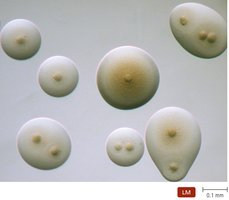
Cell Wall: Lack cell walls; smallest free-living cells.
Habitat: Colonize mucous membranes of respiratory and urinary tracts.
Other Low G + C Gram-Positive Bacilli and Cocci
Bacillus: Common in soil, forms endospores. Bacillus thuringiensis toxin is used as an insecticide; Bacillus anthracis causes anthrax.
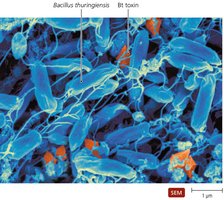
Listeria: Contaminates milk and meat, can reproduce under refrigeration, crosses placenta in pregnant women.
Lactobacillus: Grows in the body, rarely causes disease, used in food production.
Streptococcus and Enterococcus: Cause numerous diseases; some strains are multi-drug-resistant.
Staphylococcus: Common human inhabitant, produces toxins and enzymes contributing to disease.
High G + C Gram-Positive Bacteria
Corynebacterium
Shape: Pleomorphic aerobes and facultative anaerobes.
Granules: Produce metachromatic granules.
Mycobacterium
Shape: Aerobic rods, sometimes filamentous.
Growth: Slow due to mycolic acid in cell walls.
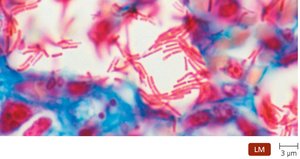
Actinomycetes
Structure: Form branching filaments resembling fungi.
Genera: Actinomyces, Nocardia, Streptomyces.
Gram-Negative Proteobacteria
Proteobacteria are the largest and most diverse group of bacteria, divided into six classes: Alphaproteobacteria, Betaproteobacteria, Gammaproteobacteria, Deltaproteobacteria, Epsilonproteobacteria, and Zetaproteobacteria.
Alphaproteobacteria
Pathogens: Rickettsia (arthropod-borne, causes diseases), Brucella (causes brucellosis).
Betaproteobacteria
Pathogens: Neisseria (inhabits mucous membranes, causes diseases), Bordetella (causes pertussis), Burkholderia (colonizes moist surfaces, affects cystic fibrosis patients).
Gammaproteobacteria
Subgroups: Purple sulfur bacteria, intracellular pathogens, methane oxidizers, glycolytic facultative anaerobes, pseudomonads.
Pseudomonads: Break down organic compounds; Pseudomonas causes urinary tract, ear, and lung infections.
Deltaproteobacteria
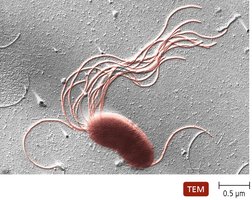
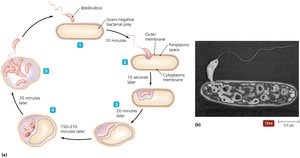
Bdellovibrio: Gram-negative pathogen of other Gram-negative bacteria; invades and consumes prey bacteria.
Epsilonproteobacteria
Genera: Campylobacter, Helicobacter.
Zetaproteobacteria
Discovery: Identified by DNA sequences; common in oceans.
Species: Mariprofundus ferrooxydans is the only formally named species.
Other Gram-Negative Bacteria
Chlamydias
Growth: Intracellular in mammals, birds, and some invertebrates.
Size: Some are smaller than viruses.
Diseases: Most common sexually transmitted bacteria in the U.S.
Spirochetes
Motility: Move in a corkscrew motion.
Metabolism: Diverse.
Pathogens: Treponema and Borrelia cause human diseases.
Additional info: Where tables were referenced but not fully visible, key characteristics and genera were logically inferred and expanded for completeness. All images included are directly relevant to the adjacent explanations, reinforcing key concepts in prokaryotic morphology, reproduction, classification, and diversity.
