 Indietro
Classification and Identification of Microorganisms
Guida di studio - Note intelligenti
 Appunti personalizzati basati sui tuoi materiali, ampliati con definizioni chiave, esempi e contesto.
Classification of Microorganisms
Taxonomy and Systematics
Taxonomy is the science of classifying organisms, enabling the study of relationships among groups of bacteria, providing universal names, and serving as a reference for identification. Systematics, or phylogeny, is the study of the evolutionary history of organisms, grouping them according to common properties and ancestry.
Taxonomy: Classification, nomenclature, and identification of organisms.
Systematics: Study of evolutionary relationships.
Phylogenetics: Grouping organisms based on shared ancestry, using anatomy, fossils, and molecular data (e.g., rRNA).
Historical and Modern Classification Systems
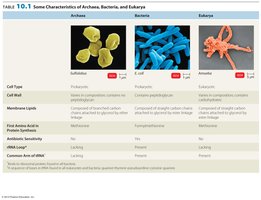
Originally, living organisms were divided into five kingdoms (Monera, Protista, Fungi, Plantae, Animalia) by Robert Whittaker in 1969. Advances in molecular biology led to the three-domain system: Bacteria, Archaea, and Eukarya.
Bacteria: Prokaryotes with peptidoglycan cell walls.
Archaea: Prokaryotes with unique cell walls, often extremophiles.
Eukarya: Includes plants, animals, fungi, and protists.
Evolutionary Origins and Fossil Evidence
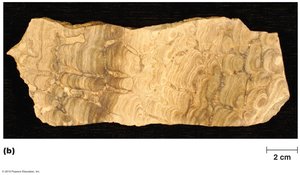
Prokaryotes are among the earliest forms of life, with fossil evidence dating back 3.5 billion years. Stromatolites are fossilized structures formed by ancient prokaryotes.
Fossilized prokaryotes: Provide insight into early microbial life.
Scientific Nomenclature and Taxonomic Hierarchy
Binomial Nomenclature
Scientific names use binomial nomenclature (genus + specific epithet), ensuring universal identification. Examples include Escherichia coli and Homo sapiens.
Taxonomic Hierarchy
Organisms are classified in a hierarchical system:
Domain
Kingdom
Phylum
Class
Order
Family
Genus
Species
Classification of Prokaryotes, Eukaryotes, and Viruses
Prokaryotic Species
A prokaryotic species is a population of cells with similar characteristics. Laboratory cultures, clones, and strains are used to distinguish groups within a species.
Clone: Population derived from a single cell.
Strain: Genetically distinct cells within a clone, identified by numbers, letters, or names.
Eukaryotic Species
Eukaryotic species are groups of closely related organisms that breed among themselves. Classification includes:
Animalia: Multicellular, no cell walls, chemoheterotrophic.
Plantae: Multicellular, cellulose cell walls, photoautotrophic.
Fungi: Chemoheterotrophic, cell walls of chitin, develop from spores or hyphal fragments.
Protista: Diverse group, classified by rRNA clades.
Viral Species
Viral species are populations of viruses with similar characteristics occupying a particular ecological niche.
Classifying and Identifying Microorganisms
Classification vs. Identification
Classification places organisms in groups of related species, while identification matches characteristics of unknown organisms to known lists. The first step after isolation is often a Gram stain.

Identification Methods
Morphological characteristics: Shape, presence of flagella, spores, or capsules.
Differential staining: Gram stain, acid-fast stain.
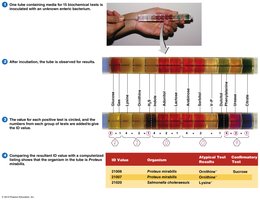
Biochemical tests: Presence of specific enzymes, e.g., lactose fermentation.
Rapid Identification Methods
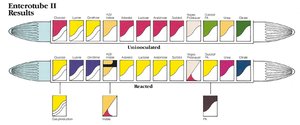
Devices like the Enterotube allow simultaneous testing of multiple biochemical properties, saving time and space in clinical labs.

Serological Methods
Serology and Slide Agglutination Test
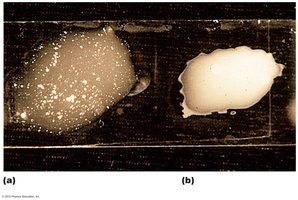
Serology uses antigen-antibody reactions for identification. The slide agglutination test involves mixing unknown bacteria with known antisera; clumping indicates a positive reaction.
ELISA (Enzyme-Linked Immunosorbent Assay)
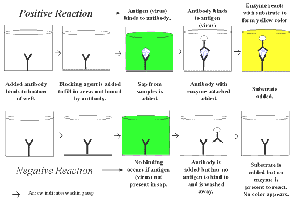
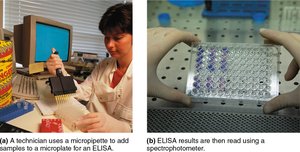
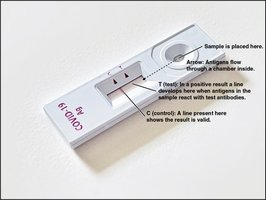
ELISA detects antigens or antibodies using enzyme-linked antibodies and a substrate that produces a color change.
Molecular and Genetic Identification Methods
Blotting Techniques
Blotting methods identify nucleic acids and proteins by transferring them from gels to nitrocellulose paper and probing with labeled molecules.
Southern Blot: Detects DNA.
Northern Blot: Detects RNA.
Western Blot: Detects protein.
Phage Typing
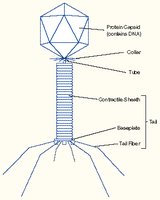
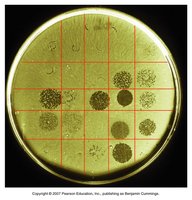
Bacteriophages are viruses that infect bacteria. Phage typing uses the specificity of phages to identify bacterial strains by observing lysis patterns.
Fatty Acid Profiles and Flow Cytometry
Fatty acid profiles are species-specific and used for identification. Flow cytometry distinguishes cells by electrical conductivity and fluorescence, allowing identification without culturing.
Genetic Methods
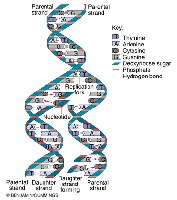
DNA Base Composition: The percentage of guanine and cytosine (% G+C) can suggest evolutionary relationships.
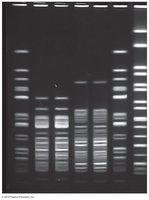
DNA Fingerprinting: Restriction enzyme digestion and electrophoresis compare DNA fragment patterns.
rRNA Sequencing: Used to track bacterial populations and determine relatedness.
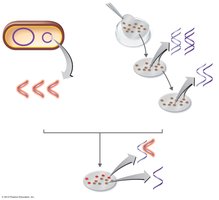
Polymerase Chain Reaction (PCR): Amplifies DNA for identification, especially for unculturable organisms.
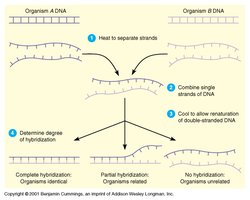
Nucleic Acid Hybridization: Measures relatedness by hybridizing DNA from different organisms.
Interpretation Tools
Dichotomous Keys
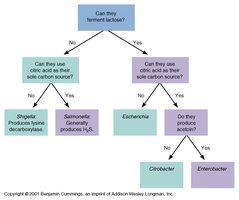
Dichotomous keys guide identification by asking successive questions with two possible answers, leading to the identification of the organism.
Cladograms
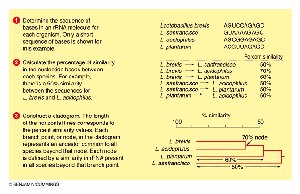
Cladograms visually represent evolutionary relationships among organisms based on shared characteristics and genetic similarity.
Summary Table: Characteristics of Archaea, Bacteria, and Eukarya
Domain | Cell Type | Cell Wall | Membrane Lipids | First Amino Acid in Protein Synthesis | Antibiotic Sensitivity | rRNA Loop | Common Arm of tRNA |
|---|---|---|---|---|---|---|---|
Archaea | Prokaryotic | Varies; no peptidoglycan | Composed of branched carbon chains attached to glycerol by ether linkage | Methionine | No | Lacking | Lacking |
Bacteria | Prokaryotic | Contains peptidoglycan | Composed of straight carbon chains attached to glycerol by ester linkage | Formylmethionine | Yes | Present | Present |
Eukarya | Eukaryotic | Varies; contains carbohydrates | Composed of straight carbon chains attached to glycerol by ester linkage | Methionine | No | Lacking | Present |
Conclusion
The classification and identification of microorganisms are fundamental to microbiology, enabling the study of evolutionary relationships, accurate naming, and effective diagnosis. Modern techniques combine classical taxonomy with molecular and biochemical methods for comprehensive analysis.
