 Indietro
Controlling Microbial Growth in the Body: Antimicrobial Drugs and Resistance
Guida di studio - Note intelligenti
 Appunti personalizzati basati sui tuoi materiali, ampliati con definizioni chiave, esempi e contesto.
Controlling Microbial Growth in the Body
Introduction to Antimicrobial Control
Controlling microbial growth within the human body is a critical aspect of microbiology and medicine. Physical methods such as incineration are not suitable for internal use; instead, drugs are employed to selectively target microbes without harming the host. The principle of selective toxicity is central to antimicrobial therapy, ensuring that pathogens are eliminated while minimizing damage to human cells.
History and Sources of Antimicrobial Agents
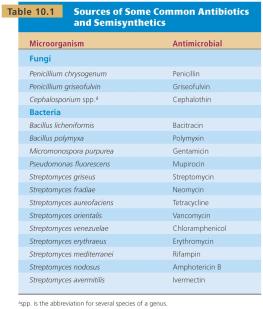
Antimicrobial agents are a relatively recent innovation in medical history, dramatically reducing mortality from infectious diseases. Most antimicrobials are secondary metabolites produced by fungi and bacteria, which naturally synthesize these compounds to compete in their environments.
Salvarsan (arsphenamine): First modern chemotherapeutic agent, used to treat syphilis (1910).
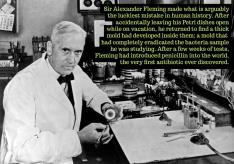
Penicillin: Discovered by Alexander Fleming in 1929, produced by Penicillium mold.
Sulfanilamide: First widely available practical antimicrobial agent (1932).
Key Factors for Antimicrobial Action
Selectivity and Spectrum
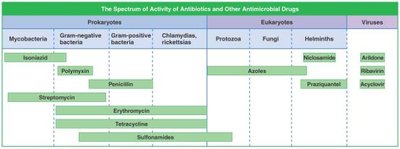
The effectiveness of antimicrobial drugs depends on their ability to target unique features of pathogens. Antibacterial drugs are the most numerous, while fewer options exist for eukaryotic infections and viruses due to similarities with host cells.
Selective toxicity: Drugs must kill pathogens without harming host cells.
Spectrum of action: Broad-spectrum drugs can affect a wide range of organisms but may disrupt normal flora, leading to secondary infections.
Mechanisms of Antimicrobial Action
Inhibition of Cell Wall Synthesis
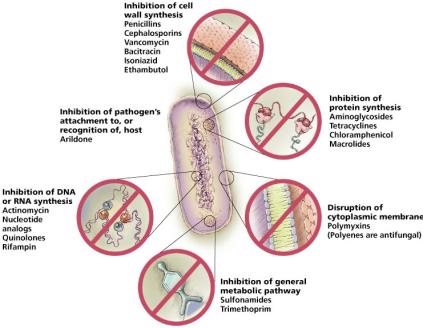
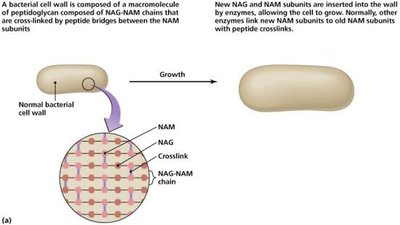
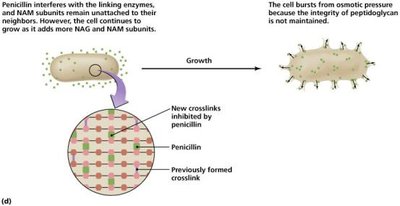
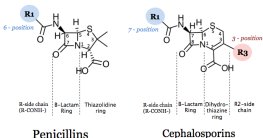
Drugs targeting cell wall synthesis are highly effective against bacteria, as animal cells lack cell walls. Beta-lactam antibiotics (e.g., penicillins, cephalosporins) prevent cross-linking of peptidoglycan, weakening the cell wall and causing lysis.
Effective only on actively growing cells.
Semisynthetic derivatives improve stability, absorption, and activity.
Inhibition of Protein Synthesis
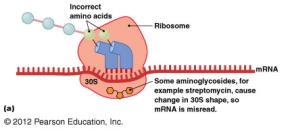
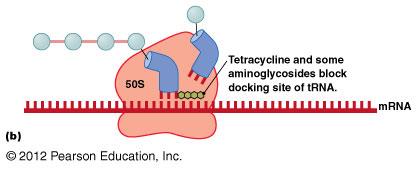
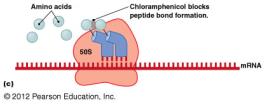
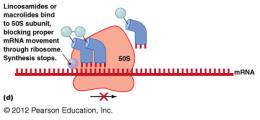
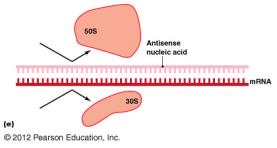
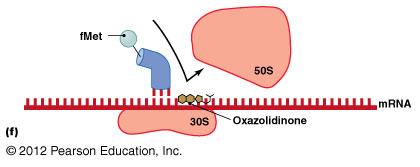
Protein synthesis inhibitors exploit differences between prokaryotic (70S) and eukaryotic (80S) ribosomes. However, mitochondria in eukaryotes contain 70S ribosomes, so some drugs may have side effects.
Aminoglycosides (e.g., streptomycin): Cause misreading of mRNA.
Tetracyclines: Block tRNA docking site.
Chloramphenicol: Inhibits peptide bond formation.
Macrolides (e.g., erythromycin): Block ribosome movement.
Antisense RNA: Prevents ribosome assembly.
Disruption of Cytoplasmic Membranes
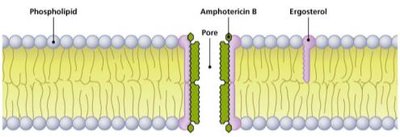
Some drugs, such as Amphotericin B, disrupt membrane integrity by binding to ergosterol in fungal membranes. Bacteria are not affected as they lack sterols.
Inhibition of Metabolic Pathways
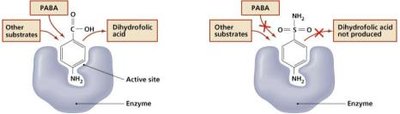
Antimetabolic agents target unique metabolic processes in pathogens. Sulfa drugs inhibit folic acid synthesis, essential for nucleotide biosynthesis.
Heavy metals inactivate enzymes.
Metabolic antagonists block enzyme activity.
Nucleic Acid Analogs
Nucleic acid analogs mimic normal nucleotides, causing premature termination of DNA or RNA synthesis. These are particularly effective against viruses with error-prone polymerases.
Acyclovir: Used for herpes.
Remdesivir: Used for COVID-19.
Retrovir: Used for HIV.
Inhibition of Viral Attachment and Release
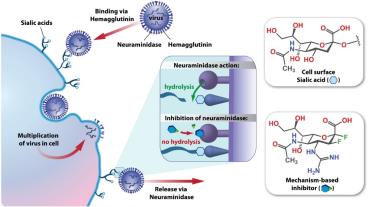
Drugs such as Relenza and Tamiflu inhibit neuraminidase, preventing the release of new influenza virions from host cells.
Efficacy and Administration of Antimicrobial Drugs
Testing Antimicrobial Efficacy
Several laboratory tests are used to determine the effectiveness of antimicrobial agents:
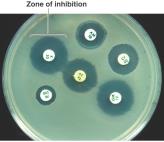
Disk-diffusion (Kirby-Bauer) test: Measures zone of inhibition.
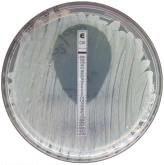
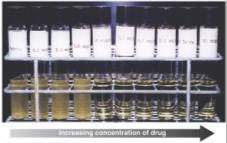
Minimum inhibitory concentration (MIC): Lowest concentration preventing growth.
Minimum bactericidal concentration (MBC): Lowest concentration killing bacteria.
Routes of Administration
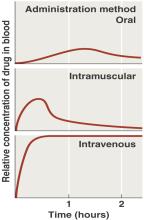
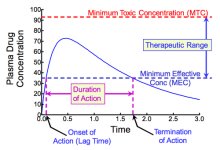
Antimicrobial drugs must reach the site of infection at concentrations above the MIC. Routes include topical, oral, intramuscular, and intravenous, each with different pharmacokinetics.
Topical: Direct application for external infections.
Oral: Convenient but relies on patient compliance.
Intramuscular (IM): Direct injection into muscle.
Intravenous (IV): Direct administration into bloodstream, fastest and highest concentration.
Safety, Side Effects, and Resistance
Safety and Side Effects
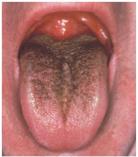
Antimicrobial drugs can cause toxicity, allergies, and disruption of normal flora. Examples include tetracycline-induced bone damage and overgrowth of Candida albicans or Clostridium difficile.
Development of Resistant Organisms
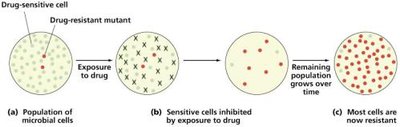
Bacteria acquire resistance through spontaneous mutations or horizontal gene transfer. Resistance becomes problematic when resistant microbes dominate the population, often due to improper drug use or overuse.
Bacterial Resistance Mechanisms
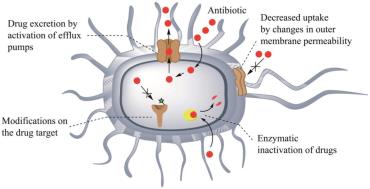
Bacteria employ several strategies to resist antimicrobial drugs:
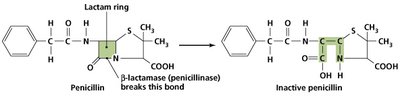
Production of enzymes (e.g., beta-lactamase) that inactivate drugs.
Prevention of drug entry by altering membrane proteins.
Modification of drug targets within the cell.
Alteration of metabolic pathways.
Efflux pumps expel drugs from the cell.
Methods for Retarding Resistance
Strategies to slow resistance include maintaining high drug concentrations, using drug combinations (synergism), limiting unnecessary use, and developing new drug variations.
Second- and third-generation drugs with novel side chains.
In extreme cases, anti-cancer drugs may be used.
Summary Table: Sources of Common Antibiotics
Microorganism | Antimicrobial |
|---|---|
Penicillium chrysogenum | Penicillin |
Penicillium griseofulvin | Griseofulvin |
Cephalosporium spp. | Cephalosporin |
Bacillus licheniformis | Bacitracin |
Bacillus polymyxa | Polymyxin |
Micromonospora purpurea | Gentamicin |
Pseudomonas fluorescens | Mupirocin |
Streptomyces griseus | Streptomycin |
Streptomyces fradiae | Neomycin |
Streptomyces aureofaciens | Tetracycline |
Streptomyces rimosus | Oxytetracycline |
Streptomyces venezuelae | Chloramphenicol |
Streptomyces erythreus | Erythromycin |
Streptomyces orientalis | Vancomycin |
Streptomyces nodosus | Amphotericin B |
Streptomyces avermitilis | Ivermectin |
Additional info: This study guide expands on lecture notes with academic context, definitions, and examples to ensure completeness and clarity for exam preparation.
