 Indietro
Controlling Microbial Growth in the Body: Antimicrobial Drugs and Resistance
Guida di studio - Note intelligenti
 Appunti personalizzati basati sui tuoi materiali, ampliati con definizioni chiave, esempi e contesto.
Controlling Microbial Growth in the Body
Introduction to Antimicrobial Control
Controlling microbial growth within the human body is essential for treating infectious diseases. Unlike external methods such as incineration, antimicrobial drugs are used internally to selectively target pathogens without harming the host. The principle of selective toxicity is fundamental, ensuring that drugs kill or inhibit microbes while minimizing damage to human cells.
History and Sources of Antimicrobial Agents
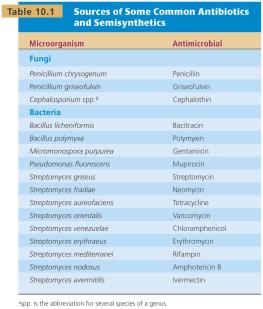
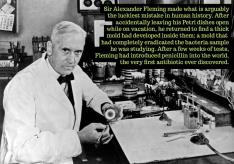
The development of antimicrobial agents revolutionized medicine, drastically reducing mortality from infectious diseases. Early agents include Salvarsan (arsphenamine) for syphilis, Penicillin for bacterial infections, and Sulfanilamide for inhibiting nucleotide synthesis. Most antimicrobials are secondary metabolites produced by fungi and bacteria, which naturally compete in their environments by producing these compounds.
Key Factors for Antimicrobial Action
The effectiveness of antimicrobial drugs depends on their ability to target unique features of pathogens. Antibacterial drugs are the most diverse, while fewer options exist for eukaryotic pathogens and viruses due to similarities with host cells.
Mechanisms of Antimicrobial Action
Inhibition of Cell Wall Synthesis
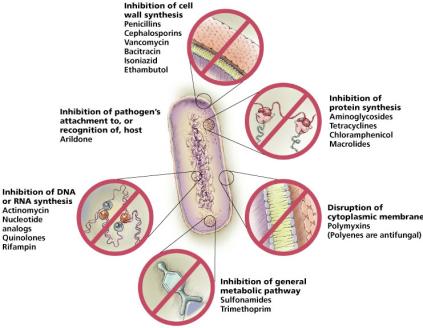
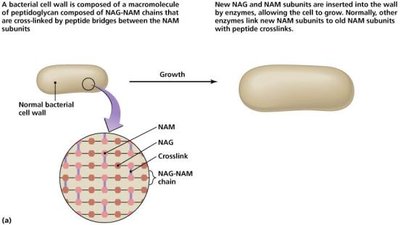
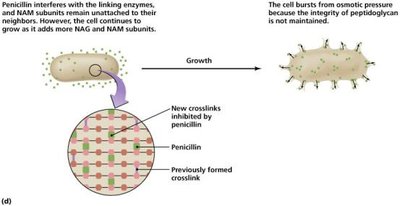
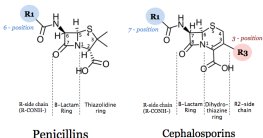
Drugs targeting cell wall synthesis exploit the presence of peptidoglycan in bacterial cell walls, which is absent in human cells. Beta-lactam antibiotics (e.g., penicillins, cephalosporins) prevent cross-linking of NAM (N-acetylmuramic acid) subunits, weakening the cell wall and causing lysis. These drugs are effective only on actively growing cells.
Beta-lactam ring: Functional group binding to enzymes that cross-link NAM subunits.
Semisynthetic derivatives: Improved stability, absorption, and broader activity.
Inhibition of Protein Synthesis
Targeting Ribosomes
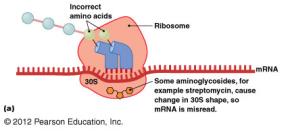
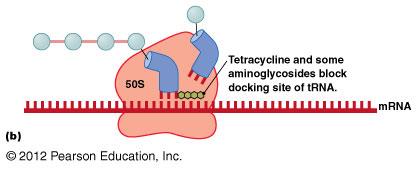
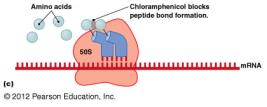
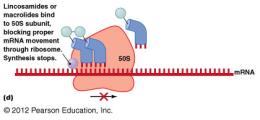
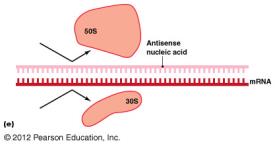
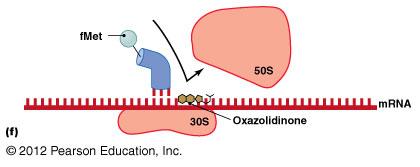
Prokaryotic ribosomes (70S) differ from eukaryotic ribosomes (80S), allowing selective inhibition of bacterial protein synthesis. However, mitochondria in eukaryotes also contain 70S ribosomes, which can lead to side effects.
Aminoglycosides (e.g., streptomycin): Cause misreading of mRNA.
Tetracyclines: Block tRNA docking site.
Chloramphenicol: Inhibits peptide bond formation.
Macrolides (e.g., erythromycin): Block ribosome movement.
Antisense RNA: Prevents ribosome assembly.
Disruption of Cytoplasmic Membranes
Membrane Integrity
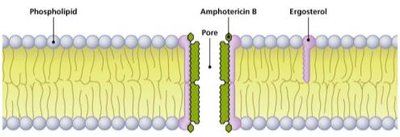
Some drugs, such as Amphotericin B, disrupt cytoplasmic membranes by binding to ergosterol in fungal cells, forming pores that lead to cell death. Human cells are less affected due to the presence of cholesterol instead of ergosterol.
Inhibition of Metabolic Pathways
Antimetabolic Agents
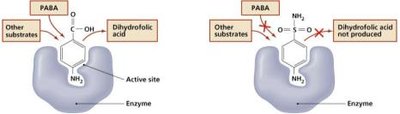
These drugs target differences in metabolic pathways between pathogens and hosts. Sulfa drugs inhibit the synthesis of folic acid, essential for nucleotide biosynthesis, by acting as competitive inhibitors.
Heavy metals inactivate enzymes.
Agents paralyze parasitic worms.
Drugs block viral activation.
Inhibition of Nucleic Acid Synthesis
Nucleic Acid Analogs
Nucleic acid analogs mimic normal nucleotides but lack essential atoms, causing premature termination of DNA or RNA synthesis. These are particularly effective against viruses with error-prone polymerases.
Acyclovir: Herpes medication.
Remdesivir: COVID-19 medication.
Retrovir: HIV medication.
Inhibition of Viral Attachment and Release
Neuraminidase Inhibitors
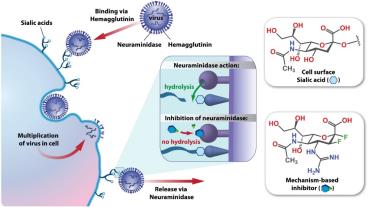
Drugs like Relenza and Tamiflu inhibit neuraminidase, preventing the release of new influenza virions from host cells by mimicking sialic acid and acting as competitive inhibitors.
Spectrum of Action
Broad vs. Narrow Spectrum
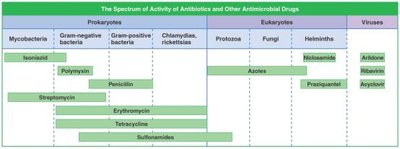
Antimicrobial drugs vary in their spectrum of activity. Broad-spectrum drugs target a wide range of organisms but may disrupt normal flora, leading to secondary infections. Narrow-spectrum drugs are more specific.
Efficacy of Antibacterial Agents
Testing Methods
Several laboratory tests assess the effectiveness of antimicrobial agents:
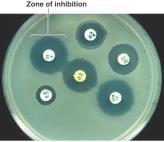
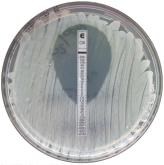
Disk-diffusion (Kirby-Bauer) test: Measures zone of inhibition around antibiotic disks.
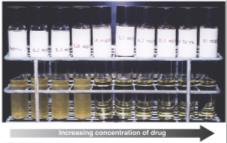
Minimum Inhibitory Concentration (MIC): Lowest concentration preventing growth.
Minimum Bactericidal Concentration (MBC): Lowest concentration killing bacteria.
Administration of Antimicrobial Drugs
Routes and Pharmacokinetics
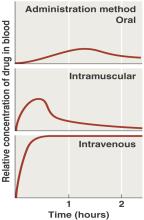
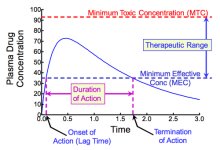
Drugs must reach the infection site at concentrations above the MIC. Administration routes include:
Topical: Direct application for external infections.
Oral: Convenient but relies on patient compliance.
Intramuscular (IM): Injection into muscle tissue.
Intravenous (IV): Direct administration into bloodstream for rapid, high concentrations.
Safety and Side Effects
Toxicity, Allergies, and Flora Disruption
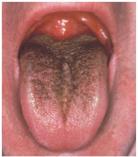
Antimicrobial drugs can cause side effects, including toxicity to organs, allergic reactions, and disruption of normal flora. Overgrowth of Candida albicans leads to yeast infections, while Clostridium difficile can cause pseudomembranous colitis.
Development of Resistant Organisms
Mechanisms of Resistance
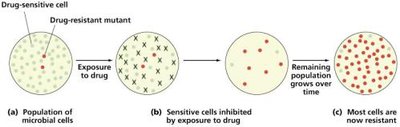
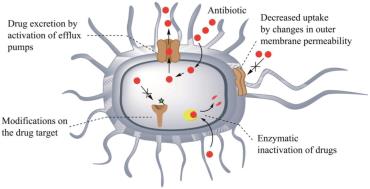
Bacteria acquire resistance through mutations or horizontal gene transfer. Resistance mechanisms include:
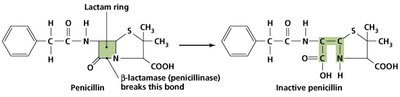
Enzyme production (e.g., beta-lactamase).
Prevention of drug entry.
Alteration of drug targets.
Metabolic pathway changes.
Efflux pumps expelling drugs.
Methods for Retarding Resistance
Strategies to Prevent Resistance
To slow resistance development:
Maintain high drug concentrations to kill all sensitive cells.
Use drug combinations (synergism).
Limit antimicrobial use to necessary cases.
Develop new drug variations (second- and third-generation drugs).
In extreme cases, use anti-cancer drugs.
Summary Table: Sources of Common Antibiotics
Microorganism | Antimicrobial |
|---|---|
Penicillium chrysogenum | Penicillin |
Penicillium griseofulvin | Griseofulvin |
Cephalosporium spp. | Cephalosporin |
Bacillus licheniformis | Bacitracin |
Bacillus polymyxa | Polymyxin |
Micromonospora purpurea | Gentamicin |
Pseudomonas fluorescens | Mupirocin |
Streptomyces griseus | Streptomycin |
Streptomyces fradiae | Neomycin |
Streptomyces aureofaciens | Tetracycline |
Streptomyces rimosus | Oxytetracycline |
Streptomyces venezuelae | Chloramphenicol |
Streptomyces erythreus | Erythromycin |
Streptomyces nodosus | Amphotericin B |
Streptomyces noursei | Nystatin |
