 Indietro
Disorders Associated with the Immune System: Hypersensitivity, Autoimmunity, Transplantation, and Immunodeficiency
Guida di studio - Note intelligenti
 Appunti personalizzati basati sui tuoi materiali, ampliati con definizioni chiave, esempi e contesto.
Disorders Associated with the Immune System
Overview
This chapter explores the various disorders that arise from abnormal immune responses, including hypersensitivity reactions, autoimmune diseases, complications in transplantation, and immunodeficiencies. Understanding these disorders is crucial for recognizing how the immune system can malfunction and the clinical implications of such dysfunctions.
Hypersensitivity Reactions
Definition and Classification
Hypersensitivity refers to antigenic responses that result in undesirable effects, often following prior sensitization to an antigen (allergen). There are four main types of hypersensitivity reactions, each with distinct mechanisms and clinical manifestations:
Type I (Anaphylactic)
Type II (Cytotoxic)
Type III (Immune Complex)
Type IV (Delayed Cell-Mediated)
The study of hypersensitivity reactions is called immunopathology. The hygiene hypothesis suggests that reduced exposure to pathogens may lower immune tolerance and increase susceptibility to allergies.
Type I (Anaphylactic) Reactions
Type I hypersensitivity occurs within minutes after re-exposure to an allergen. It involves IgE antibodies bound to mast cells and basophils, which degranulate and release mediators such as histamine, leukotrienes, and prostaglandins.
Histamine: Increases capillary permeability.
Leukotrienes: Cause prolonged smooth muscle contraction.
Prostaglandins: Affect smooth muscle and increase mucus secretion.
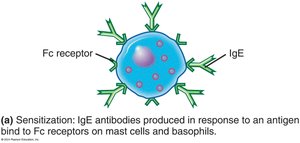
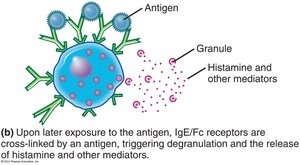
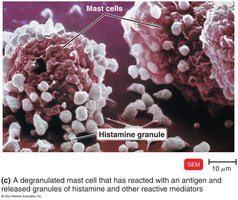
Systemic Anaphylaxis
Systemic exposure to allergens can cause anaphylactic shock, characterized by cardiovascular collapse and respiratory distress. Common triggers include injected antigens and bee stings. Treatment involves epinephrine administration.
Localized Anaphylaxis
Localized reactions are typically less severe and affect specific tissues, such as the respiratory tract (hay fever, asthma) or gastrointestinal tract (food allergies). Symptoms depend on the route of allergen entry.
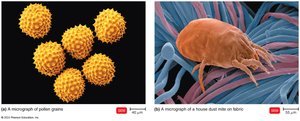
Food Allergies
Common food allergens include eggs, peanuts, tree nuts, milk, soy, fish, wheat, sesame, peas, and sulfites. Symptoms range from hives to gastrointestinal upset, and systemic anaphylaxis may occur in severe cases.
Prevention and Diagnosis
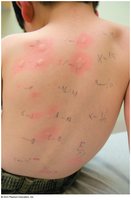
Allergy Testing: Involves inoculating antigens beneath the skin to observe for a rapid inflammatory reaction (wheal).
Desensitization: Gradual exposure to increasing doses of allergen to induce IgG production, which blocks allergen-IgE interaction.
Type II (Cytotoxic) Reactions
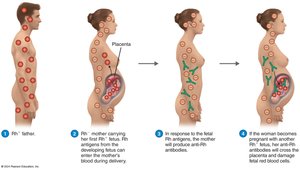
Type II reactions involve IgG or IgM antibodies binding to antigens on cell surfaces, activating complement and leading to cell lysis or damage. Classic examples include blood transfusion reactions and hemolytic disease of the newborn.
ABO Blood Group System: Antibodies form against A and/or B antigens on red blood cells (RBCs).
Rh Blood Group System: Rh-negative individuals can develop anti-Rh antibodies after exposure to Rh-positive blood, leading to hemolytic disease in subsequent pregnancies.
Drug-induced cytotoxic reactions include immune thrombocytopenic purpura (platelet destruction), agranulocytosis (granulocyte destruction), and hemolytic anemia (RBC destruction).
Type III (Immune Complex) Reactions
Type III hypersensitivity involves the formation of immune complexes between antibodies and soluble antigens. These complexes deposit in tissues, activate complement, and cause inflammation. Examples include the Arthus reaction and serum sickness.
Arthus Reaction: Localized tissue necrosis following injection of an antigen in a sensitized individual.
Serum Sickness: Systemic inflammation due to injection of foreign serum proteins.
Type IV (Delayed Cell-Mediated) Reactions
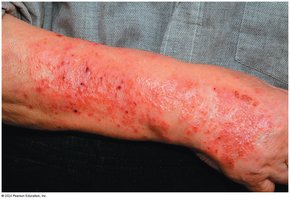
Type IV reactions are mediated by T cells and occur 24–48 hours after antigen exposure. Sensitization involves antigen presentation to T cells, and re-exposure leads to cytokine release and tissue damage.
Examples: Tuberculin skin test, allergic contact dermatitis (e.g., poison ivy, metals, latex).
Autoimmune Diseases
Overview and Mechanisms
Autoimmune diseases result from the immune system attacking self-antigens, leading to tissue and organ damage. Loss of self-tolerance can involve cytotoxic, immune complex, or cell-mediated mechanisms. Women are disproportionately affected.
Clonal Deletion: Normally eliminates self-reactive T cells in the thymus.
Autoimmunity: Failure of self-tolerance, leading to immune attack on the body's own tissues.
Cytotoxic Autoimmune Reactions
Multiple Sclerosis: Autoantibodies, T cells, and macrophages attack the myelin sheath of nerves, impairing nerve transmission. Symptoms range from mild weakness to severe paralysis.
Immune Complex Autoimmune Reactions
Systemic Lupus Erythematosus (SLE): Autoantibodies against DNA and other cellular components form immune complexes that deposit in tissues, especially the kidneys.
Rheumatoid Arthritis: Immune complexes deposit in joints, causing chronic inflammation and joint damage.
Graves’ Disease: Abnormal antibodies mimic TSH, overstimulating the thyroid gland.
Myasthenia Gravis: Antibodies block acetylcholine receptors at neuromuscular junctions, leading to muscle weakness.
Cell-Mediated Autoimmune Reactions
Insulin-Dependent Diabetes Mellitus (Type 1): T cells destroy insulin-producing beta cells in the pancreas.
Transplantation Immunology
Bone Marrow and Organ Transplants
Transplants can trigger immune responses against foreign tissues. Bone marrow (hematopoietic stem cell) transplants aim to restore healthy blood cell production but may cause graft-versus-host (GVH) disease if donor lymphocytes attack the recipient.
Umbilical Cord Blood: A rich source of stem cells with less stringent matching requirements.
Types of Grafts
Autograft: Tissue from the same individual.
Isograft: Tissue from an identical twin.
Allograft: Tissue from another person.
Xenotransplantation: Tissue from a different species (e.g., genetically modified pigs).
Immunosuppression
To prevent transplant rejection, immunosuppressive drugs are used:
Cyclosporine, Tacrolimus: Suppress IL-2, inhibiting cytotoxic T cells.
Sirolimus: Inhibits both cellular and humoral immunity.
Mycophenolate: Inhibits proliferation of T and B cells.
Basiliximab: Monoclonal antibody that blocks IL-2.
Immunodeficiencies
Types and Examples
Immunodeficiencies are characterized by an insufficient immune response. They can be congenital (genetic) or acquired (developed during life).
Congenital: Example: DiGeorge syndrome (absence of thymus, no cell-mediated immunity).
Acquired: Causes include drugs, cancers, and infections (e.g., HIV/AIDS).
Acquired Immunodeficiency Syndrome (AIDS)
Origin and Structure of HIV
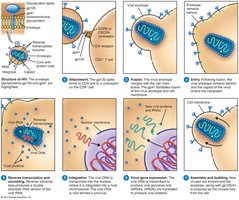
AIDS is caused by the Human Immunodeficiency Virus (HIV), a retrovirus of the genus Lentivirus. HIV contains two identical +ssRNA genomes, reverse transcriptase, integrase, and a phospholipid envelope with gp120 glycoprotein spikes.
Origin: HIV likely crossed into humans from chimpanzees (SIV) in Africa around 1908.
HIV Infection and Replication
HIV infects CD4+ T helper cells, macrophages, and dendritic cells. The virus attaches via gp120 to CD4 and a coreceptor (CCR5 or CXCR4), fuses with the cell, and releases its RNA. Reverse transcriptase synthesizes DNA from RNA, which is integrated into the host genome by integrase. The virus can remain latent or actively produce new virions.
Pathogenicity and Immune Evasion
HIV evades the immune system by remaining latent as a provirus, spreading via cell-cell fusion, and undergoing rapid antigenic variation.
HIV Disease Progression and Transmission
HIV Positive: Phases 1 and 2 (asymptomatic or mild symptoms).
AIDS: Phase 3 (severe immunodeficiency, opportunistic infections).
Transmission: Blood, semen, breast milk, transplacental, contaminated needles, organ transplants, and sexual contact.
Global Epidemiology
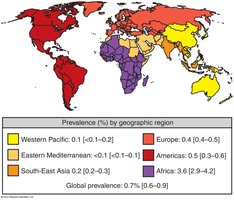
HIV/AIDS affects 38 million people worldwide, with the highest prevalence in Africa. Heterosexual transmission is the most common mode globally.
Prevention and Treatment
Biomedical Interventions: Condoms, HIV testing, needle exchange programs.
Behavioral Interventions: Sex education, counseling.
Structural Interventions: Addressing social and economic factors.
Highly Active Antiretroviral Therapy (HAART): Combination drug therapy to suppress viral replication and prevent resistance.
Preexposure (PrEP) and Postexposure (PEP) Prophylaxis: Drug regimens to prevent infection before or after exposure.
Challenges in HIV Vaccine Development
No natural immunity model exists.
Lack of suitable animal models.
HIV's high mutation rate and immune evasion strategies complicate vaccine design.
An ideal vaccine would induce immunity before latent reservoirs are established, stimulate cytotoxic T lymphocyte (CTL) production, and be affordable.
