 Indietro
Genetics and Molecular Biology: Microbial Genetics, DNA Structure, and Gene Expression
Guida di studio - Note intelligenti
 Appunti personalizzati basati sui tuoi materiali, ampliati con definizioni chiave, esempi e contesto.
Genetics: Foundations and Key Concepts
Gregor Mendel and the Principles of Heredity
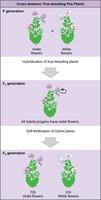
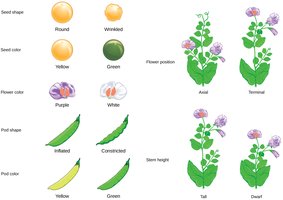
Gregor Mendel, known as the "Father of Modern Genetics," established the foundational principles of heredity through his experiments with pea plants. He observed and tracked heritable traits, demonstrating how genetic information is passed from one generation to the next.
Heritable Traits: Observable characteristics passed from parent to offspring.
Gene: A heritable unit of genetic material determining a particular trait.
Allele: Different versions of a gene.
Genotype: The genetic makeup of an organism.
Phenotype: The physiological and physical traits of an organism.
Genomes and Chromosomes
Genome Structure and Complexity
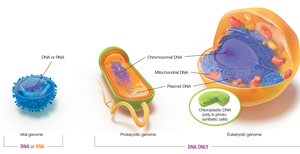
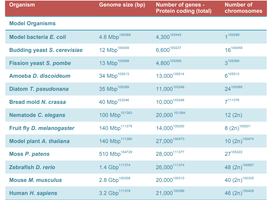
The genome is the entire collection of genetic material in a cell. Organisms vary in genome size, gene number, and chromosome count, with more complex organisms generally possessing more genes.
Genome: All genetic material in a cell.
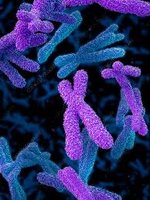
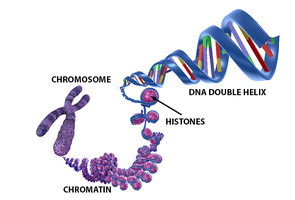
Chromosome: Packaged strands of DNA; number varies by organism.
Histones: Organizational proteins in eukaryotes; prokaryotes use "histone-like" proteins.
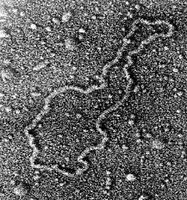
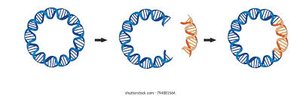
Plasmids: Extra-chromosomal DNA, often conferring survival advantages (e.g., antibiotic resistance).
Prokaryotic vs. Eukaryotic Genomes
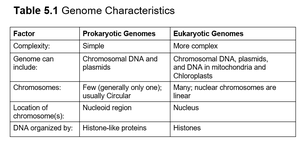
Prokaryotic and eukaryotic genomes differ in complexity, chromosome structure, and organization.
Factor | Prokaryotic Genomes | Eukaryotic Genomes |
|---|---|---|
Complexity | Simple | More complex |
Genome can include | Chromosomal DNA and plasmids | Chromosomal DNA, plasmids, and DNA in mitochondria and chloroplasts |
Chromosomes | Few (usually one); circular | Many; nuclear chromosomes are linear |
Location of chromosome(s) | Nucleoid region | Nucleus |
DNA organized by | Histone-like proteins | Histones |
DNA Structure and Function
Nucleic Acids: DNA and RNA
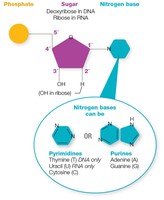
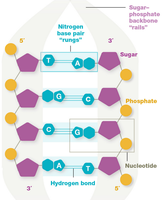
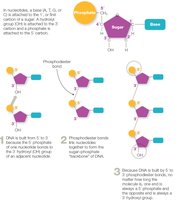
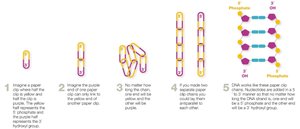
DNA and RNA are nucleic acids composed of nucleotides. Each nucleotide consists of a phosphate group, a sugar (deoxyribose in DNA, ribose in RNA), and a nitrogen base.
DNA: Deoxyribonucleic acid; contains deoxyribose sugar.
RNA: Ribonucleic acid; contains ribose sugar.
Nitrogen Bases: Adenine (A), Guanine (G), Cytosine (C), Thymine (T; DNA only), Uracil (U; RNA only).
DNA Double Helix and Base Pairing
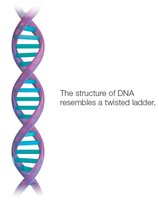
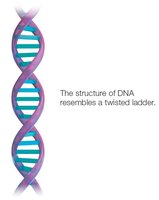
DNA is structured as a double helix, with "rungs" consisting of complementary nitrogen base pairs. The molecule is antiparallel and built in a 5’ to 3’ direction.
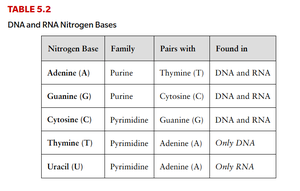
Base Pairing: A pairs with T, G pairs with C in DNA; A pairs with U in RNA.
Antiparallel: Two strands run in opposite directions.
Nitrogen Base | Family | Pairs with | Found in |
|---|---|---|---|
Adenine (A) | Purine | Thymine (T) | DNA and RNA |
Guanine (G) | Purine | Cytosine (C) | DNA and RNA |
Cytosine (C) | Pyrimidine | Guanine (G) | DNA and RNA |
Thymine (T) | Pyrimidine | Adenine (A) | Only DNA |
Uracil (U) | Pyrimidine | Adenine (A) | Only RNA |
Central Dogma: Flow of Genetic Information
Transcription and Translation
The central dogma describes the flow of genetic information: DNA is transcribed into RNA, which is then translated into protein. Reverse transcription can occur in some viruses, where RNA is used as a template to build DNA.
Transcription: DNA is copied into RNA.
Translation: RNA is used to synthesize proteins.
Reverse Transcription: RNA is used as a template to synthesize DNA (e.g., retroviruses).
DNA Replication
Mechanism and Enzymes
DNA replication allows cells to copy their DNA before division. The process is fast and accurate, involving several key enzymes.
Helicase: Unwinds DNA helix.
Primase: Builds RNA primers.
DNA Polymerase III: Main enzyme for DNA synthesis.
DNA Polymerase I: Replaces RNA primers with DNA.
Ligase: Seals nicks in the DNA backbone.
Gyrase/Topoisomerase: Relieves torsion stress.
Enzyme | Function |
|---|---|
Helicase | Unwinds DNA helix |
Primase | Builds RNA primers |
DNA polymerase III | Main enzyme for DNA synthesis |
DNA polymerase I | Replaces RNA primers with DNA |
Ligase | Seals nicks in DNA backbone |
Gyrase/Topoisomerase | Relieves torsion stress |
Gene Expression: Transcription and Translation
Transcription
Transcription is the process by which genes in DNA are copied into RNA. It consists of three main steps: initiation, elongation, and termination.
Initiation: RNA polymerase binds to the promoter region.
Elongation: RNA polymerase synthesizes RNA.
Termination: RNA synthesis ends at a terminator sequence.
Translation
Translation is the process by which ribosomes synthesize proteins using the information encoded in RNA. It also consists of initiation, elongation, and termination steps.
Initiation: Ribosome assembles at the start codon.
Elongation: Amino acids are added to the growing polypeptide chain.
Termination: Ribosome reaches a stop codon and releases the completed protein.
Regulation of Gene Expression
Pre-Transcriptional Regulation
Gene expression is regulated at multiple levels. Pre-transcriptional regulation controls how often transcription occurs, involving transcription factors, operons, epigenetics, and quorum sensing.
Transcription Factors: Proteins that bind to promoters and recruit RNA polymerase.
Operons: Collections of genes controlled by a shared regulatory element.
Epigenetics: Chemical modifications (e.g., DNA methylation) that regulate gene expression.
Quorum Sensing: Bacterial communication to alter gene expression based on population density.
Operon Type | Default State | Regulation |
|---|---|---|
Inducible | Off | Turned on by specific conditions (e.g., Lac operon) |
Repressible | On | Turned off when end product is available (e.g., arg operon) |
Post-Transcriptional Regulation
Post-transcriptional regulation determines how often mRNA is translated into protein. Mechanisms include small noncoding RNAs and riboswitches.
Small noncoding RNAs: Bind to mRNAs to limit protein synthesis.
Riboswitches: mRNAs with sensor regions that bind small molecules to control translation.
Mutations and Genetic Variation
Types of Mutations
Mutations are changes in genetic material. They can be spontaneous or induced, and are classified as substitution (point mutations), insertion (frameshift), or deletion (frameshift).
Substitution: Incorrect nucleotide replaces the correct one.
Insertion: Addition of one or more nucleotides.
Deletion: Removal of one or more nucleotides.
Frameshift: Most drastic changes, affecting reading frame.
Silent Mutation: Does not change amino acid sequence.
Reversion Mutation: Corrects a base-substitution mutation.
Mutagen Types
Chemical Mutagens: Organic/inorganic agents (e.g., arsenic, tobacco smoke).
Physical Mutagens: UV light, X-rays, gamma rays.
Biological Mutagens: Exchange of genetic material (e.g., viruses).
DNA Proofreading and Repair
Specialized enzymes maintain genome stability by excising damaged or mismatched nucleotides and replacing them with correct ones.
Genetic Variation Without Sexual Reproduction
Vertical vs. Horizontal Gene Transfer
Genetic information can be transferred vertically (parent to offspring) or horizontally (between cells independent of division). Horizontal gene transfer is prevalent in bacteria and includes plasmids, conjugation, transformation, transduction, and transposons.
Plasmids: Extra-chromosomal DNA, often carrying antibiotic resistance genes.
Conjugation: Transfer of DNA via pilus.
Transformation: Uptake of DNA from environment.
Transduction: Transfer of DNA by bacteriophages.
Transposons: "Jumping genes" that change position within the genome.
Example: R plasmids confer antibiotic resistance and can be shared among bacteria via horizontal gene transfer.
Additional info: This chapter provides foundational knowledge for microbial genetics, DNA structure, gene regulation, and mechanisms of genetic variation, all essential for understanding microbiology at the college level.
