 Indietro
Infection, Infectious Diseases, and Epidemiology: Foundations of Microbiology
Guida di studio - Note intelligenti
 Appunti personalizzati basati sui tuoi materiali, ampliati con definizioni chiave, esempi e contesto.
Introduction to Microbiology
Definition and Scope
Microbiology is the scientific study of microorganisms, which are organisms invisible to the naked eye. This field encompasses all single-celled microscopic organisms, including viruses (which are microscopic but not cellular), bacteria, fungi, and parasites. While the majority of microorganisms are harmless or beneficial, a small proportion are pathogenic and can cause disease in animals and plants.
Microorganisms: Organisms too small to be seen without a microscope.
Pathogens: Microorganisms that cause disease.
Importance: Microbes play essential roles in ecosystems, industry, and health, but also include agents of infectious diseases.
Example: Penicillium chrysogenum is the mold from which the antibiotic penicillin is produced, illustrating the beneficial applications of microbes.
Basic Microbial Structures
Major Groups of Microorganisms
The diversity of microorganisms is reflected in their size, complexity, and growth requirements. Understanding their structure is fundamental to microbiology.
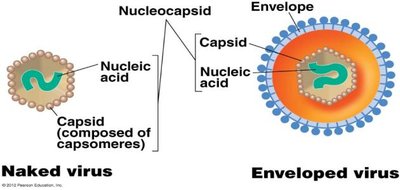
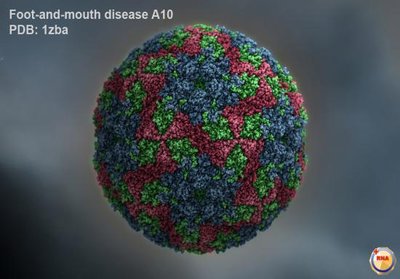
Viruses: Composed mainly of nucleic acids (DNA or RNA) and a protein shell (capsid). They require host cells for replication and can impair host cell function.
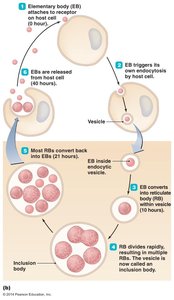
Chlamydia: More complex than viruses, these bacteria multiply only within living cells and have a unique life cycle with two forms: the infectious elementary body and the replicative reticulate body.
Mycoplasmas: The smallest self-replicating microbes, lacking a rigid cell wall, making them delicate. Mycoplasma pneumoniae causes atypical pneumonia.
Bacteria: Prokaryotes with a rigid cell wall, lacking membrane-bound organelles, and possessing a circular chromosome.
Eukaryotes: Organisms with genetic material enclosed in a nucleus. Infectious eukaryotes include fungi, protists, and worms.
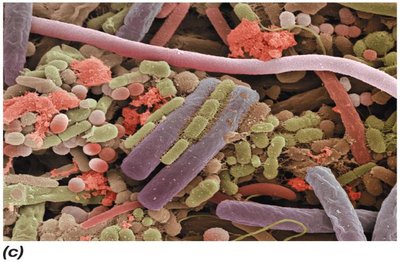
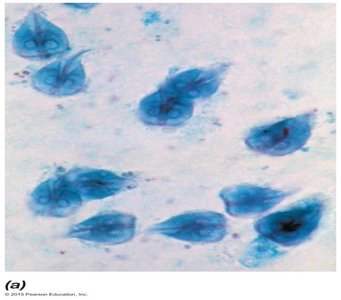
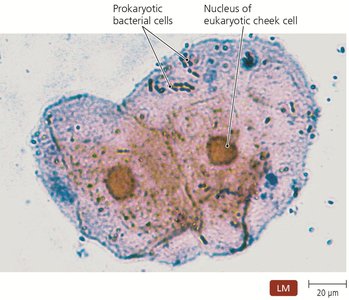
Example: Streptococcus bacteria (dark blue) can be seen alongside human cheek cells, highlighting the difference between prokaryotic and eukaryotic cells.
Symbiotic Relationships Between Microbes and Their Hosts
Types of Symbiosis
Symbiosis refers to the close association between different species. Humans have numerous symbiotic relationships with microorganisms, which can be classified as follows:
Mutualism: Both organisms benefit (e.g., bacteria in the human colon).
Commensalism: One benefits, the other is unaffected (e.g., mites in hair follicles).
Amensalism: One is harmed, the other is unaffected (e.g., fungus secreting antibiotics inhibiting bacteria).
Parasitism: One benefits at the expense of the other (e.g., Mycobacterium tuberculosis in human lungs).
Type | Organism 1 | Organism 2 | Example |
|---|---|---|---|
Mutualism | Benefits | Benefits | Bacteria in human colon |
Commensalism | Benefits | Neither benefits nor is harmed | Mites in hair follicles |
Amensalism | Is harmed | Neither benefits nor is harmed | Fungus secreting antibiotic |
Parasitism | Benefits | Is harmed | Tuberculosis bacteria in lungs |
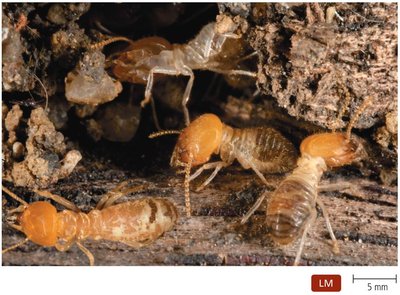
Example: Wood-eating termites depend on protozoa in their intestines to digest cellulose, an example of mutualism.
Human Microbiome
The microbiome refers to the collection of microorganisms that colonize the human body without causing disease under normal circumstances. These are also called normal microbiota or flora.
Resident microbiota: Permanent inhabitants, mostly commensal.
Transient microbiota: Temporary residents, unable to persist due to competition, immune response, or environmental changes.
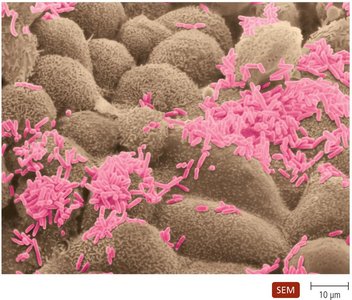
Example: The human intestine contains a vast community of resident microbiota, essential for health and digestion.
Opportunistic Pathogens
Normal microbiota can become opportunistic pathogens under certain conditions, such as immune suppression, introduction to unusual body sites, or changes in the normal microbiota.
Example: Escherichia coli is harmless in the gut but can cause infection if introduced into the urinary tract.
Reservoirs of Infectious Diseases of Humans
Types of Reservoirs
Reservoirs are sites where pathogens are maintained as sources of infection. There are three main types:
Animal reservoirs: Diseases naturally spread from animals to humans (zoonoses).
Human carriers: Asymptomatic individuals who can transmit pathogens.
Nonliving reservoirs: Soil, water, and food contaminated with pathogens.
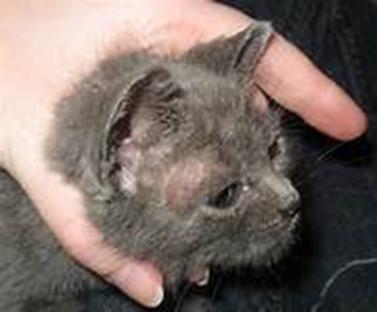
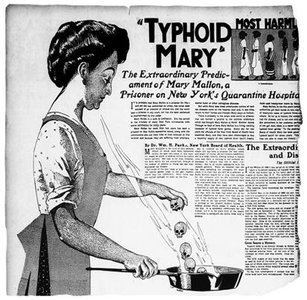
Example: "Typhoid Mary" was a famous human carrier who transmitted Salmonella typhi without showing symptoms herself.
Infection: The Invasion and Establishment of Microbes in Hosts
Contamination vs. Infection
Contamination is the mere presence of microbes on or in the body, while infection occurs when microbes evade external defenses, multiply, and become established.
Infection requires successful colonization and invasion of host tissues.
Portals of Entry
Pathogens enter the body through specific sites known as portals of entry:
Skin: Through cuts, openings, or by burrowing/digesting outer layers.
Mucous membranes: Lining body cavities open to the environment (e.g., respiratory, gastrointestinal tracts).
Placenta: Usually a barrier, but some pathogens can cross and infect the fetus.
Parenteral route: Circumvents normal portals by direct deposition into tissues (e.g., via needles, insect bites).
Adhesion
Adhesion is the process by which microorganisms attach to host cells, a critical step for colonization and infection. This involves specialized structures (fimbriae, pili) or molecules (adhesins, viral attachment proteins).
Attachment proteins determine host specificity.
Biofilms can form when bacteria attach to each other and surfaces.
Example: Neisseria gonorrhoeae uses fimbriae and pili for adherence to host tissues, facilitating infection.
The Nature of Infectious Disease
Manifestations of Disease
Symptoms: Subjective effects felt only by the patient (e.g., pain, fatigue).
Signs: Objective, measurable effects observed by others (e.g., fever, rash).
Syndrome: A group of symptoms and signs that characterize a disease.
Asymptomatic (subclinical) infections: No symptoms, but signs may be present.
Terminology of Disease
Prefix/Suffix | Meaning | Example |
|---|---|---|
carcino- | Cancer | Carcinogenic |
col-, colo- | Colon | Colitis |
dermato- | Skin | Dermatitis |
-emia | Pertaining to the blood | Viremia |
endo- | Inside | Endocarditis |
-gen, gen- | Give rise to | Pathogen |
hepat- | Liver | Hepatitis |
idio- | Unknown | Idiopathic |
-itis | Inflammation | Meningitis |
-oma | Tumor or swelling | Papilloma |
-osis | Condition of | Toxoplasmosis |
-patho, patho- | Abnormal | Pathology |
septi- | Rotting; pathogens present | Septicemia |
terato- | Defects | Teratogenic |
tox- | Poison | Toxin |
Categories of Diseases
Category | Description | Examples |
|---|---|---|
Hereditary | Genetic errors from parents | Sickle-cell anemia, Down syndrome |
Congenital | Defects present at birth | Fetal alcohol syndrome |
Degenerative | Result from aging | Renal failure |
Nutritional | Lack of essential nutrients | Rickets |
Endocrine | Hormonal imbalances | Addison’s disease |
Mental | Emotional/psychosomatic | Skin rash |
Immunological | Immune dysfunction | Allergies |
Neoplastic | Abnormal cell growth | Cancers |
Infectious | Caused by infectious agents | Colds, influenza |
Iatrogenic | Medical treatment/procedures | Surgical error |
Idiopathic | Unknown cause | Alzheimer’s disease |
Healthcare-Associated | Acquired in healthcare settings | Pseudomonas infection |
Causation of Disease: Etiology
Etiology is the study of the cause of disease. Infectious diseases are caused by infectious agents. Robert Koch developed a set of postulates to prove that a specific pathogen causes a specific disease, forming the basis of the germ theory of disease.
Some pathogens cannot be cultured in the lab.
Some diseases are caused by multiple pathogens or cofactors.
Ethical considerations may prevent testing in humans.
Virulence Factors of Infectious Agents
Pathogenicity and Virulence
Pathogenicity is the ability of a microorganism to cause disease, while virulence is the degree of pathogenicity. Virulence factors include adhesion factors, biofilms, extracellular enzymes, toxins, and antiphagocytic factors.
Virulence can be measured as LD50 (lethal dose-50): the number of cells required to kill 50% of test animals.
Virulence is influenced by pathogen, host, and environmental factors.
Extracellular Enzymes
Pathogens secrete extracellular enzymes that dissolve structural chemicals in the body, aiding in invasion and evasion of host defenses. Mutants lacking these enzymes are often avirulent.
Toxins
Toxins are chemicals produced by pathogens that harm tissues or trigger damaging immune responses. Toxemia refers to toxins in the bloodstream. There are two main types:
Exotoxins: Secreted proteins causing specific damage.
Endotoxins: Components of the outer membrane of Gram-negative bacteria (lipopolysaccharide, LPS) released upon cell death.
Example: Botulinum toxin (an exotoxin) produced by Clostridium botulinum causes botulism, a severe paralytic disease.
Additional info: This guide covers foundational concepts in microbiology, focusing on infection, infectious diseases, and epidemiology, and is suitable for college-level study and exam preparation.
