 Indietro
Introduction to Medical Microbiology: The Microbial World and You
Guida di studio - Note intelligenti
 Appunti personalizzati basati sui tuoi materiali, ampliati con definizioni chiave, esempi e contesto.
The Microbial World and You
Microbes in Our Lives
Microorganisms, or microbes, are ubiquitous and play essential roles in various ecological and industrial processes. While only a minority are pathogenic, microbes are involved in food spoilage, decomposition of organic waste, nitrogen fixation, oxygen generation, and the production of numerous chemical and food products.
Pathogenic microbes: Cause infectious diseases.
Beneficial microbes: Decompose waste, produce oxygen, and are used in industry (e.g., production of ethanol, acetone, vitamins, antibiotics).
Fermented foods: Microbes are used to produce vinegar, cheese, yogurt, alcoholic beverages, and bread.
The Human Microbiome
The human microbiome refers to the collection of microbes living stably on and within the human body. These microbes outnumber human cells and are acquired before birth, with some colonizing the body permanently and others transiently.
Microbiota: Help maintain health, prevent pathogenic growth, and train the immune system.
Transient microbiota: Microbes that colonize the body temporarily.
Classification of Microorganisms
Three Domains of Life
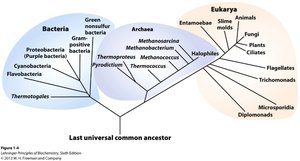
Microorganisms are classified into three domains based on cellular organization, as proposed by Carl Woese in 1978: Bacteria, Archaea, and Eukarya (including protists, fungi, plants, and animals).
Bacteria: Prokaryotic, diverse metabolic capabilities.
Archaea: Prokaryotic, often extremophiles.
Eukarya: Eukaryotic, includes protists, fungi, plants, and animals.
Types of Microorganisms
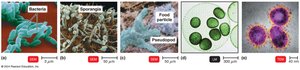
Bacteria
Fungi
Protozoans
Algae
Viruses
Infectious Diseases
Definition and Types
Infectious diseases result from the invasion of the body by pathogenic microorganisms. The study of medical microbiology focuses on diseases caused by bacteria, fungi, viruses, and protozoa, but also includes helminths and arthropods as important parasites and vectors.
Pathogens: Microbes that cause disease.
Infectious agents: Prions, viruses, bacteria, fungi, protozoa, helminths, arthropods.
History of Microbiology
First Observations
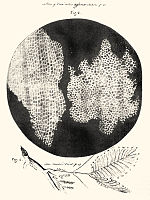
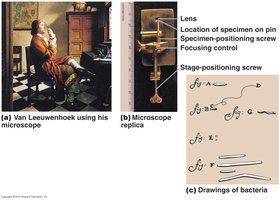
The field of microbiology began with the discovery of cells and microorganisms. Robert Hooke (1665) described cells, and Anton van Leeuwenhoek (1673-1723) observed microbes using a crude microscope.
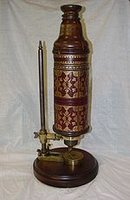
Spontaneous Generation Debate
Early scientists debated whether life could arise spontaneously from non-living matter (spontaneous generation) or only from pre-existing life (biogenesis).
Spontaneous generation: Hypothesis that life arises from non-living matter.
Biogenesis: Hypothesis that life arises from existing life.
Key Experiments
Francesco Redi (1668) conducted experiments with decaying meat to challenge spontaneous generation. Later, John Needham, Lazzaro Spallanzani, and Louis Pasteur contributed further evidence.
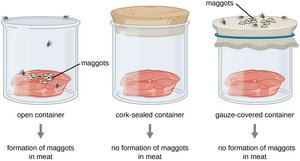
Pasteur's Experiments
Louis Pasteur's experiments with swan-necked flasks demonstrated that microorganisms are present in the air and do not spontaneously arise in sterilized broth, leading to the development of aseptic techniques.
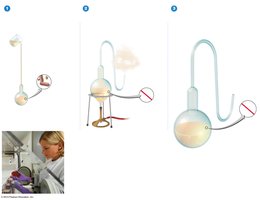

Milestones in Microbiology
First Golden Age
The first golden age of microbiology saw major discoveries, including the disproving of spontaneous generation, development of aseptic techniques, and identification of disease-causing microbes.
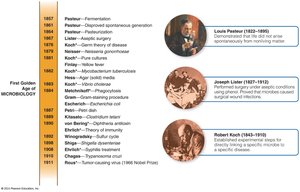
Second and Third Golden Age
The second era focused on treating diseases, with the discovery of antibiotics and synthetic drugs. The third era introduced molecular biology, genetic manipulation, and genomics.
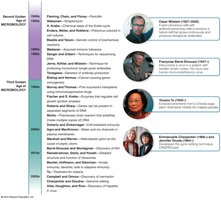
Major Subject Areas in Medical Microbiology
Subdivisions
Medical microbiology encompasses several subdivisions, including clinical microbiology, chemotherapy, microbial physiology, pathogenesis, ecology, biotechnology, immunology, and epidemiology.
Clinical microbiology: Study of medically important microorganisms.
Chemotherapy: Control of microorganisms using drugs.
Microbial pathogenesis: Host-pathogen interactions.
Microbial ecology: Microbiota and biofilms.
Biotechnology: Practical applications.
Immunology: Immunization, allergies, immunodeficiencies.
Epidemiology: Disease movement in populations.
Approaches to the Study of Infectious Diseases
Three Approaches
Infectious diseases can be studied using organismal, body systems, or ecological approaches.
Organismal approach: Focus on type of organism (bacteria, viruses, fungi, protozoa, helminths).
Body systems approach: Focus on body parts infected (skin, cardiovascular, respiratory, digestive, urinary, reproductive systems).
Ecological approach: Focus on route of infection (foodborne, waterborne, sexually transmitted, nosocomial, arthropod-borne).
Summary Table: Types of Microorganisms
Type | Cellular Organization | Domain | Pathogenicity |
|---|---|---|---|
Bacteria | Prokaryotic | Bacteria | Some pathogenic |
Archaea | Prokaryotic | Archaea | Rarely pathogenic |
Fungi | Eukaryotic | Eukarya | Some pathogenic |
Protozoa | Eukaryotic | Eukarya | Some pathogenic |
Algae | Eukaryotic | Eukarya | Non-pathogenic (some produce toxins) |
Viruses | Acellular | None | Many pathogenic |
Helminths | Eukaryotic | Eukarya | Pathogenic (parasitic) |
Arthropods | Eukaryotic | Eukarya | Vectors of pathogens |
Key Terms and Definitions
Microorganism: An organism too small to be seen with the unaided eye.
Pathogen: A microorganism that causes disease.
Microbiome: The collection of microbes living in and on the human body.
Aseptic technique: Procedures that prevent contamination by unwanted microorganisms.
Biogenesis: The principle that living organisms arise from pre-existing life.
Spontaneous generation: The hypothesis that life arises from non-living matter.
Important Individuals in Microbiology
Robert Hooke: First described cells.
Anton van Leeuwenhoek: First observed microbes.
Louis Pasteur: Disproved spontaneous generation, developed aseptic techniques.
Alexander Fleming: Discovered penicillin.
Paul Ehrlich: Developed the concept of the "magic bullet" for chemotherapy.
Formulas and Equations
Microbial population growth can be described mathematically:
Exponential growth equation:
Where: = number of cells at time t = initial number of cells = number of generations
Additional info: This equation is fundamental in understanding microbial growth dynamics.
----------------------------------------
