 Indietro
Introduction to Microbiology: History, Classification, and Importance of Microorganisms
Guida di studio - Note intelligenti
 Appunti personalizzati basati sui tuoi materiali, ampliati con definizioni chiave, esempi e contesto.
Introduction to Microbiology
Definition and Scope
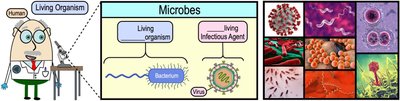
Microbiology is the scientific study of microbes, which includes both living organisms and infectious agents that are too small to be seen by the naked eye. The field encompasses a wide variety of entities, from unicellular organisms to acellular infectious agents.
Microorganisms: Living organisms too small to see unaided, including bacteria, archaea, fungi, algae, protozoa, and helminths.
Microbes: Includes microorganisms and non-living infectious agents (such as viruses, viroids, and prions).
History of Microbiology
Discovery of Microorganisms
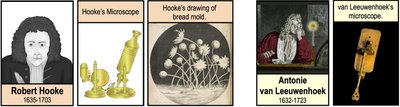
The existence of microorganisms was first revealed in the 17th century. Robert Hooke and Antonie van Leeuwenhoek were pivotal figures in this discovery.
Robert Hooke (1665): First to visualize and depict a microorganism (bread mold Mucor), describing it as a "microscopical mushroom."
Antonie van Leeuwenhoek (1674): Used a microscope to observe protozoa and bacteria, which he called "animalicules."
Both Hooke and Leeuwenhoek are credited with revealing the microbial world.
Classification of Microorganisms
Domains of Life
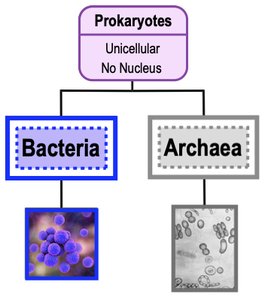
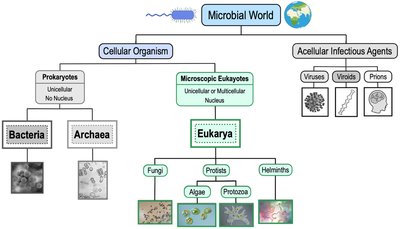
Microorganisms are classified into three domains: Bacteria, Archaea, and Eukarya. Each domain has distinct characteristics.
Bacteria: Unicellular, prokaryotic organisms without a nucleus. Major inhabitants of human bodies and the environment.
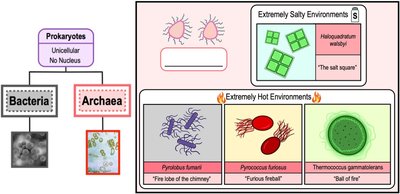
Archaea: Unicellular, prokaryotic organisms with unique rRNA sequences and cell walls lacking peptidoglycan. Known for thriving in extreme environments.
Eukarya: Organisms with membrane-bound nuclei, can be unicellular or multicellular. Includes plants, animals, fungi, and protists.
Bacteria
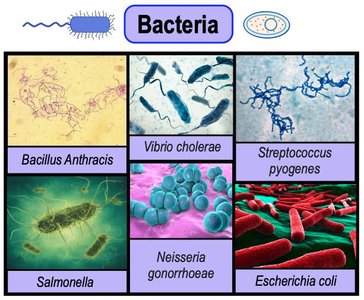
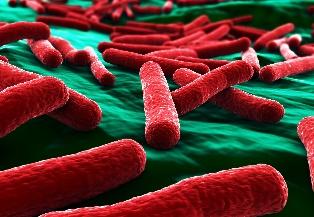
Bacteria are the most diverse and abundant group of organisms on Earth. They exhibit a variety of shapes and can divide by binary fission.
Examples: Bacillus anthracis, Vibrio cholerae, Streptococcus pyogenes, Salmonella, Neisseria gonorrhoeae, Escherichia coli.
Cell walls are typically made of peptidoglycan.
Archaea
Archaea are prokaryotes with unique features, such as cell walls without peptidoglycan and the ability to thrive in extreme environments (extremophiles).
Types of extremophiles: Halophiles (salt-loving), Thermophiles (heat-loving), Acidophiles (acid-loving), Alkaliphiles (alkali-loving).
Can also grow in moderate environments.
Eukarya
Eukaryotes possess a membrane-bound nucleus and include both unicellular and multicellular organisms. Microbiologists focus on microscopic eukaryotes such as fungi, algae, protozoa, and helminths.
Fungi: Range from unicellular yeasts to multicellular molds and mushrooms. Cell walls made of chitin; do not perform photosynthesis.
Protists: Includes algae (photosynthetic, cell walls of cellulose) and protozoa (unicellular, motile, lack cell walls).
Helminths: Parasitic worms; not technically microorganisms, but their eggs and larvae are microscopic.
Fungi
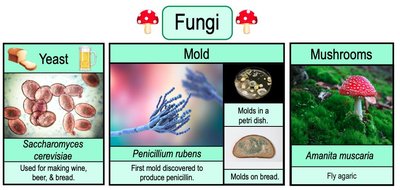
Yeast: Unicellular, used in fermentation (e.g., Saccharomyces cerevisiae).
Mold: Multicellular, filamentous, e.g., Penicillium rubens.
Mushrooms: Multicellular, e.g., Amanita muscaria.
Algae
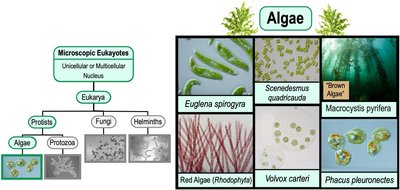
Photosynthetic eukaryotes, can be unicellular or multicellular.
Cell walls made of cellulose.
Examples: Euglena spirogyra, Scenedesmus quadricauda, Macrocystis pyrifera, Volvox carteri, Phacus pleuronectes.
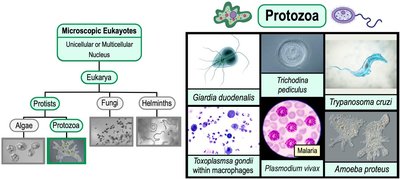
Protozoa
Unicellular, motile, ingest organic material, lack cell walls.
Examples: Giardia duodenalis, Trichodina pediculus, Trypanosoma cruzi, Toxoplasma gondii, Plasmodium vivax, Amoeba proteus.
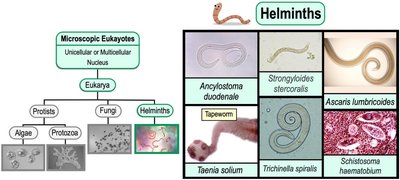
Helminths
Parasitic worms; eggs and larvae are microscopic.
Examples: Ancylostoma duodenale, Strongyloides stercoralis, Ascaris lumbricoides, Taenia solium, Trichinella spiralis, Schistosoma haematobium.
Acellular Infectious Agents
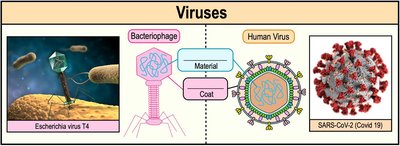
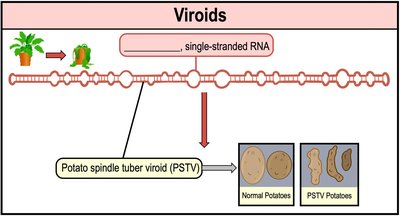
Acellular infectious agents are non-cellular and include viruses, viroids, and prions. They are not considered living but can infect living cells.
Viruses: Obligate intracellular parasites made of DNA or RNA in a protein coat, sometimes with a lipid envelope. Infect all forms of life.
Viroids: Infectious agents made of a single, short strand of RNA; only known to infect plants.
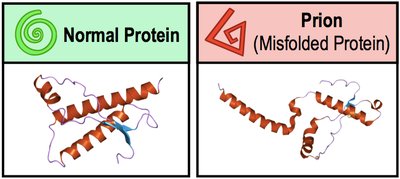
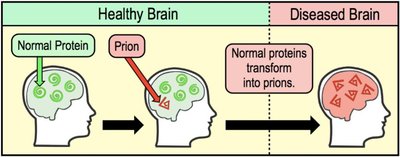
Prions: Infectious proteins that cause misfolding of normal proteins, leading to neurodegenerative diseases.
Importance of Microorganisms
Commercial Benefits
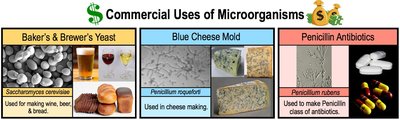
Microorganisms are used in various industries to produce valuable products, including food, beverages, antibiotics, and biofuels.
Examples: Baker's yeast (Saccharomyces cerevisiae), blue cheese mold (Penicillium roqueforti), penicillin antibiotics (Penicillium rubens).
Environmental Benefits
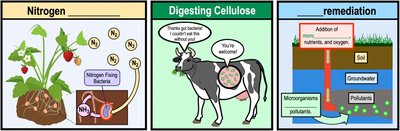
Microorganisms play essential roles in environmental processes such as nitrogen fixation, cellulose degradation, and bioremediation.
Nitrogen fixation: Conversion of atmospheric nitrogen (N2) into forms usable by plants.
Cellulose degradation: Breakdown of cellulose in animal guts and the environment.
Bioremediation: Use of microbes to degrade environmental pollutants.
Microorganisms as Research Tools
Microorganisms are used as model organisms in research due to their fundamental metabolic and genetic similarities to multicellular organisms, rapid growth, and ease of cultivation.
Examples: Escherichia coli (bacterium), Chlamydomonas reinhardtii (alga), Stentor coeruleus (protozoan), Schizosaccharomyces pombe (fungus).
Microorganisms in Health and Disease
Human bodies host trillions of microorganisms, collectively known as the normal microbiota or flora. These microbes play crucial roles in health by competing with pathogens and supporting bodily functions.
Normal microbiota: Beneficial microbes living on and in the human body.
Pathogens: Disease-causing microbes.
Human Microbiome Project: Research initiative to characterize human-associated microbes.
Scientific Method in Microbiology
Overview
The scientific method is a systematic procedure used to answer questions, test ideas, and build scientific knowledge. It involves observation, hypothesis formation, experimentation, data analysis, and conclusion.
Prediction: Expected outcome of an event.
Hypothesis: Proposed, testable explanation for an observation.
Theory: Testable hypothesis supported by extensive evidence.
Experimental Design
Experiments are designed to test hypotheses using variables and controls to ensure validity.
Independent variable: The factor manipulated by the scientist.
Dependent variable: The factor measured in response to changes in the independent variable.
Controls: Groups used to prevent false positives/negatives; include negative and positive controls.
Spontaneous Generation vs. Biogenesis
Historical Experiments
Spontaneous generation was the belief that life could arise from non-living matter. This was challenged and disproved by experiments from Redi, Needham, Spallanzani, and Pasteur.
Francesco Redi: Demonstrated that maggots only appear on meat when flies lay eggs, disproving spontaneous generation.
John Needham: Incorrectly supported spontaneous generation due to flawed experimental setup.
Lazzaro Spallanzani: Improved experimental design, showing that microbes do not spontaneously generate.
Louis Pasteur: Used swan-neck flasks to conclusively disprove spontaneous generation, showing that air carries microbes.
John Tyndall: Explained why Pasteur's results could not always be replicated, identifying heat-resistant microbes (endospores).
Summary Table: Microbial Classification
Domain/Agent | Cell Type | Key Features | Examples |
|---|---|---|---|
Bacteria | Prokaryotic | Unicellular, no nucleus, peptidoglycan cell wall | Escherichia coli, Bacillus anthracis |
Archaea | Prokaryotic | Unicellular, no nucleus, cell wall without peptidoglycan, extremophiles | Halobacterium, Pyrococcus furiosus |
Eukarya | Eukaryotic | Unicellular or multicellular, nucleus, includes fungi, protists, helminths | Saccharomyces cerevisiae, Giardia duodenalis, Taenia solium |
Viruses | Acellular | DNA or RNA in protein coat, obligate intracellular parasite | SARS-CoV-2, Bacteriophage T4 |
Viroids | Acellular | Single-stranded RNA, infects plants | Potato spindle tuber viroid |
Prions | Acellular | Misfolded proteins, cause neurodegenerative diseases | Scrapie, Creutzfeldt-Jakob disease |
Additional info: Some content was expanded for academic completeness, including definitions, examples, and context for experimental design and microbial classification.
