 Indietro
Introduction to Microbiology: The Microbial World and You
Guida di studio - Note intelligenti
 Appunti personalizzati basati sui tuoi materiali, ampliati con definizioni chiave, esempi e contesto.
Introduction to Microbiology
What are Microorganisms?
Microorganisms, or microbes, are tiny living entities that are typically invisible to the naked eye. They play essential roles in ecosystems, human health, and industry. The main groups of microorganisms include:
Bacteria
Fungi
Protozoa
Microscopic algae
Viruses
Microorganisms in Our Lives
Microbes are ubiquitous and have diverse roles in nature and human society:
Most are non-pathogenic (do not cause disease).
Act as decomposers breaking down organic matter.
Conduct photosynthesis, producing oxygen and carbohydrates.
Form the microbiome—the community of microbes living in and on the human body.
Serve as the basis of aquatic food webs.
Used in applied roles such as chemical production (ethanol, acetone, vitamins), food fermentation (vinegar, cheese, bread), biofactories (cellulase, insulin), and pest control.
The Microbiome
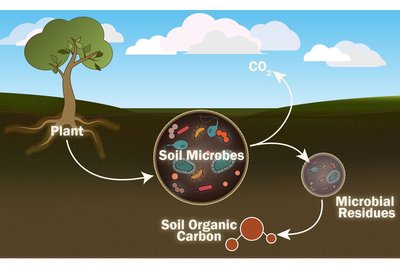
The microbiome refers to the group of microbes that live stably on or in the human body. These microbes:
Help maintain good health.
Prevent growth of pathogenic microbes.
May help train the immune system to recognize threats.
Normal microbiota are acquired before birth and may colonize the body indefinitely or transiently.
Major research initiatives include the Human Microbiome Project and the National Microbiome Initiative.
Naming Microorganisms
Microorganisms are named using binomial nomenclature developed by Carolus Linnaeus:
Each organism has two names: genus and species (specific epithet).
Names are italicized or underlined; genus is capitalized, species is lowercase.
Example: Escherichia coli (named after Theodor Escherich, found in the colon), Staphylococcus aureus (clustered, spherical, gold-colored colonies).
Types of Microorganisms
Bacteria
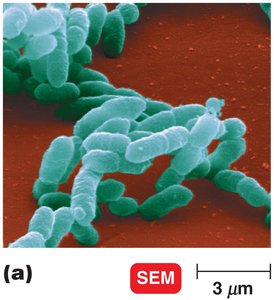
Bacteria are prokaryotes (cells without a nucleus):
Single-celled organisms.
Cell walls contain peptidoglycan.
Reproduce by binary fission.
Obtain nutrition from organic/inorganic chemicals or photosynthesis.
May possess flagella for movement.
Archaea
Archaea are also prokaryotes but differ from bacteria:
Lack peptidoglycan in cell walls; some lack cell walls entirely.
Often extremophiles (live in extreme environments).
Include methanogens, extreme halophiles, and extreme thermophiles.
Rarely pathogenic.
Fungi
Fungi are eukaryotic organisms (cells with a nucleus):
Cell walls contain chitin.
Absorb organic chemicals for energy.
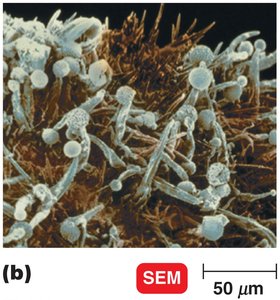
Include unicellular yeasts and multicellular molds and mushrooms.
Multicellular fungi form mycelia composed of hyphae.
Protozoa
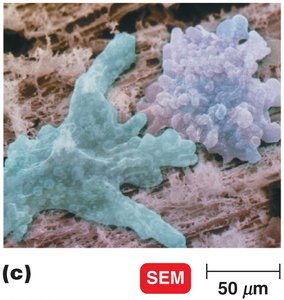
Protozoa are eukaryotic, mostly unicellular organisms:
Absorb or ingest organic chemicals.
Move by pseudopods, cilia, or flagella.
Can be free-living or parasitic; some are photosynthetic.
Reproduce sexually or asexually.

Algae
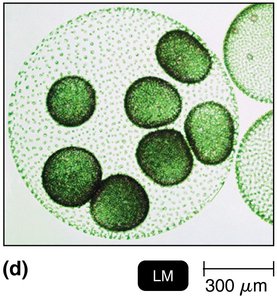
Algae are eukaryotic organisms found in aquatic and soil environments:
Cell walls contain cellulose.
Conduct photosynthesis, producing oxygen and carbohydrates.
Reproduce sexually and asexually.
Viruses
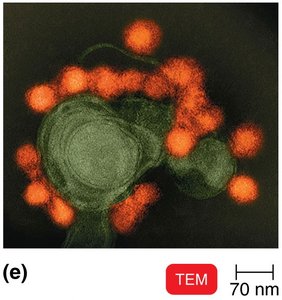
Viruses are acellular entities:
Consist of a DNA or RNA core surrounded by a protein coat.
Some have a lipid envelope.
Replicate only inside living host cells; inert outside hosts.
Multicellular Animal Parasites
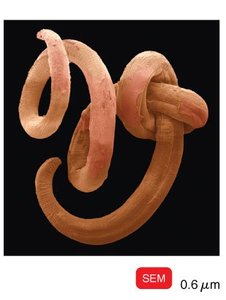
These are eukaryotic, multicellular organisms:
Include parasitic flatworms and roundworms (helminths).
Some have microscopic stages in their life cycles.
Classification of Microorganisms
Three-Domain System
Developed by Carl Woese in 1978, microorganisms are classified into three domains based on cellular organization:
Bacteria
Archaea
Eukarya (includes protists, fungi, plants, and animals)
History of Microbiology
The First Observations
Early discoveries laid the foundation for microbiology:
Robert Hooke (1665): Observed "cells"—beginning of cell theory.
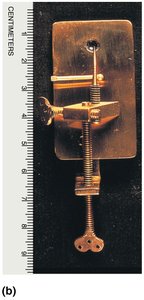
Anton van Leeuwenhoek (1623–1673): First to observe microbes ("animalcules").
Spontaneous Generation vs. Biogenesis
Debate over the origin of life:
Spontaneous generation: Life arises from nonliving matter; a "vital force" is needed.
Biogenesis: Living cells arise only from preexisting living cells.
Key experiments:
Francesco Redi (1668): Used jars with decaying meat to test for maggot formation.
John Needham (1745): Boiled nutrient broth in covered flasks.
Lazzaro Spallanzani (1765): Boiled nutrient solutions in sealed flasks.
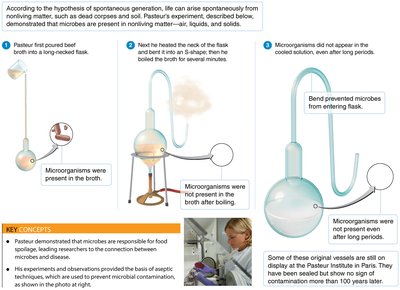
Louis Pasteur (1861): Demonstrated that microorganisms are present in the air and disproved spontaneous generation using swan-necked flasks.
The Golden Ages of Microbiology
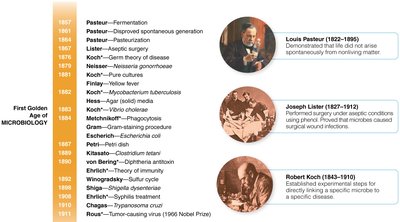
First Golden Age (1857–1914)
Major discoveries and developments:
Relationship between microbes and disease.
Role of immunity in preventing disease.
Studies of microbial chemical activities.
Improved microscopy and culturing methods.
First vaccines and aseptic techniques.
First use of chemotherapeutic drugs.
Pasteur and Fermentation
Louis Pasteur demonstrated that microbes cause fermentation and food spoilage:
Fermentation: Microbial conversion of sugar to alcohol in the absence of oxygen.
Bacteria using air spoil wine by turning it to vinegar (acetic acid).
Developed pasteurization: Application of high heat for a short time to kill harmful bacteria in beverages.
Germ Theory of Disease
The theory that microorganisms cause disease:
Bassi and Pasteur linked silkworm diseases to microbes.
Semmelweis advocated handwashing to prevent transmission of puerperal fever.
Joseph Lister used phenol to sanitize surgical wounds.
Robert Koch discovered the causative agent of anthrax and formulated Koch’s Postulates.
Vaccination
Edward Jenner (1796) inoculated a person with cowpox virus, conferring immunity to smallpox. The term "vaccination" is derived from the Latin "vacca" (cow).
Second Golden Age (1900s–1980s)
Advances in chemotherapy and molecular biology:
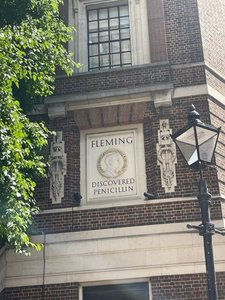
Development of synthetic drugs and antibiotics (e.g., penicillin by Fleming).
Discovery that genes encode enzymes (Beadle and Tatum).
Identification of DNA as hereditary material (Avery, MacLeod, McCarty).
Model of DNA structure (Watson and Crick).
Role of mRNA in protein synthesis (Jacob and Monod).
Branches of Microbiology
Major Fields
Bacteriology: Study of bacteria.
Mycology: Study of fungi.
Parasitology: Study of protozoa and parasitic worms.
Immunology: Study of immunity; includes vaccines and interferons.
Virology: Study of viruses.
Summary Table: Types of Microorganisms
Type | Cell Type | Cell Wall | Reproduction | Key Features |
|---|---|---|---|---|
Bacteria | Prokaryotic | Peptidoglycan | Binary fission | Flagella, diverse nutrition |
Archaea | Prokaryotic | No peptidoglycan | Binary fission | Extremophiles |
Fungi | Eukaryotic | Chitin | Sexual/asexual | Absorptive nutrition |
Protozoa | Eukaryotic | None | Sexual/asexual | Motility structures |
Algae | Eukaryotic | Cellulose | Sexual/asexual | Photosynthesis |
Viruses | Acellular | Protein coat | Host-dependent | DNA/RNA core |
Helminths | Eukaryotic | None | Complex life cycle | Multicellular parasites |
Key Equations and Concepts
Pasteurization
Pasteurization is a process used to kill harmful microbes in beverages:
Application of high heat for a short time.
Typical equation:
Binary Fission
Bacterial reproduction by binary fission:
One cell divides into two identical cells.
Equation for population growth: where is the final number of cells, is the initial number, and is the number of generations.
Koch's Postulates
The microorganism must be found in all organisms suffering from the disease, but not in healthy organisms.
The microorganism must be isolated and grown in pure culture.
The cultured microorganism should cause disease when introduced into a healthy organism.
The microorganism must be re-isolated from the experimentally infected host.
Conclusion
Microbiology is a foundational science that explores the diversity, roles, and impact of microorganisms. Understanding microbes is essential for advances in medicine, biotechnology, ecology, and public health.
