 Indietro
Introduction to Microbiology: The Microbial World and You
Guida di studio - Note intelligenti
 Appunti personalizzati basati sui tuoi materiali, ampliati con definizioni chiave, esempi e contesto.
Chapter 1: The Microbial World and You
What is a Microbe?
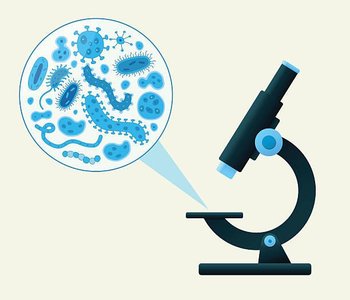
Microbes, or microorganisms, are living organisms that are too small to be seen with the unaided eye. They include bacteria, archaea, fungi, protozoa, algae, and viruses. Microbes are ubiquitous and play essential roles in ecosystems, industry, and human health.
Definition: Microbe = Microorganism (from Greek: 'mikros' = small, 'bios' = life)
Size: Most microbes are less than 100 μm in size, requiring a microscope for observation.
Examples: Bacteria, viruses, fungi, protozoa, algae.
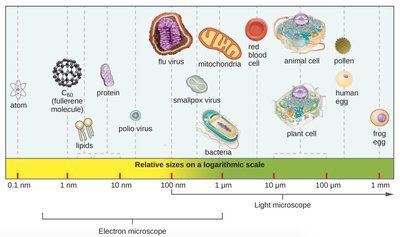
Relative Sizes of Microorganisms
The size of microorganisms varies greatly, from viruses (about 100 nm) to bacteria (~1 μm) to plant and animal cells (10–100 μm). Objects must be about 100 μm to be visible without a microscope.
Roles of Microbes
Microbes are essential to life on Earth and have diverse roles:
Pathogenicity: Less than 1% are pathogenic (disease-causing).
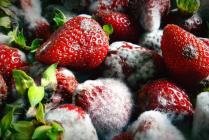
Food Spoilage: Some microbes cause food spoilage.
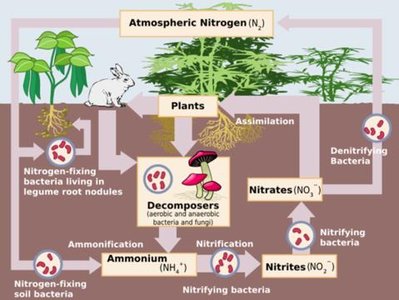
Ecological Importance: Basis of aquatic food chains, decomposers of organic waste, nitrogen fixation, and oxygen generation via photosynthesis.
Industrial Applications: Production of ethanol, acetone, vitamins, fermented foods (e.g., vinegar, cheese, yogurt, bread), and products for manufacturing and medicine (e.g., insulin).
The Microbiome
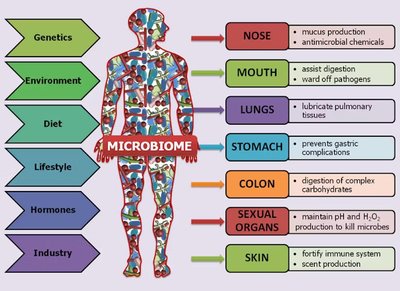
The microbiome refers to the collective genomes of the microorganisms (microbiota) that live in a particular environment, including the human body. It includes commensal, symbiotic, and pathogenic microorganisms.
Resident Microbiota: Microbes that colonize the body indefinitely.
Transient Microbiota: Microbes that colonize the body temporarily.
Acquisition: Begins before birth and continues throughout life.
Human Microbiome Project & National Microbiome Initiative
Major research initiatives have mapped the human microbiome and explored its role in health and disease:
Human Microbiome Project (2007–2016): Determined the makeup of typical microbiota in various body areas and studied links to disease.
National Microbiome Initiative (2016–): Explores the role of microbes in different ecosystems.
Functions of the Microbiome
The microbiome is crucial for:
Immune Development: Educates the immune system and provides resistance to pathogens.
Nutrition: Synthesizes vitamins (e.g., E. coli produces vitamin K2 and B12) and provides nutrients.
Behavior and Mental Health: Influences the nervous system and mental health via the gut-brain axis.
Microbiome and Diet
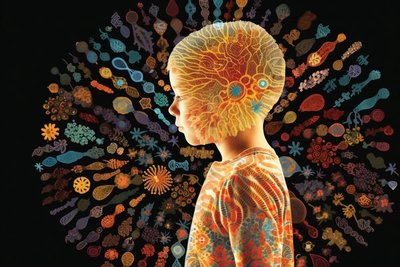
Diet significantly influences the composition and function of the microbiome. Westernized diets high in fat and low in fiber can negatively impact microbiome diversity and function, potentially contributing to diseases such as obesity.
Taxonomy and Classification of Microorganisms
Taxonomy: The Science of Classification
Taxonomy involves the classification, description, identification, and naming of living organisms. The modern system was established by Carolus Linnaeus in 1735, introducing hierarchical categories: Kingdom, Class, Order, Family, Genus, and Species.
Binomial Nomenclature: Each organism is given a two-part name: Genus (capitalized) and species (lowercase), both italicized (e.g., Escherichia coli).
Rules: Names must not be offensive, use only Latin alphabet letters, and may derive from any language.
Three Domains of Life
Carl Woese and George Fox (1970s) used ribosomal RNA (rRNA) to classify life into three domains:
Bacteria: Prokaryotic, ester-linked membrane lipids, 70S ribosomes.
Archaea: Prokaryotic, ether-linked membrane lipids, 70S ribosomes, unique rDNA.
Eukarya: Eukaryotic, linear chromosomes, 80S ribosomes, membrane-bound organelles.
Characteristic | Bacteria | Archaea | Eukarya |
|---|---|---|---|
Chromosome Structure | Usually circular | Usually circular | Usually linear |
Operons | Present | Present | Absent |
mRNA introns | Absent | Absent | Present |
Membrane lipids | Ester-linked | Ether-linked | Ester-linked |
Plasmids | Common | Occasional | Rare |
Ribosome Size | 70S | 70S | 80S |
Viruses: Not Part of the Tree of Life
Viruses are not classified within the three domains of life. They are acellular, have small and diverse genomes, and are not considered alive by most definitions.
History of Microbiology
The Theory of Spontaneous Generation
Spontaneous generation (abiogenesis) was the belief that living things could arise from nonliving matter. This idea was challenged and eventually disproven by experiments from scientists such as Francesco Redi, Lazzaro Spallanzani, and Louis Pasteur.
Redi's Experiment (1668): Showed that maggots only appeared in meat when flies could lay eggs, disproving spontaneous generation for larger organisms.
Spallanzani's Experiment (1760s): Demonstrated that boiling and sealing prevented microbial growth.
Pasteur's Swan-Neck Flask Experiment: Definitively disproved spontaneous generation for microbes.
Development of Cell Theory
Modern cell theory states:
All living organisms are composed of one or more cells.
The cell is the basic unit of structure and organization in organisms.
Cells arise from pre-existing cells.
Germ Theory of Disease
The germ theory states that diseases are caused by microorganisms. Key contributors include:
Girolamo Fracastoro: Proposed contagion by invisible particles.
John Snow: Traced cholera outbreaks to contaminated water.
Ignaz Semmelweis: Advocated handwashing to prevent disease transmission.
Joseph Lister: Introduced antiseptic techniques in surgery.
Robert Koch: Developed Koch's postulates for identifying disease-causing microbes.
Branches of Microbiology
Bacteriology: Study of bacteria.
Mycology: Study of fungi.
Protozoology: Study of protozoa.
Parasitology: Study of parasites.
Virology: Study of viruses.
Microbes in the Environment and Human Welfare
Microbial Ecology
Microbial ecology studies the relationship between microorganisms and their environment. Microbes recycle vital elements such as carbon, nitrogen, sulfur, and phosphorus, making them available to plants and animals.
Sewage Treatment and Bioremediation
Microbes are used to treat sewage and clean up pollutants (bioremediation). They degrade organic matter and detoxify harmful substances such as oil and mercury.
Insect Pest Control
Microbes pathogenic to insects (e.g., Bacillus thuringiensis) are used as biological alternatives to chemical pesticides.
Biotechnology and Recombinant DNA Technology
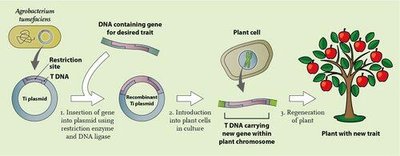
Microbes are used in biotechnology to produce foods, chemicals, proteins, vaccines, and enzymes. Recombinant DNA technology allows for the genetic modification of organisms for practical applications, including gene therapy and agriculture.
Microbes and Human Disease
Infection: Successful colonization of a host by a microorganism.
Pathogen: A microorganism that can cause disease.
Disease: A deviation from normal structure or function due to infection.
Diagnosis: Based on signs and symptoms, though many diseases have similar presentations.
Biofilms
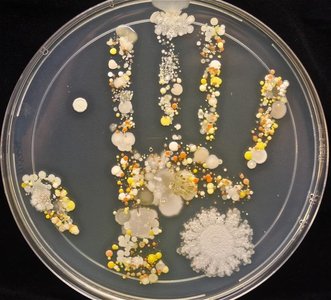
Biofilms are complex communities of microbes attached to surfaces. They can be beneficial (protecting mucous membranes, providing food in aquatic systems) or harmful (clogging pipes, causing infections, and increasing antibiotic resistance).
Emerging Infectious Diseases
New and increasing infectious diseases are driven by factors such as antibiotic resistance, global travel, and increased human exposure to new environments. Examples include coronaviruses, monkeypox, Zika virus, influenza, and Ebola virus.
Where Can You Find Microbes?
Microbes are ubiquitous, found in diverse environments such as deep in the earth's crust, polar ice caps, oceans, inside plants and animals, oil wells, and even clouds.
Summary Table: Major Groups of Microorganisms
Group | Cell Type | Examples | Key Features |
|---|---|---|---|
Bacteria | Prokaryotic | Escherichia coli | Single-celled, diverse metabolism |
Archaea | Prokaryotic | Halophiles, thermophiles | Unique membrane lipids, extremophiles |
Fungi | Eukaryotic | Yeasts, molds | Decomposers, cell walls of chitin |
Protozoa | Eukaryotic | Amoeba, Paramecium | Motile, diverse habitats |
Algae | Eukaryotic | Chlorella, diatoms | Photosynthetic, aquatic |
Viruses | Acellular | Influenza virus, HIV | Obligate intracellular parasites |
