 Indietro
Introduction to Microbiology: The Microbial World and You
Guida di studio - Note intelligenti
 Appunti personalizzati basati sui tuoi materiali, ampliati con definizioni chiave, esempi e contesto.
Introduction to Microbiology
Definition and Importance of Microorganisms
Microorganisms, or microbes, are living entities that are too small to be seen with the unaided eye. They are essential for life on Earth, playing critical roles in the food chain, maintaining chemical and biological balance, and supporting commercial applications such as fermentation and biotechnology.
Microorganisms: Include bacteria, archaea, fungi, protozoa, algae, viruses, and parasitic worms.
Human Microbiome: The human body contains approximately 30 trillion human cells and about 40 trillion bacterial cells.
Normal Microbiota: Microbes that reside permanently in the body without causing disease.
Transient Microbiota: Microbes that are present temporarily.
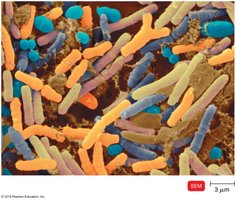
Classification of Microorganisms
Microorganisms are classified into three major domains: Bacteria, Archaea, and Eukarya. Viruses are acellular and are not classified within these domains.
Prokaryotes: Bacteria and Archaea; lack membrane-bound nucleus.
Eukaryotes: Fungi, protozoa, algae, and parasitic worms; have membrane-bound nucleus.
Viruses: Acellular entities composed of genetic material and protein coat.
Nomenclature
Scientific names of microorganisms follow binomial nomenclature:
Genus species (italicized; Genus capitalized, species lowercase). Example: Escherichia coli
Abbreviation: E. coli
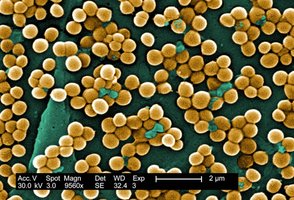
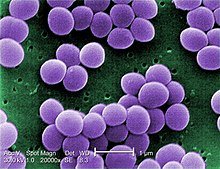
Names often describe characteristics (e.g., Staphylococcus aureus: staphylo = cluster, coccus = spherical, aureus = golden color).
Bacteria
Characteristics and Shapes
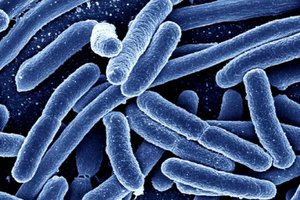
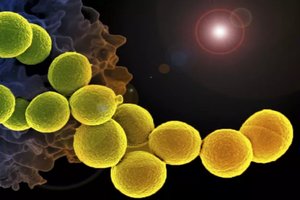
Bacteria are unicellular prokaryotes with a rigid cell wall made of peptidoglycan. They exhibit various shapes and arrangements:
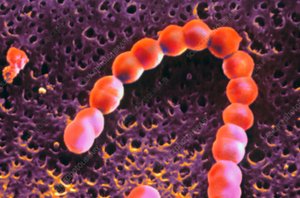
Bacillus: Rod-shaped
Coccus: Spherical
Spiral: Corkscrew-shaped
Strepto-: Chains
Staphylo-: Clusters
Archaea
Characteristics and Types
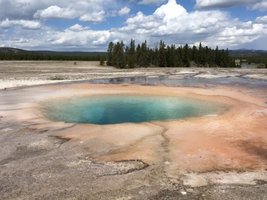
Archaea are unicellular prokaryotes that may have a cell wall, but it is not made of peptidoglycan. They are often found in extreme environments and are classified into three main groups:
Methanogens: Produce methane as a waste product.
Extreme Halophiles: Thrive in highly salty environments.
Extreme Thermophiles: Live at very high temperatures.

Eukaryotic Microorganisms
Protozoa, Fungi, Algae, and Parasitic Worms
Eukaryotes possess a distinct nucleus containing genetic material.
Protozoa: Unicellular, often motile (e.g., amoebas).
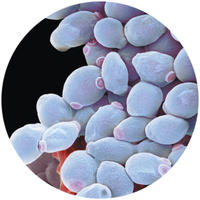
Fungi: Uni- (yeast) or multi- (molds) cellular; cannot photosynthesize.
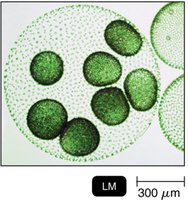
Algae: Uni- or multi-cellular; capable of photosynthesis.
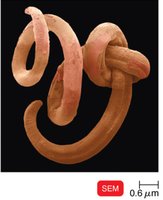
Parasitic worms: Multicellular eukaryotes.
Viruses
Structure and Properties
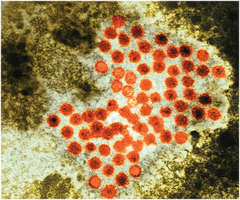
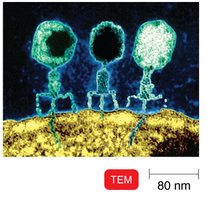
Viruses are acellular, consisting of a protein coat and genetic material. They are parasitic, relying on host cells for replication.
Cannot survive outside a host.
Capable of infecting and replicating within host cells.
Debate exists on whether viruses are living or non-living.
History of Microbiology
Key Figures and Concepts
Robert Hooke: Introduced the concept of the "cell"; Cell Theory states all living things are composed of cells.
Anton van Leeuwenhoek: First to observe microbes under a microscope, described as "animalcules".
Spontaneous Generation vs Biogenesis: Spontaneous generation posited that life arises from nonliving matter; biogenesis states that living cells arise only from preexisting cells.
Louis Pasteur: Disproved spontaneous generation, established causal relationship between microbes and disease (Germ Theory).
Joseph Lister: Applied germ theory to surgery, reducing infection with phenol.
Koch’s Postulates: Criteria to establish a causal relationship between a microbe and a disease.
Advances in Microbiology
Fermentation, Pasteurization, Vaccination
Fermentation: Yeast converts sugar to alcohol.
Pasteurization: Heating process to kill bacteria.
Vaccination: Inoculation with avirulent strains to induce immunity.
Birth of Modern Medicine
Chemotherapy: Use of chemicals to treat disease.
Antibiotics: Produced by bacteria or fungi to act against other microbes; now often synthetic.
Problems: Toxicity and antibiotic resistance.
Branches of Microbiology
Bacteriology: Study of bacteria.
Mycology: Study of fungi.
Parasitology: Study of parasites.
Immunology: Study of immune system.
Virology: Study of viruses.
Benefits of Microorganisms
Recycling vital elements: Decomposition and nutrient cycling.
Treat sewage & clean up toxic wastes: Bioremediation.
Control insects and pests: Biological control.
Recombinant DNA Technology: Production of food, chemicals, genetically modified foods, and gene therapy.
Microbes and Human Disease
Factors and Emerging Diseases
Biofilms: Microbial communities that can contribute to disease.
Host resistance: Determines susceptibility to infection.
Emerging infectious diseases: New or changing diseases with increasing incidence.
----------------------------------------
