 Indietro
Introduction to Microbiology: The Microbial World and Microscopy
Guida di studio - Note intelligenti
 Appunti personalizzati basati sui tuoi materiali, ampliati con definizioni chiave, esempi e contesto.
Introduction to Microbiology
Definition and Scope
Microbiology is the scientific study of organisms that are too small to be seen with the naked eye, known as microorganisms or microbes. These include bacteria, archaea, viruses, fungi, algae, and protozoa. Microorganisms are fundamental to life on Earth, influencing human health, environmental processes, and industrial applications.
Microorganisms are highly diverse in form and function.
They inhabit every environment that supports life, from soil and water to extreme environments.
Many are single-celled, but some form complex multicellular structures.
Microbes are the oldest form of life and constitute a major fraction of Earth's biomass.
Significance of Microorganisms
Impact on Human Society and the Environment
Microorganisms have profound effects on human society and the environment. They can cause diseases, decompose organic material, and play essential roles in nutrient cycling and biotechnology.
Pathogenicity: Some microbes cause illness and death in humans, animals, and plants.
Decomposition: Microbes break down organic matter, recycling nutrients in ecosystems.
Oxygen Production: Photosynthetic microorganisms, such as algae and cyanobacteria, produce a significant portion of atmospheric oxygen.
Nitrogen Fixation: Certain bacteria convert atmospheric nitrogen into forms usable by plants, supporting agriculture and ecosystem productivity.
Biotechnology: Microbes are used in the production of drugs, supplements, and in bioremediation (e.g., oil spill cleanup).




Major Groups of Microorganisms
Classification and Diversity
Microorganisms are classified into several major groups based on their cellular structure and evolutionary relationships. The three domains of life are Bacteria, Archaea, and Eukarya. In addition, non-living infectious agents such as viruses, viroids, and prions are studied in microbiology.
Bacteria: Prokaryotic, single-celled organisms found in diverse environments. They play roles in health, disease, and ecological processes.
Archaea: Prokaryotic, often found in extreme environments. Unlike bacteria, archaea have unique membrane lipids and genetic features. They are not known to cause disease in plants or animals.
Eukarya: Includes algae, fungi, and protists. These organisms have membrane-bound organelles and can be unicellular or multicellular.
Viruses: Non-living infectious agents that require host cells to replicate. They infect animals, plants, and even bacteria.

Examples of Microbial Groups
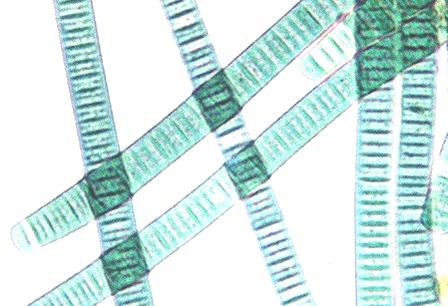
Algae: Photosynthetic eukaryotes that produce oxygen and serve as primary producers in aquatic ecosystems.
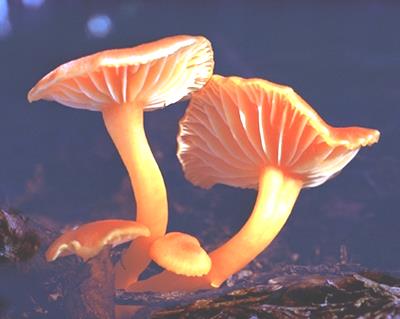
Fungi: Eukaryotic organisms important in medicine (e.g., penicillin production), industry (e.g., fermentation), and agriculture (e.g., plant pathogens).
Protists: Diverse group of eukaryotes, some of which cause diseases such as malaria.
Viruses: Cause diseases in all forms of life and are important tools in molecular biology.
Applications of Microorganisms
Industrial, Medical, and Environmental Uses
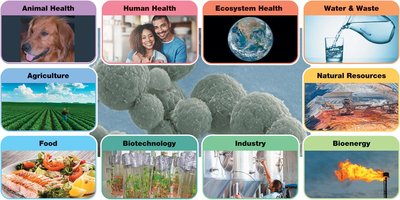
Microorganisms are utilized in a variety of applications that benefit society and the environment.
Fermentation: Used in the production of bread, beer, wine, and cheese.
Bioremediation: Microbes are employed to clean up environmental pollutants, such as oil spills.
Biosynthesis: Production of antibiotics, vaccines, and dietary supplements.
Model Organisms: Microbes serve as models for studying genetics, cell biology, and biochemistry.
Microscopy in Microbiology
Fundamentals of Microscopy
Microscopy is essential for studying microorganisms due to their small size. Microscopes magnify and resolve the fine details of microbial cells, enabling their observation and identification.
Magnification: The process of enlarging the appearance of an object.
Resolution: The ability to distinguish two closely spaced objects as separate entities. Resolution is limited by the wavelength of light or electrons used.
Refraction: Bending of light as it passes through different media, which is fundamental to lens-based magnification.
Types of Microscopy
Light Microscopy: Includes bright-field, phase-contrast, differential interference contrast, dark-field, and fluorescence microscopy. Most use visible light (400–700 nm).
Electron Microscopy: Uses electron beams with much shorter wavelengths (~0.005 nm), allowing for much higher resolution. Includes transmission electron microscopy (TEM) and scanning electron microscopy (SEM).
Staining Techniques
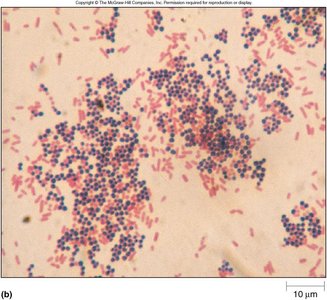
Staining enhances contrast in microscopic specimens, making cellular structures more visible. Common stains include Gram stain and acid-fast stain. Note that staining typically kills the microbes.
Recent Advances in Microscopy
Confocal Scanning Laser Microscopy (CSLM): Generates three-dimensional images by focusing a laser on single layers of the specimen.
Electron Cryotomography: A form of TEM used to obtain three-dimensional images of cells and their components.
Summary
Microbiology is a foundational biological science that explores the diversity, structure, function, and applications of microorganisms. Through microscopy and molecular techniques, scientists continue to uncover the vital roles microbes play in health, industry, and the environment.
