 Indietro
Introduction to Microbiology: The Microbial World and Its Impact
Guida di studio - Note intelligenti
 Appunti personalizzati basati sui tuoi materiali, ampliati con definizioni chiave, esempi e contesto.
The Microbial World
Definition and Diversity of Microorganisms
Microorganisms are organisms too small to be seen with the naked eye and are incredibly diverse. They include bacteria, fungi, protozoa, microscopic algae, and viruses. Some microorganisms are pathogenic, meaning they can cause disease in humans, animals, or plants.
Bacteria: Unicellular prokaryotes found in various environments.
Fungi: Includes yeasts and molds; some cause diseases like athlete’s foot (Trichophyton rubrum).
Protozoa: Unicellular eukaryotes, e.g., Plasmodium vivax causes malaria.
Microscopic algae: Photosynthetic organisms important for oxygen production.
Viruses: Acellular entities that require host cells to replicate.
Pathogen: A disease-causing microorganism.
Examples of Pathogens:
Trichophyton rubrum (fungus) – athlete’s foot
Streptococcus pyogenes (bacteria) – strep throat
Plasmodium vivax (protist) – malaria
Importance of Microbiology
Understanding microorganisms is crucial for:
Preventing food spoilage
Preventing and controlling disease
Understanding disease transmission and epidemics
Generating oxygen (e.g., in photobioreactors)
Managing waste and bioremediation
Producing chemical products (e.g., ethanol, acetone, vitamins)
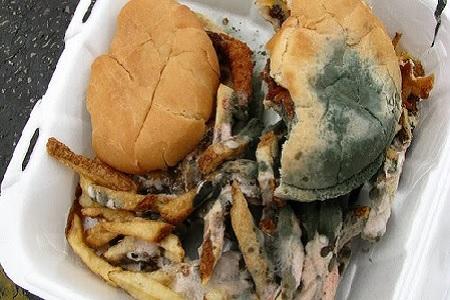
Image explanation: Spoiled food demonstrates the role of microorganisms in food spoilage, highlighting the importance of microbiology in food safety and preservation.
Microorganisms in Environmental and Industrial Processes
Oxygen Generation: Microalgae in photobioreactors convert CO2 and light into oxygen and biomass, which can be harvested for various products.
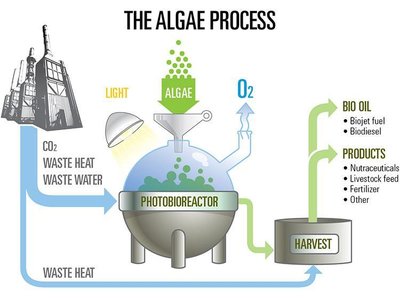
Image explanation: The diagram shows how photobioreactors use algae to convert waste CO2 and light into oxygen and valuable products, demonstrating the industrial application of microbiology.
Waste Management: Microorganisms play a key role in decomposing organic waste and treating sewage.

Image explanation: Wastewater treatment plants utilize microbial processes to break down organic matter, illustrating the environmental importance of microbes.
Bioremediation: Certain bacteria can degrade pollutants, such as oil spills, helping to clean up contaminated environments.
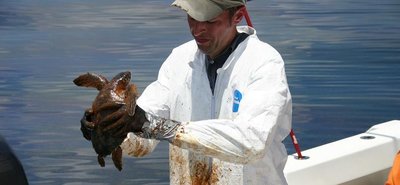
Image explanation: Bioremediation in action: Scientists use oil-eating bacteria to help clean up oil spills, such as the Deepwater Horizon disaster.
The History of Microbiology
Ancient Intuition and Fermentation
Long before the scientific understanding of microbes, humans used them in fermentation to produce and preserve foods and beverages such as vinegar, sauerkraut, pickles, alcoholic drinks, cheese, yogurt, and bread. These processes rely on the metabolic activities of bacteria and fungi.
Fermentation: The microbial conversion of sugars to acids, gases, or alcohol under anaerobic conditions.
Examples: Vinegar (acetic acid bacteria), sauerkraut (lactic acid bacteria), bread (yeast), cheese and yogurt (lactic acid bacteria).
Miasmas, Sanitation, and Early Theories of Disease
Before the germ theory, disease was attributed to 'miasmas' (bad air) or supernatural causes. Ancient Greeks and Romans built sanitation infrastructure based on these beliefs, such as aqueducts and sewers.
The Shift to Naturalism and the Invisible Hypothesis
Hippocrates and Thucydides promoted natural causes for disease and evidence-based reasoning. Marcus Terentius Varro and Avicenna speculated that invisible agents (microorganisms) could cause disease, and Fracastoro described modes of contagion (direct contact, fomites, air).
Visualization of Microbes
Robert Hooke (1665) observed cells in cork, and Anton van Leeuwenhoek (1670s) first observed 'animalcules' (microbes) with a microscope, laying the foundation for microbiology as a science.
Disproving Spontaneous Generation
Historical Experiments
Spontaneous generation was the belief that life could arise from nonliving matter. Key experiments challenged this idea:
Francesco Redi (1668): Showed that maggots only appeared in meat when flies could lay eggs on it.
John Needham (1745): Claimed microbes appeared in boiled broth, supporting spontaneous generation.
Lazzaro Spallanzani (1768): Showed that sealed, boiled broth did not develop microbes, supporting biogenesis.
Louis Pasteur (1861): Used swan-neck flasks to demonstrate that microbes come from the air, not spontaneous generation.
Biogenesis: The principle that living organisms arise from pre-existing life.
Modern Cell Theory
Development of Cell Theory
Modern cell theory states:
All living things are composed of one or more cells (Hooke, Schleiden, Schwann).
The cell is the basic unit of life (Schleiden, Schwann).
All cells arise from pre-existing cells (Remak, Virchow, Pasteur).
The Golden Age of Microbiology
Major Discoveries and Techniques
Between 1857 and 1914, microbiology advanced rapidly, led by Louis Pasteur and Robert Koch. Key developments included:
Aseptic Techniques: Methods to prevent contamination by unwanted microorganisms.
Fermentation and Pasteurization: Pasteur showed microbes cause fermentation and spoilage; pasteurization kills spoilage microbes without damaging products.
Germ Theory of Disease: The idea that specific microbes cause specific diseases.
Koch’s Postulates: Criteria to establish a causative relationship between a microbe and a disease.
Koch’s Postulates (Summarized in Table)
Step | Description |
|---|---|
1 | Microorganism must be found in all cases of the disease, absent from healthy organisms. |
2 | Microorganism must be isolated and grown in pure culture. |
3 | Culture must cause disease when introduced into a healthy host. |
4 | Microorganism must be reisolated from the experimentally infected host. |
Vaccination and Immunity
Edward Jenner developed the first vaccine (smallpox) by using cowpox virus. Vaccination provides immunity, the ability to resist infection. Modern vaccines, such as those for COVID-19, are based on these principles.
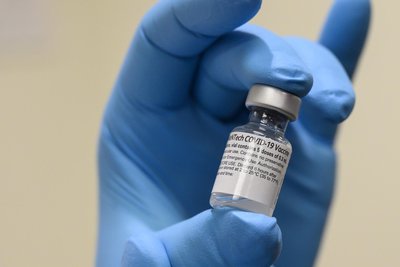
Image explanation: Vaccines are a direct application of microbiological principles to prevent infectious diseases by stimulating immunity.
Chemotherapy and Antibiotics
Chemotherapy refers to the use of chemicals to treat disease. Antibiotics are substances produced by microbes that inhibit or kill other microbes. The discovery of penicillin by Alexander Fleming revolutionized the treatment of bacterial infections.
Additional info: This guide covers foundational concepts from the first chapters of a college microbiology course, including the diversity and importance of microbes, the history of microbiology, the disproof of spontaneous generation, the development of cell theory, and the major discoveries of the Golden Age of Microbiology.
