 Indietro
Isolation and Identification of Enterobacteriaceae and Pseudomonas: Microbiology Lab Study Guide
Guida di studio - Note intelligenti
 Appunti personalizzati basati sui tuoi materiali, ampliati con definizioni chiave, esempi e contesto.
Isolation and Identification of Enterobacteriaceae and Pseudomonas
Overview
This study guide covers the laboratory procedures and principles for isolating and identifying pathogenic members of the family Enterobacteriaceae and the genus Pseudomonas. Both groups are gram-negative bacilli, and accurate identification requires biochemical testing beyond gram staining.
Enterobacteriaceae and Pseudomonas
General Characteristics
Gram-negative bacilli: Both groups are rod-shaped and stain pink with Gram stain.
Motility: If motile, Enterobacteriaceae possess peritrichous flagella.
Facultative anaerobes: Enterobacteriaceae can grow in both aerobic and anaerobic conditions.
Oxidase-negative: Enterobacteriaceae lack cytochrome oxidase.
Glucose fermentation: Enterobacteriaceae ferment glucose; Pseudomonas typically do not.
Nitrate reduction: Most Enterobacteriaceae reduce nitrates to nitrites.
Medically Important Genera
Strict pathogens: Salmonella, Shigella, some strains of Escherichia coli, some species of Yersinia.
Opportunistic pathogens: Escherichia coli, Proteus, Enterobacter, Klebsiella, Citrobacter, Serratia.
Glucose Non-Fermenting Gram-Negative Bacilli
Often found in soil and water.
Can cause infections in immunosuppressed individuals.
Pseudomonas aeruginosa: Most common opportunistic pathogen in this group; causes nosocomial infections.
Laboratory Identification Methods
Gram Staining Limitations
Gram staining alone cannot distinguish between Enterobacteriaceae and Pseudomonas, as both are gram-negative bacilli. Biochemical tests are required for accurate identification.
Oxidase Test
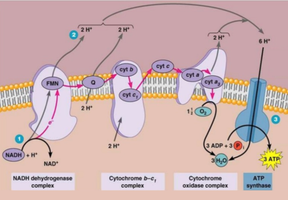
The oxidase test detects the presence of cytochrome oxidase, an enzyme involved in the electron transport chain. It distinguishes oxidase-positive Pseudomonas from oxidase-negative Enterobacteriaceae.
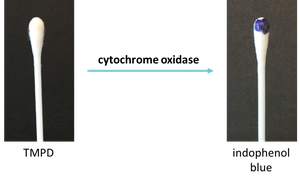
Principle: Cytochrome oxidase transfers electrons to oxygen. The test uses TMPD (tetramethyl phenylenediamine dihydrochloride) as a reagent.
Positive result: TMPD is oxidized to indophenol blue (dark blue/purple color).
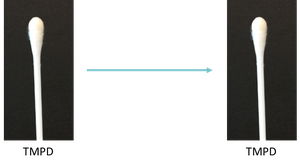
Negative result: No color change.
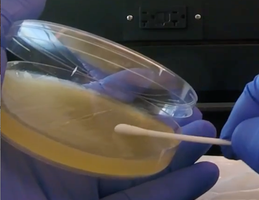
Procedure: Scrape bacterial growth onto an oxidase swab and observe for color change within 10 seconds.
Cetrimide Agar
Selective Medium for Pseudomonas
Cetrimide: Inhibits most bacteria except Pseudomonas species.
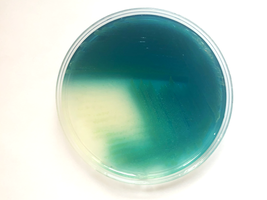
Pigment production: Pseudomonas aeruginosa produces pyoverdin (yellow/green fluorescent pigment) and pyocyanin (blue water-soluble pigment).
Odor: Fruity or grape-like aroma due to aminoacetophenone.
Typical results: Blue-green pigment and grape-like odor indicate Pseudomonas aeruginosa.
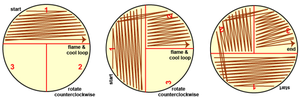
Streak Plate Technique
Used to inoculate cetrimide agar for isolation of pure colonies.
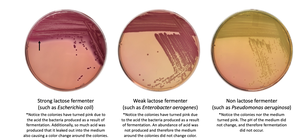
MacConkey Agar
Selective and Differential Medium
Selective: Inhibits gram-positive bacteria; isolates gram-negative bacilli.
Differential: Differentiates based on lactose fermentation.
Indicator: Neutral red turns pink/red when pH drops below 6.8 due to acid from lactose fermentation.
Interpretation: Growth indicates gram-negative organism. Pink color indicates lactose fermentation (Enterobacteriaceae); no color change indicates non-lactose fermenter (Pseudomonas).
EnteroPluri-Test
Multi-Test System for Enterobacteriaceae Identification
Structure: Compartmented tube with 12 agars and inoculating wire.
Tests: Performs 15 biochemical tests simultaneously.
Procedure: Inoculate tube, incubate, add reagents to specific compartments, interpret color changes.
Analysis: Results are combined into a code for species identification using a Computer Coding Identification System (CCIS).
Summary Table: Key Differences and Identification Methods
Feature | Enterobacteriaceae | Pseudomonas |
|---|---|---|
Gram Stain | Gram-negative bacilli | Gram-negative bacilli |
Glucose Fermentation | Ferment glucose | Do not ferment glucose |
Oxidase Test | Negative | Positive |
Cetrimide Agar | No growth | Growth with blue-green pigment |
MacConkey Agar | Growth; pink if lactose fermenter | Growth; no color change |
Key Terms and Definitions
Gram-negative: Bacteria with a thin peptidoglycan layer and outer membrane, stain pink with Gram stain.
Bacilli: Rod-shaped bacteria.
Facultative anaerobe: Organism that can grow with or without oxygen.
Oxidase test: Biochemical test for cytochrome oxidase enzyme.
Cetrimide agar: Selective medium for Pseudomonas.
MacConkey agar: Selective and differential medium for gram-negative bacilli and lactose fermentation.
EnteroPluri-Test: Multi-test system for rapid identification of Enterobacteriaceae.
Relevant Equations
Electron Transport Chain (ETC) and Cytochrome Oxidase:
Lactose Fermentation:
Examples and Applications
Clinical diagnosis: Identification of pathogens causing urinary tract infections, wound infections, pneumonia, and septicemia.
Hospital infection control: Detection of Pseudomonas aeruginosa in nosocomial settings.
Microbiological research: Use of selective and differential media for bacterial isolation and study.
Additional info: The EnteroPluri-Test is especially useful in clinical labs for rapid identification, reducing the need for multiple media and incubation spaces.
