 Indietro
Microbiology Lab 3 Study Guide
Guida di studio - Note intelligenti
 Appunti personalizzati basati sui tuoi materiali, ampliati con definizioni chiave, esempi e contesto.
Microbiology Laboratory Safety and Preparation
Lab Safety Protocols
Proper laboratory safety is essential to prevent contamination and ensure accurate results in microbiology experiments.
Personal Protective Equipment (PPE): Always wear a lab coat, gloves, and goggles. Dispose of used gloves in the red biohazard bin only.
Hand Hygiene: Wash hands before and after lab work.
Disinfection: Clean benchtops with Lysol before and after work.
Storage: Place lab coats and goggles in a ziplock bag and store them in the correct bin before leaving.
Obtaining Pure Cultures from Mixed Populations
Introduction to Pure Cultures
In nature, microorganisms exist as mixed populations. For study and identification, microbiologists must isolate pure cultures—populations descended from a single organism.
Pure Culture: A culture in which all organisms are descendants of the same original cell.
Importance: Pure cultures are necessary for accurate identification, study of microbial physiology, and antibiotic sensitivity testing.
Steps to Obtain Pure Cultures
Dilution and Isolation: The mixed sample is diluted and spread on an agar surface so that individual cells are separated and grow into discrete colonies (isolation plate).
Subculturing: A single colony is aseptically picked and transferred to a new sterile medium, resulting in a pure culture after incubation.
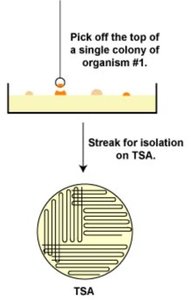
Mechanical Techniques for Bacterial Isolation
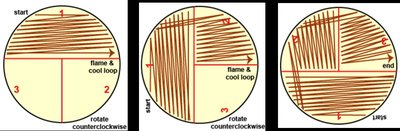
Streak Plate Method
The streak plate method is the most common technique for isolating bacteria on solid media. It involves spreading a bacterial sample over the surface of an agar plate in a pattern that thins out the sample and separates individual cells.
Procedure: The inoculating loop is sterilized between streaking each sector to reduce the number of cells and achieve isolated colonies in the final sector.
Common Errors: Not sterilizing the loop between sectors, overlapping sectors, or not using the entire surface can prevent proper isolation.
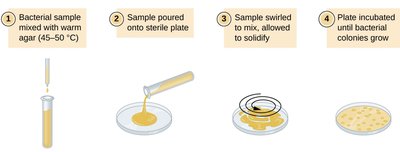
Pour Plate Method
In the pour plate method, a diluted bacterial sample is mixed with melted agar and poured into a sterile petri dish. After solidification and incubation, colonies grow both on and within the agar.
Purpose: Useful for quantifying bacteria and isolating colonies from a diluted sample.
Requirement: The sample must be sufficiently diluted to allow for discrete colony formation.
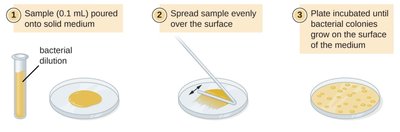
Spread Plate Method
The spread plate method involves spreading a diluted bacterial sample evenly over the surface of solid agar using a sterile bent glass rod. After incubation, colonies grow only on the surface.
Purpose: Used for isolating and counting bacteria from a diluted sample.
Requirement: The sample must be dilute enough to yield isolated colonies.
Specialized Media for Isolation and Identification
General-Purpose Media
General-purpose media support the growth of a wide variety of microorganisms. Trypticase Soy Agar (TSA) is commonly used for this purpose.
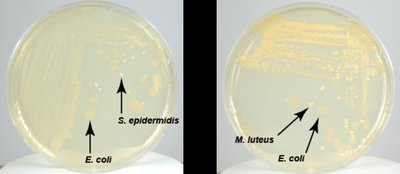
TSA: Grows both gram-positive and gram-negative bacteria. Colony morphology can help distinguish species.
Selective and Differential Media
Special-purpose media are designed to aid in the isolation and identification of specific groups of microorganisms.
Selective Media: Contain agents that inhibit the growth of some organisms while permitting others. Example: Phenylethyl Alcohol Agar (PEA) inhibits gram-negative bacteria, allowing gram-positives to grow.
Differential Media: Contain indicators that reveal differences between organisms, often through color changes. Example: MacConkey Agar differentiates lactose fermenters from non-fermenters.
Phenylethyl Alcohol Agar (PEA)
Selective for: Gram-positive bacteria (e.g., Staphylococcus epidermidis, Micrococcus luteus).
Inhibits: Gram-negative bacteria.
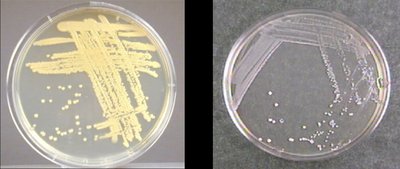
Identification: M. luteus produces a yellow pigment; S. epidermidis does not.
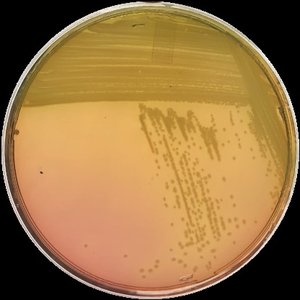
MacConkey Agar
Selective for: Gram-negative bacteria (contains crystal violet and bile salts).
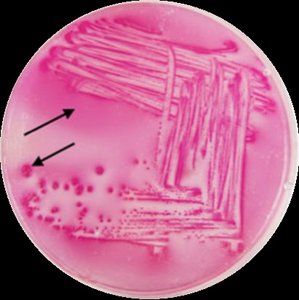
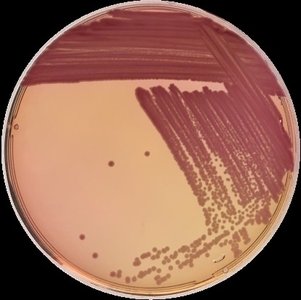
Differential for: Lactose fermentation (contains lactose and neutral red indicator).
Results:
Strong lactose fermenters (e.g., Escherichia coli): Pink/red colonies with pink precipitate/cloudiness in agar.
Weak lactose fermenters (e.g., Klebsiella aerogenes): Pink/red colonies without precipitate.
Non-fermenters (e.g., Pseudomonas aeruginosa): Colorless colonies on transparent agar.
Colony Morphology and Identification
Colony Characteristics on TSA
Staphylococcus epidermidis: Gram-positive, circular, convex, non-pigmented colonies.
Micrococcus luteus: Gram-positive, circular, convex, yellow, water-insoluble pigment.
Escherichia coli: Gram-negative, irregular, raised, non-pigmented colonies.
Enterobacter aerogenes: Gram-negative, irregular, raised, non-pigmented, possibly mucoid colonies.
Pseudomonas aeruginosa: Gram-negative, irregular, raised, green to blue water-soluble pigment.
Laboratory Procedures for Isolation
Day 1: Inoculation and Incubation
Label and divide TSA, PEA, and MacConkey plates into thirds.
Inoculate each plate with the mixed broth using the streak plate method.
Incubate plates agar-side-up at 37°C.
Day 2: Isolation of Pure Cultures
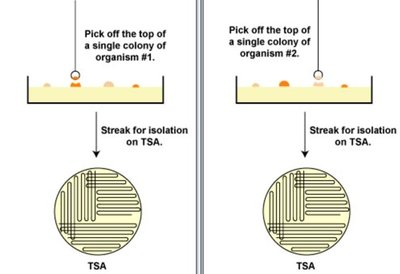
Pick isolated colonies from any plate and streak onto new TSA plates to obtain pure cultures.
Incubate agar-side-up at 37°C.
Common Issues in Isolation Techniques
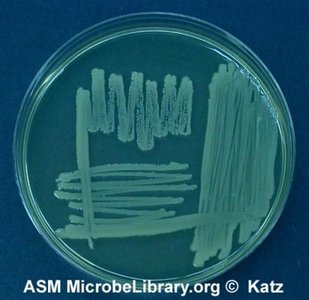
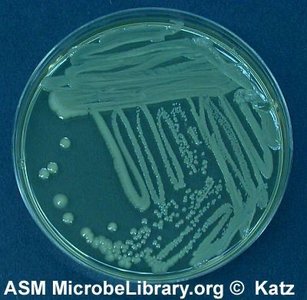
Failure to Sterilize Loop: Leads to no reduction in cell number between sectors, preventing isolation.
Overlapping Sectors: Causes mixing of colonies and poor isolation.
Not Using Entire Surface: Limits space for colony separation.
Study Guide: Key Concepts and Skills
Define and explain the importance of pure cultures and isolation plates.
Describe and perform streak, pour, and spread plate methods.
Differentiate between general-purpose, selective, and differential media with examples.
Interpret results from PEA and MacConkey agar to identify gram status and lactose fermentation ability.
Practice aseptic technique and proper disposal of materials.
Incubate agar plates agar-side-up to prevent condensation from disturbing colonies.
Summary Table: Media Types and Their Functions
Medium | Type | Selective For | Differential For | Key Components |
|---|---|---|---|---|
Trypticase Soy Agar (TSA) | General-purpose | None | None | Rich nutrients |
Phenylethyl Alcohol Agar (PEA) | Selective | Gram-positive bacteria | None | Phenylethyl alcohol |
MacConkey Agar | Selective & Differential | Gram-negative bacteria | Lactose fermentation | Crystal violet, bile salts, lactose, neutral red |
Additional Info
Incubating plates agar-side-up prevents condensation from dripping onto the agar surface, which could disturb colony formation.
Proper disposal of biohazardous materials is essential for lab safety and contamination prevention.
