 Indietro
Microbial Diseases of the Respiratory System: Structure, Function, and Pathogenesis
Guida di studio - Note intelligenti
 Appunti personalizzati basati sui tuoi materiali, ampliati con definizioni chiave, esempi e contesto.
Microbial Diseases of the Respiratory System
Structure and Function of the Respiratory System
The respiratory system is divided into the upper and lower regions, each with specialized structures and defense mechanisms to prevent microbial invasion.
Upper respiratory system: Includes the nose, pharynx, middle ear, and eustachian tubes. Saliva and tears help protect mucosal surfaces by flushing out pathogens and containing antimicrobial substances.
Lower respiratory system: Comprises the larynx, trachea, bronchial tubes, and alveoli. The ciliary escalator moves particles toward the throat via ciliary action, while alveolar macrophages destroy microorganisms in the lungs. Respiratory mucus also protects mucosal surfaces.
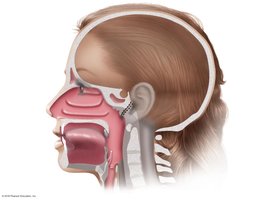
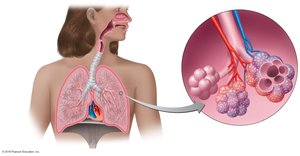
Normal Microbiota of the Respiratory System
The normal microbiota of the respiratory system plays a crucial role in suppressing pathogens by competing for nutrients and producing inhibitory substances. The lower respiratory system is nearly sterile due to these defenses.
Upper respiratory microbiota: Diverse and competitive, preventing colonization by pathogens.
Lower respiratory system: Maintained nearly sterile by physical and immune defenses.
Microbial Diseases of the Upper Respiratory System
Common Infections and Their Characteristics
Several diseases affect the upper respiratory tract, each with distinct clinical features:
Pharyngitis: Sore throat, often viral or bacterial in origin.
Laryngitis: Inflammation of the larynx, leading to voice changes.
Tonsillitis: Inflammation of the tonsils, usually self-limiting.
Sinusitis: Inflammation of the sinuses, often self-limiting.
Epiglottitis: Most life-threatening; inflammation of the epiglottis can block the airway.
Bacterial Diseases of the Upper Respiratory System
Several bacterial pathogens cause significant diseases in the upper respiratory tract:
Streptococcal pharyngitis (strep throat): Caused by Streptococcus pyogenes (group A streptococci, GAS). Features include resistance to phagocytosis, production of streptokinases (lyse clots), and streptolysins (cytotoxic). Symptoms: local inflammation, fever, tonsillitis, enlarged lymph nodes. Diagnosed by enzyme immunoassay (EIA) tests.
Scarlet fever: Caused by erythrogenic toxin from lysogenized S. pyogenes. Can lead to rheumatic fever if untreated.
Diphtheria: Caused by Corynebacterium diphtheriae, a Gram-positive rod. Forms a tough grayish membrane in the throat, blocking air passage. Exotoxin can damage the heart and kidneys. Prevented by the DTaP vaccine (diphtheria toxoid).
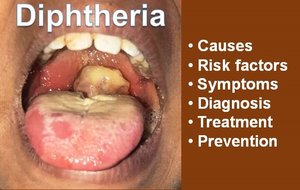
Cutaneous diphtheria: Forms skin ulcers.
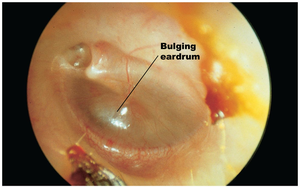
Otitis media: Infection of the middle ear, common in children due to smaller auditory tubes. Causes include Streptococcus pneumoniae, Haemophilus influenzae, Moraxella catarrhalis, S. pyogenes, and Staphylococcus aureus. Treated with broad-spectrum penicillins.
Viral Diseases of the Upper Respiratory System
The common cold is caused by over 200 different viruses, primarily rhinoviruses and coronaviruses. Symptoms include sneezing, nasal secretion, and congestion, but typically no fever. Antibiotics are ineffective; treatment is symptomatic with cough suppressants and antihistamines.
Microbial Diseases of the Lower Respiratory System
Overview and Common Diseases
Lower respiratory tract infections are often more severe and can involve the bronchi, bronchioles, and alveoli, leading to bronchitis, bronchiolitis, and pneumonia.
Pertussis (Whooping Cough)
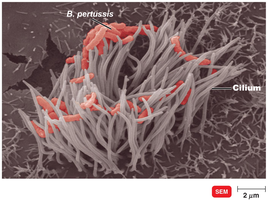
Pertussis is caused by Bordetella pertussis, a Gram-negative coccobacillus. The bacterium produces a capsule that allows attachment to ciliated cells in the trachea, destroying them and shutting down the ciliary escalator. The tracheal cytotoxin damages ciliated cells, and pertussis toxin enters the bloodstream.
Stages:
Catarrhal stage: Resembles the common cold.
Paroxysmal stage: Violent coughing, gasping for air.
Convalescence stage: Recovery, may last for months.
Prevention: DTaP vaccine.
Treatment: Erythromycin or other macrolides.
Tuberculosis
Tuberculosis (TB) is caused by Mycobacterium tuberculosis, an acid-fast, obligate aerobe with a slow generation time. The lipid-rich cell wall makes it resistant to drying and antimicrobials. Other causes include Mycobacterium bovis and Mycobacterium avium-intracellulare complex (especially in HIV patients).
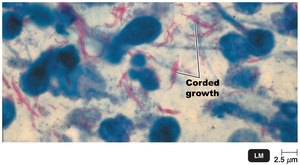
Pathogenesis: Inhaled organisms are phagocytized by alveolar macrophages. Mycolic acids stimulate an inflammatory response, leading to the formation of tubercles. Tubercles may heal and calcify (Ghon's complexes) or break down, releasing bacteria and causing miliary TB (disseminated infection).
Diagnosis: Tuberculin skin test (delayed hypersensitivity), followed by X-ray/CT, acid-fast staining, and culture. New rapid tests include IFN-γ and PCR.
Treatment: Minimum 6 months of drug therapy (isoniazid, ethambutol, pyrazinamide, rifampin). MDR and XDR strains are resistant to first- and second-line drugs.
Prevention: BCG vaccine (live, avirulent M. bovis), not widely used in the U.S.
Bacterial Pneumonias
Pneumonia can be classified as typical (caused by S. pneumoniae) or atypical (caused by other microorganisms). Lobar pneumonia affects lung lobes, bronchopneumonia affects adjacent alveoli, and pleurisy involves inflamed pleural membranes.
Pneumococcal pneumonia: Caused by S. pneumoniae, a Gram-positive, encapsulated diplococcus. Infected alveoli fill with fluids and RBCs, interfering with oxygen uptake. Diagnosed by optochin-inhibition, bile solubility, or urine antigen tests. Treated with macrolides and fluoroquinolones; prevented by conjugated vaccine.
Haemophilus influenzae pneumonia: Gram-negative coccobacillus; predisposing factors include alcoholism, poor nutrition, cancer, or diabetes. Treated with cephalosporins.
Mycoplasmal pneumonia: Also called walking pneumonia; caused by Mycoplasma pneumoniae (no cell wall). Mild but persistent symptoms; treated with tetracyclines.
Legionellosis: Caused by Legionella pneumophila; grows in water systems. Transmitted by inhaling aerosols. Treated with erythromycin and macrolides.
Chlamydial pneumonia: Caused by Chlamydophila pneumoniae; mild illness, treated with tetracyclines.
Psittacosis: Caused by Chlamydophila psittaci; transmitted from birds. Treated with tetracyclines.
Q Fever: Caused by Coxiella burnetii; transmitted from animals or unpasteurized milk. Treated with doxycycline; chloroquine for chronic cases.
Viral Diseases of the Lower Respiratory System
Viral Pneumonia, RSV, and Influenza
Viral pneumonia often occurs as a complication of influenza, measles, or chickenpox. Notable viruses include SARS-associated coronavirus and MERS-CoV.
Respiratory Syncytial Virus (RSV): Most common viral respiratory disease in infants and life-threatening in older adults. Causes cell fusion (syncytium) in culture. Treated with palivizumab.
Influenza (Flu): Caused by Influenzavirus, which contains eight RNA segments and an outer lipid bilayer. Symptoms include chills, fever, headache, and muscle aches. Hemagglutinin (HA) spikes attach to host cells; neuraminidase (NA) spikes help virus release. Antigenic drift (minor changes) and antigenic shift (major changes) allow evasion of immunity. Treated with zanamivir and oseltamivir (neuraminidase inhibitors). Annual multivalent vaccine is available.
Fungal Diseases of the Lower Respiratory System
Major Fungal Pathogens
Histoplasmosis: Caused by Histoplasma capsulatum, a dimorphic fungus. Acquired from airborne conidia in areas with bird or bat droppings. Treated with itraconazole.
Coccidioidomycosis (Valley Fever): Caused by Coccidioides immitis, a dimorphic fungus found in desert soils. Forms spherules in tissues. Treated with fluconazole or itraconazole.
Pneumocystis pneumonia (PCP): Caused by Pneumocystis jirovecii. Asymptomatic in immunocompetent, but causes pneumonia in immunocompromised (AIDS indicator). Treated with trimethoprim-sulfamethoxazole.
Blastomycosis: Caused by Blastomyces dermatitidis, a dimorphic fungus. Symptoms resemble bacterial pneumonia; treated with itraconazole and amphotericin B.
Other fungi: Aspergillus fumigatus (aspergillosis), Rhizopus and Mucor (mold spores). Predisposing factors include immunocompromised state, cancer, and diabetes.
