Indietro
Microbial Genetics: Structure, Function, and Regulation of Genetic Material
Guida di studio - Note intelligenti
 Appunti personalizzati basati sui tuoi materiali, ampliati con definizioni chiave, esempi e contesto.
Genetics: Fundamental Concepts
Key Terms and Definitions
Genetics is the study of inheritance and inheritable traits as expressed in an organism’s genetic material. The genome is the entire genetic complement of an organism, including its genes and nucleotide sequences. A gene is a specific nucleotide sequence that encodes for proteins or RNA molecules.
Genetics: Study of heredity and variation in organisms.
Genome: Complete set of genetic material in an organism.
Gene: Segment of DNA that codes for a functional product.
Structure of Nucleic Acids
DNA and RNA Structure
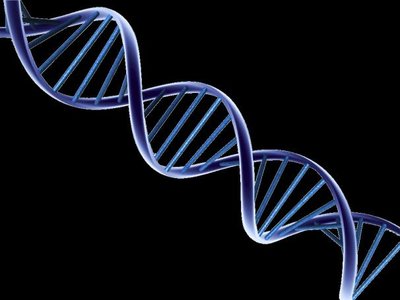
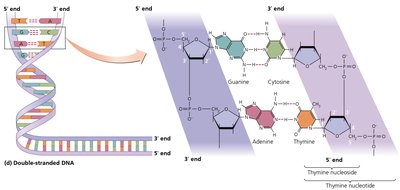
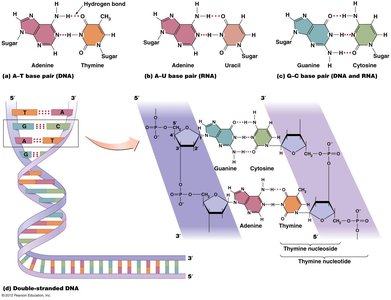
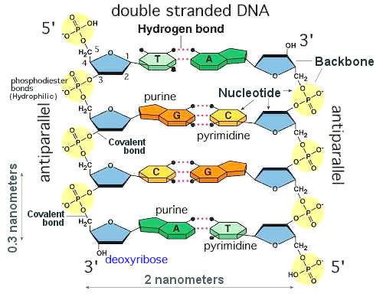
Nucleic acids are polymers of nucleotides, each consisting of a phosphate group, a five-carbon sugar, and a nitrogenous base. DNA is typically double-stranded and forms a double helix, while RNA is usually single-stranded.
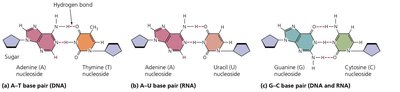
DNA: Contains deoxyribose sugar; bases are adenine (A), thymine (T), guanine (G), and cytosine (C).
RNA: Contains ribose sugar; bases are adenine (A), uracil (U), guanine (G), and cytosine (C).
Base Pairing: A pairs with T (or U in RNA), G pairs with C.
Structure of Prokaryotic Genomes
Chromosomes and Plasmids
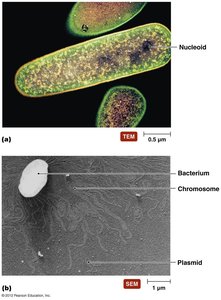
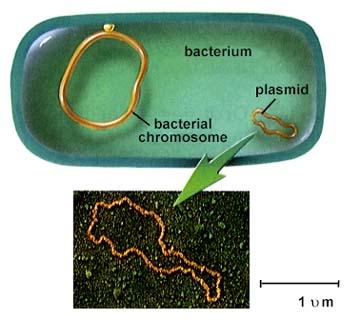
Prokaryotic genomes are typically composed of a single, circular chromosome located in the nucleoid region. Prokaryotes are haploid, meaning they have one chromosome copy. In addition to chromosomes, prokaryotes may contain plasmids—small, circular DNA molecules that replicate independently and can confer survival advantages such as antibiotic resistance.
Chromosome: Main DNA molecule, circular, found in nucleoid.
Plasmids: Extra-chromosomal DNA, not essential for basic survival but may provide advantages (e.g., resistance factors, virulence plasmids).
Structure of Eukaryotic Genomes
Nuclear and Extranuclear DNA
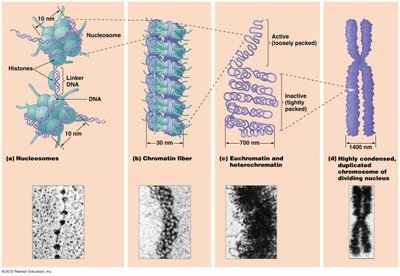
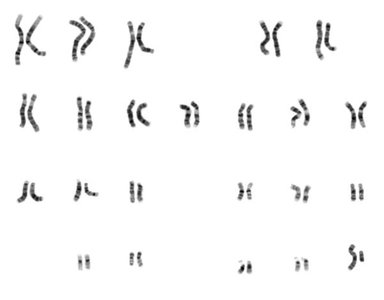
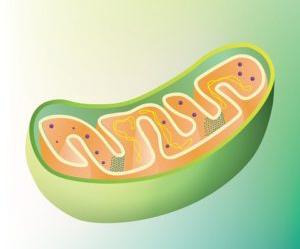
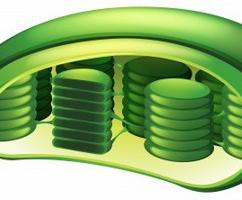
Eukaryotic cells typically have multiple, linear chromosomes located within the nucleus and are often diploid. Eukaryotes also contain extranuclear DNA in mitochondria and chloroplasts, which resemble prokaryotic chromosomes and code for a small fraction of cellular proteins.
Nuclear Chromosomes: Linear, multiple per cell, sequestered in nucleus.
Extranuclear DNA: Found in mitochondria and chloroplasts; codes for a small percentage of proteins and RNAs.
DNA Replication
Mechanism and Enzymes
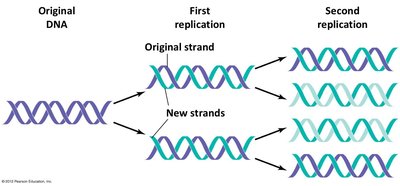
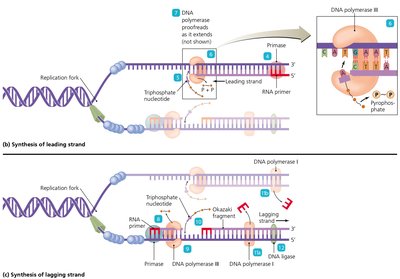
DNA replication is an anabolic process essential for cell division and population growth. It is semiconservative, meaning each new DNA molecule consists of one original and one newly synthesized strand. Replication requires triphosphate deoxyribonucleotides, which provide both monomers and energy.
Semiconservative Replication: Each daughter DNA contains one parental and one new strand.
Key Enzymes: DNA polymerase (synthesizes DNA 5' to 3'), helicase (unwinds DNA), gyrase/topoisomerase (relieves supercoiling).
Leading Strand: Synthesized continuously.
Lagging Strand: Synthesized discontinuously as Okazaki fragments.
Gene Function: Genotype and Phenotype
Relationship Between Genotype and Phenotype
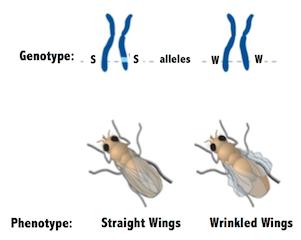
The genotype is the set of genes in the genome, while the phenotype refers to the physical and functional traits expressed by the organism. Not all genes are expressed at all times; gene expression is regulated to conserve energy and resources.
Genotype: Genetic makeup (e.g., DNA sequence).
Phenotype: Observable traits (e.g., enzyme activity, morphology).
Central Dogma of Genetics
Flow of Genetic Information
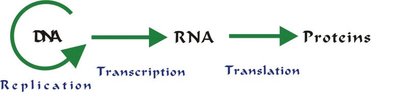
The central dogma describes the flow of genetic information: DNA is transcribed into RNA, which is then translated into protein. This process involves two main steps: transcription and translation.
Transcription: Synthesis of RNA from a DNA template.
Translation: Synthesis of polypeptides (proteins) from an mRNA template.
Transcription: Synthesis of RNA
Events and Types of RNA
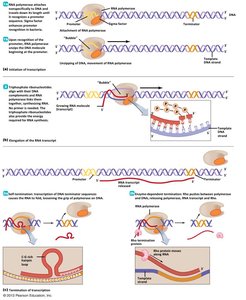
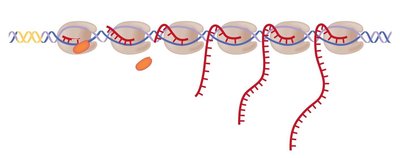
Transcription occurs in three steps: initiation, elongation, and termination. Several types of RNA are produced, including mRNA, rRNA, tRNA, regulatory RNA, and ribozymes.
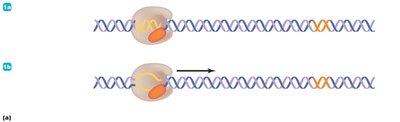
Initiation: RNA polymerase binds to promoter with help of sigma factor (in bacteria).
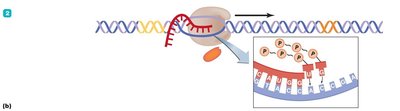
Elongation: RNA polymerase synthesizes RNA by adding ribonucleotides complementary to the DNA template.
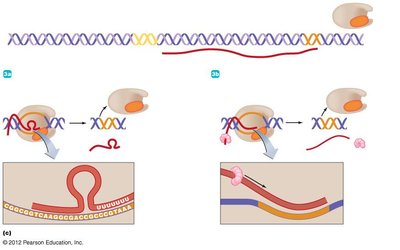
Termination: Transcription ends by self-termination (hairpin loop) or enzyme-dependent termination (Rho protein).
Transcription in Eukaryotes
Eukaryotic transcription occurs in the nucleus and involves three types of nuclear RNA polymerases and numerous transcription factors. Eukaryotic mRNA is processed before translation through capping, polyadenylation, and splicing.
Translation: Protein Synthesis
Genetic Code and Translation Machinery
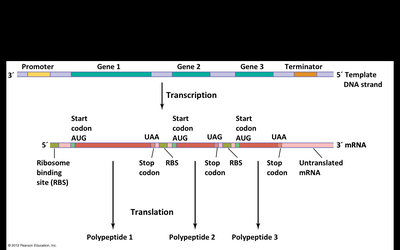
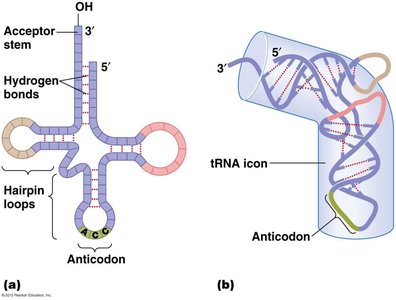
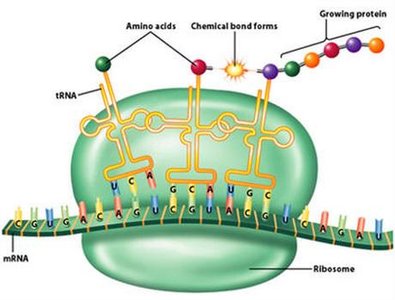
Translation is the process by which ribosomes use the genetic information in mRNA to synthesize polypeptides. The genetic code is a set of triplet codons that specify amino acids. Translation involves mRNA, tRNA, and ribosomes.
mRNA: Carries genetic code from DNA.
tRNA: Brings amino acids to the ribosome; contains anticodon complementary to mRNA codon.
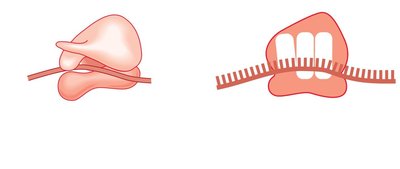
Ribosome: Site of protein synthesis; composed of rRNA and proteins.
Stages of Translation
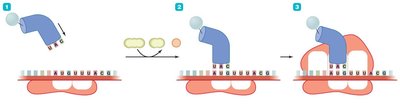
Translation occurs in three stages: initiation, elongation, and termination. Initiation and elongation require energy in the form of GTP. In prokaryotes, translation can begin before transcription is complete (polyribosome formation).
Initiation: Assembly of ribosome, mRNA, and initiator tRNA at the start codon.
Elongation: Sequential addition of amino acids to the growing polypeptide chain.
Termination: Release factors recognize stop codons, releasing the completed polypeptide.
Translation Differences in Eukaryotes
Initiation occurs when the ribosomal subunit binds to the 5′ guanine cap.
The first amino acid is methionine (not formyl-methionine as in prokaryotes).
Ribosomes can synthesize polypeptides into the rough endoplasmic reticulum.
Regulation of Genetic Expression
Gene Regulation and Operons
Gene expression in bacteria is regulated to conserve energy. Many genes are expressed constantly, while others are regulated at the transcriptional or translational level. Operons are clusters of genes under the control of a single promoter and operator, allowing coordinated regulation.
Inducible Operons: Activated by inducers (e.g., lac operon).
Repressible Operons: Transcribed continually until deactivated by repressors (e.g., trp operon).
RNA as Regulators
Regulatory RNAs, such as microRNAs (miRNAs), small interfering RNAs (siRNAs), and riboswitches, can control translation by binding to mRNA and affecting its stability or translation efficiency.
Mutations and DNA Repair
Types and Effects of Mutations
Mutations are changes in the nucleotide sequence of the genome. They are rare and usually deleterious but can occasionally confer advantages. Types include point mutations (substitutions, insertions, deletions) and frameshift mutations.
Silent Mutation: No change in amino acid sequence.
Missense Mutation: Changes one amino acid.
Nonsense Mutation: Introduces a stop codon.
Frameshift Mutation: Alters the reading frame, causing major changes in protein sequence.
Mutagens and DNA Repair Mechanisms
Mutagens such as radiation and chemicals increase mutation rates. Cells possess several DNA repair mechanisms, including direct repair, single-strand repair, and error-prone repair.
Direct Repair: Corrects specific base changes.
Single-Strand Repair: Fixes damaged DNA using the undamaged strand as a template.
Error-Prone Repair: Used when damage is extensive; may introduce mutations.
Detection of Mutants
Selection and Screening Methods
Mutants are descendants of cells that have not repaired a mutation. Methods to detect mutants include positive selection, negative (indirect) selection, and the Ames test.
Positive Selection: Directly selects for mutants with a specific trait (e.g., antibiotic resistance).
Negative Selection: Identifies mutants by their inability to grow under certain conditions.
Ames Test: Screens for mutagenic potential of chemicals using bacterial strains.
Genetic Recombination and Horizontal Gene Transfer
Mechanisms of Genetic Exchange
Genetic recombination involves the exchange of nucleotide sequences between DNA molecules, resulting in new genetic combinations. In prokaryotes, horizontal gene transfer allows the movement of genetic material between cells by transformation, transduction, or conjugation.
Transformation: Uptake of naked DNA from the environment.
Transduction: Transfer of DNA via bacteriophages (viruses).
Conjugation: Direct transfer of DNA between cells via a pilus.
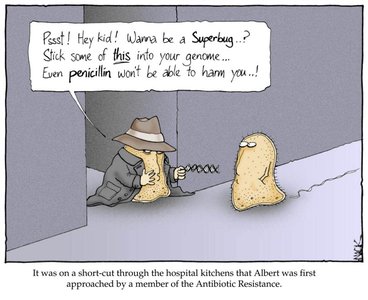
Additional info: The cartoon in image_1 humorously illustrates the concept of horizontal gene transfer and the acquisition of antibiotic resistance genes, which is a major concern in clinical microbiology.