 Indietro
Microbial Genetics: Structure, Function, and Regulation
Guida di studio - Note intelligenti
 Appunti personalizzati basati sui tuoi materiali, ampliati con definizioni chiave, esempi e contesto.
Genetics in Microbiology
Introduction to Genetics
Genetics is the study of genes, their functions, and how variations arise in genomes. In microbiology, understanding genetics is essential for exploring how microorganisms inherit traits, adapt, and evolve. The genome is the complete set of genetic material in a cell or virus, serving as an instruction manual for all cellular features.
Genotype: The genetic makeup of an organism; the set of genes it carries.
Phenotype: The observable physical and physiological traits of an organism, determined by genotype and environmental influences.
Relationship: Genotype determines phenotype by directing the synthesis of proteins and other molecules.
Organization of Genetic Material
Prokaryotic vs. Eukaryotic Genomes
Genomes are organized differently in prokaryotes and eukaryotes, affecting gene regulation and inheritance.
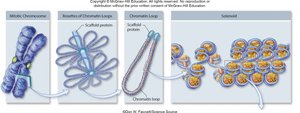
Prokaryotes: Typically have 1–3 circular chromosomes located in the nucleoid region. DNA is organized with histone-like proteins.
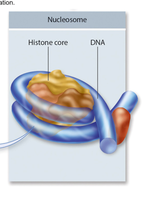
Eukaryotes: Possess multiple linear chromosomes housed in the nucleus, organized with histone proteins to prevent tangling.
Plasmids: Small, circular DNA molecules found in many microorganisms, replicating independently and often carrying genes for antibiotic resistance or other survival advantages.
Nucleic Acids: DNA and RNA
Structure of DNA
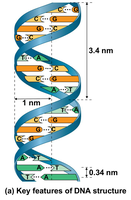
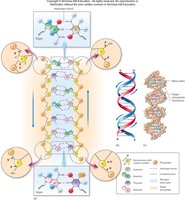
DNA (deoxyribonucleic acid) is the hereditary material in cells, composed of two antiparallel strands forming a double helix. Each strand consists of nucleotides joined by phosphodiester bonds.
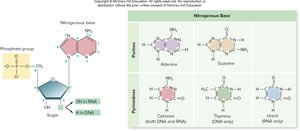
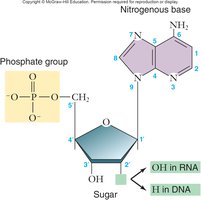
Nucleotide Components: Phosphate group, deoxyribose sugar, and a nitrogenous base (Adenine, Thymine, Guanine, Cytosine).
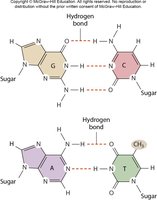
Base Pairing: Adenine pairs with Thymine (A-T, 2 hydrogen bonds); Guanine pairs with Cytosine (G-C, 3 hydrogen bonds).
Directionality: DNA strands run 5’ to 3’ and 3’ to 5’, allowing for complementary base pairing and proper replication.
Structure of RNA
RNA (ribonucleic acid) is typically single-stranded and contains ribose sugar. Uracil replaces thymine as a nitrogenous base.
Ribonucleotides: Composed of a phosphate group, ribose sugar, and nitrogenous bases (A, U, G, C).
Types of RNA: Messenger RNA (mRNA), Transfer RNA (tRNA), Ribosomal RNA (rRNA), and regulatory RNAs (miRNA, siRNA).
Function: RNA plays roles in protein synthesis, gene regulation, and catalysis.
Central Dogma of Molecular Biology
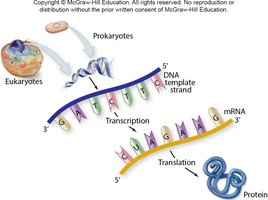
The central dogma describes the flow of genetic information: DNA is transcribed into RNA, which is then translated into protein. This process is fundamental to gene expression and phenotype determination.
DNA Replication
Mechanism and Enzymes
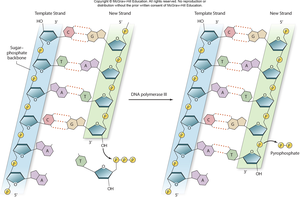
DNA replication is the process by which cells copy their DNA before division. It is highly accurate due to complementary base pairing and proofreading by DNA polymerases.
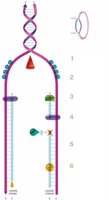
Key Enzymes: Helicase (unwinds DNA), Primase (lays RNA primers), DNA polymerase III (synthesizes new DNA), DNA polymerase I (replaces RNA primers), Ligase (seals nicks), Gyrase/Topoisomerase (relieves tension).
Origin of Replication: Replication begins at specific sites (single origin in prokaryotes, multiple in eukaryotes).
Leading vs. Lagging Strand: Leading strand is synthesized continuously; lagging strand is synthesized in Okazaki fragments.
Semiconservative Replication: Each new DNA molecule contains one parental and one newly synthesized strand.
Protein Synthesis (Gene Expression)
Transcription
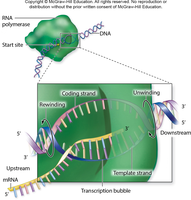
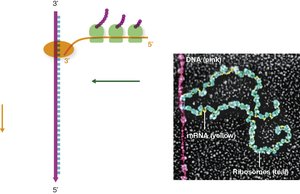
Transcription is the synthesis of RNA from a DNA template. It occurs in three main steps: initiation, elongation, and termination. In eukaryotes, transcription occurs in the nucleus; in prokaryotes, it occurs in the cytoplasm.
RNA Polymerase: Binds to promoter, unwinds DNA, and synthesizes RNA.
Base Pairing: U pairs with A, G pairs with C in RNA.
Reverse Transcription: Some viruses and cells can synthesize DNA from an RNA template using reverse transcriptase.
RNA Processing in Eukaryotes
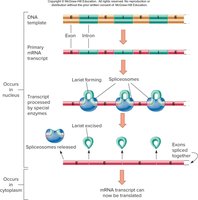
Eukaryotic mRNA undergoes splicing to remove introns and join exons, forming mature mRNA that can be translated. This process is carried out by the spliceosome and allows for alternative splicing, increasing protein diversity.
Exons: Coding regions retained in mature mRNA.
Introns: Non-coding regions removed during splicing.
Translation
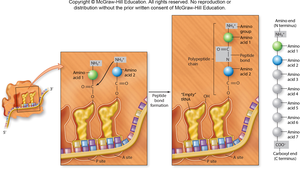
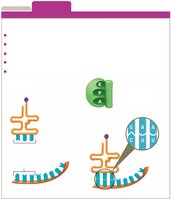
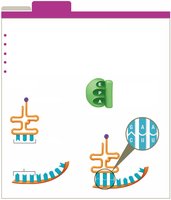
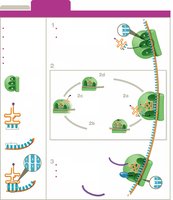
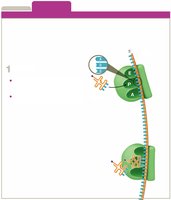
Translation is the process by which ribosomes decode mRNA to synthesize proteins. It involves initiation, elongation, and termination steps.
mRNA: Contains codons specifying amino acids.
tRNA: Brings amino acids to the ribosome, matching codons with anticodons.
rRNA: Forms the core of ribosome structure and catalyzes peptide bond formation.
Genetic Code: 64 codons encode 20 amino acids and stop signals; redundancy and wobble allow for some mutation tolerance.
Regulation of Protein Synthesis
Gene Regulation Mechanisms
Cells regulate gene expression to conserve energy and resources. Regulation occurs at pre-transcriptional and post-transcriptional levels.
Constitutive Genes: Continuously expressed (housekeeping genes).
Facultative Genes: Expressed only in response to environmental changes.
Operons: In prokaryotes, groups of genes regulated together (e.g., lac operon is inducible, arg operon is repressible).
Epigenetic Regulation: Chemical modifications (e.g., DNA methylation) that affect gene expression without altering DNA sequence.
Quorum Sensing: Bacterial communication system that regulates gene expression in response to population density.
Post-Transcriptional Regulation: Includes mRNA stability, splicing, and small noncoding RNAs (miRNA, siRNA).
Mutations and Genetic Variation
Types and Effects of Mutations
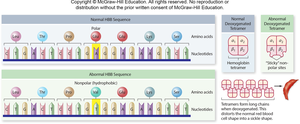
Mutations are changes in the nucleotide sequence of DNA, driving evolution and adaptation. They can be spontaneous or induced by mutagens.
Substitution: One base is replaced by another (can be silent, missense, or nonsense).
Insertion/Deletion: Addition or removal of bases, often causing frameshifts.
Silent Mutation: No change in amino acid sequence.
Missense Mutation: Changes one amino acid in the protein (e.g., sickle cell anemia).
Nonsense Mutation: Introduces a premature stop codon.
Frameshift Mutation: Alters the reading frame, drastically changing the protein.
DNA Repair Mechanisms
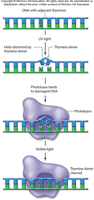
Cells possess proofreading and repair systems to maintain genome stability. Excision repair removes damaged or mismatched nucleotides, especially thymine dimers caused by UV light.
Genetic Variation Without Sexual Reproduction
Horizontal Gene Transfer
Bacteria can acquire new genetic traits through horizontal gene transfer, independent of cell division.
Conjugation: Transfer of plasmids via pili between cells, often spreading antibiotic resistance.
Transformation: Uptake of free DNA from the environment (demonstrated by Griffith’s experiment with Streptococcus pneumoniae).
Transduction: Transfer of DNA by bacteriophages (viruses that infect bacteria).
Transposons: "Jumping genes" that move within and between genomes, contributing to genetic diversity.
Clinical Connections
Genetics and Disease
Mutations in specific genes can lead to diseases such as cystic fibrosis or sickle cell anemia. Understanding genetic mechanisms aids in diagnosis, treatment, and potential gene therapy approaches.
Summary Table: Key Differences in Genetic Organization
Feature | Prokaryotes | Eukaryotes |
|---|---|---|
Chromosome Structure | Usually single, circular | Multiple, linear |
Location | Nucleoid region | Nucleus |
Organizational Proteins | Histone-like proteins | Histones |
Plasmids | Common | Occasional |
Replication Origins | Single | Multiple |
