 Indietro
Microbial Genetics: Structure, Function, and Regulation of Genetic Material
Guida di studio - Note intelligenti
 Appunti personalizzati basati sui tuoi materiali, ampliati con definizioni chiave, esempi e contesto.
Microbial Genetics
Introduction to Microbial Genetics
Microbial genetics is the study of the mechanisms of heritable information in microorganisms, focusing on the structure, function, and regulation of genes. Understanding microbial genetics is essential for grasping how microorganisms adapt, evolve, and interact with their environments.
Key Terminology
Genetics: The study of genes, how they carry information, how information is expressed, and how genes are replicated.
Gene: A segment of DNA that encodes a functional product, usually a protein.
Chromosome: Structure containing DNA that physically carries hereditary information; chromosomes contain the genes.
Genome: All the genetic information in a cell.
Genomics: The molecular study of genomes.
Genotype: The genetic makeup of an organism.
Phenotype: The expression of the genes, resulting in observable traits.
Structure of Prokaryotic Chromosomes
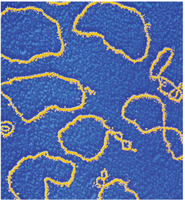
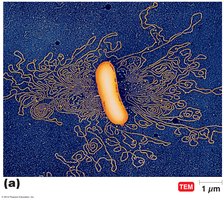
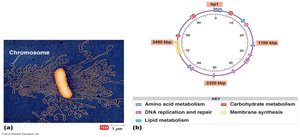
Prokaryotic chromosomes are typically circular and contain all the essential genetic information for the cell's survival and function. The chromosome is highly folded and supercoiled to fit within the cell.
Genetic Map and Functional Organization
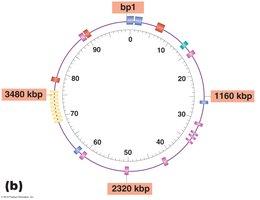
The genetic map of Escherichia coli (E. coli) illustrates the locations of genes involved in various metabolic pathways and cellular processes. Genes are organized according to their function, such as amino acid metabolism, DNA replication and repair, lipid metabolism, carbohydrate metabolism, and membrane synthesis.
The Flow of Genetic Information
Genetic information flows from DNA to RNA to protein, a process known as the central dogma of molecular biology. This involves three main processes: replication, transcription, and translation.
Replication: DNA is copied to produce identical genetic material for daughter cells.
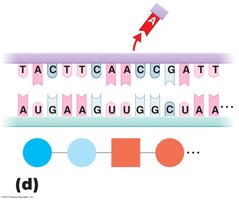
Transcription: DNA is transcribed into RNA (mRNA, tRNA, rRNA).
Translation: mRNA is translated into proteins by ribosomes.
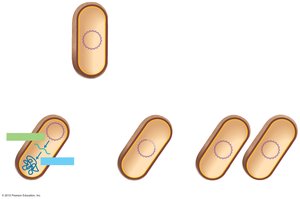
DNA Structure and Replication
DNA Structure
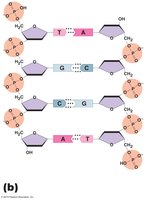
DNA is a polymer of nucleotides, each consisting of a deoxyribose sugar, a phosphate group, and a nitrogenous base (adenine, thymine, cytosine, or guanine). The DNA molecule forms a double helix, with complementary base pairing (A-T and G-C) held together by hydrogen bonds. The two strands are antiparallel, meaning they run in opposite directions (5' to 3' and 3' to 5').
Enzymes in DNA Replication, Expression, and Repair
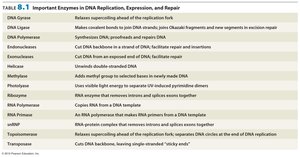
Several enzymes are essential for DNA replication, gene expression, and repair. The following table summarizes their functions:
Enzyme | Function |
|---|---|
DNA Gyrase | Relaxes supercoiling ahead of the replication fork |
DNA Ligase | Joins DNA strands; joins Okazaki fragments and new segments in excision repair |
DNA Polymerase | Synthesizes DNA; proofreads and repairs DNA |
Endonucleases | Cut DNA backbone in a strand of DNA; facilitate repair and insertions |
Exonucleases | Cut DNA from an exposed end of DNA; facilitate repair |
Helicase | Unwinds double-stranded DNA |
Methylase | Adds methyl group to selected bases in newly made DNA |
Photolyase | Uses visible light energy to separate UV-induced pyrimidine dimers |
Primase | An RNA polymerase that makes RNA primers from a DNA template |
RNA Polymerase | Copies RNA from a DNA template |
snRNPs | Remove introns and splice exons together |
Topoisomerase | Relaxes supercoiling ahead of the replication fork; separates DNA circles at the end of DNA replication |
Transposase | Cuts DNA backbone, leaving single-stranded "sticky ends" |
DNA Replication
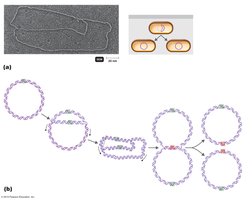
DNA replication is semiconservative, meaning each new DNA molecule consists of one parental and one newly synthesized strand. Replication begins at the origin and proceeds bidirectionally in prokaryotes. The leading strand is synthesized continuously, while the lagging strand is synthesized discontinuously as Okazaki fragments, which are later joined by DNA ligase.
Replication proceeds in the 5' to 3' direction.
Initiated by an RNA primer synthesized by primase.
DNA polymerase extends the new strand.
Okazaki fragments are joined by DNA ligase.
Gene Expression: Transcription and Translation
Transcription
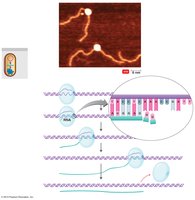
Transcription is the synthesis of RNA from a DNA template. It produces messenger RNA (mRNA), transfer RNA (tRNA), and ribosomal RNA (rRNA). In prokaryotes, transcription occurs in the cytoplasm, while in eukaryotes, it occurs in the nucleus and involves additional RNA processing steps.
RNA polymerase binds to the promoter region to initiate transcription.
Transcription proceeds in the 5' to 3' direction.
Transcription stops at the terminator sequence.
RNA Processing in Eukaryotes
In eukaryotic cells, the initial RNA transcript (pre-mRNA) contains both exons (coding regions) and introns (non-coding regions). Introns are removed, and exons are spliced together to form mature mRNA, which is then exported to the cytoplasm for translation.
Translation
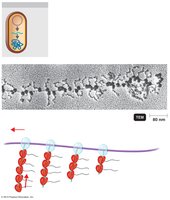
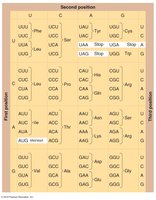
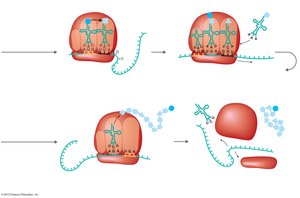
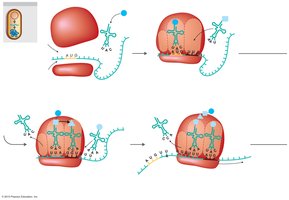
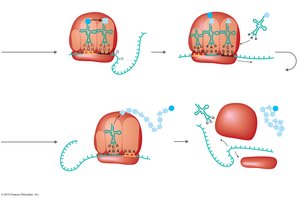
Translation is the process by which ribosomes synthesize proteins using the sequence of codons in mRNA. Each codon (three nucleotides) specifies an amino acid. Translation begins at the start codon (AUG) and ends at one of the stop codons (UAA, UAG, UGA).
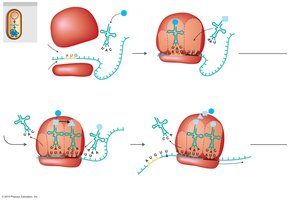
tRNA molecules carry specific amino acids and have anticodons complementary to mRNA codons.
The genetic code is degenerate, meaning multiple codons can code for the same amino acid.
Steps of Translation
Initiation: Ribosome assembles around the start codon on mRNA.
Elongation: tRNAs bring amino acids to the ribosome, and peptide bonds form between amino acids.
Termination: The ribosome reaches a stop codon, releasing the completed polypeptide.
Regulation of Gene Expression
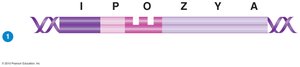
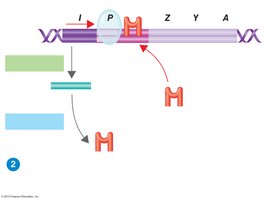
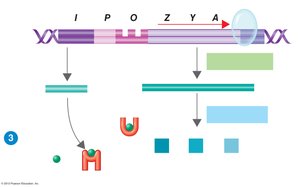
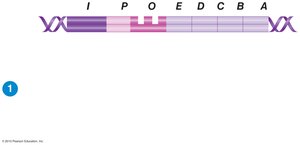
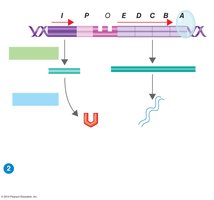
Gene expression in bacteria is tightly regulated to conserve energy and resources. Genes can be constitutive (always expressed) or regulated (inducible or repressible). The operon model explains the coordinated regulation of groups of genes involved in related functions.
Inducible operons: Genes are expressed only in the presence of an inducer (e.g., lac operon).
Repressible operons: Genes are transcribed until turned off by a repressor (e.g., trp operon).
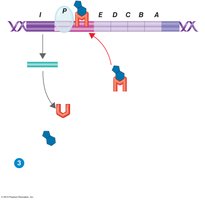
Epigenetic Control
Epigenetic mechanisms, such as DNA methylation, can regulate gene expression without altering the DNA sequence. Methylated genes are often silenced but this modification is reversible and can be inherited by daughter cells.
Mutations and Genetic Variation
Types of Mutations
Mutations are changes in the genetic material that can be neutral, beneficial, or harmful. They can occur spontaneously or be induced by mutagens.
Base substitution (point mutation): A single base is changed, which may result in a missense (amino acid change) or nonsense (stop codon) mutation.
Frameshift mutation: Insertion or deletion of nucleotides alters the reading frame, often resulting in nonfunctional proteins.
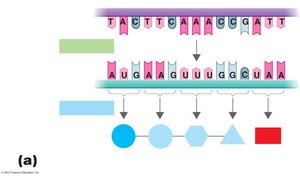
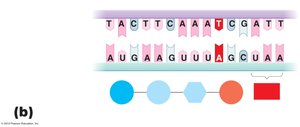
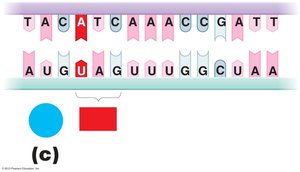
Mutagenic Agents
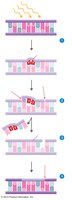
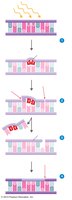
Mutagens are agents that cause mutations. Ionizing radiation (X-rays, gamma rays) can break DNA strands, while ultraviolet (UV) radiation causes thymine dimers, which disrupt normal base pairing.
DNA Repair Mechanisms
Photolyases: Enzymes that use light energy to break thymine dimers.
Nucleotide excision repair: Damaged DNA is removed by endonucleases and exonucleases, and the gap is filled by DNA polymerase and ligase.
Selection of Mutant Cells
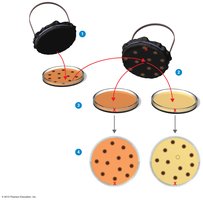
Mutant cells can be identified by positive (direct) selection, where mutants grow or appear differently, or by negative (indirect) selection, where mutants do not grow. Replica plating is a technique used to identify auxotrophic mutants.
Genetic Transfer and Recombination
Genetic Recombination
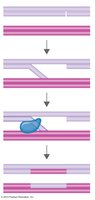
Genetic recombination is the exchange of genes between two DNA molecules, resulting in new combinations of genes. In bacteria, recombination can occur through vertical gene transfer (parent to offspring) or horizontal gene transfer (between cells of the same generation).
Mechanisms of Horizontal Gene Transfer
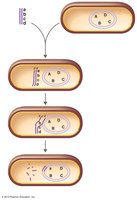
Transformation: Uptake of naked DNA from the environment by a recipient cell.
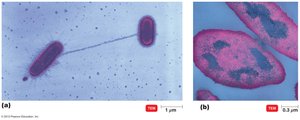
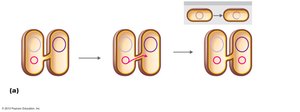
Conjugation: Transfer of DNA between bacteria via direct cell-to-cell contact, often involving a sex pilus and plasmids (F factor).
Transduction: Transfer of bacterial genes by bacteriophages (viruses that infect bacteria).
Plasmids and Transposons
Plasmids: Small, circular DNA molecules that replicate independently of the chromosome. Types include conjugative plasmids (carry genes for sex pili and transfer), dissimilation plasmids (catabolism of unusual compounds), and R factors (antibiotic resistance).
Transposons: Segments of DNA that can move from one location to another within a genome, carrying genes such as antibiotic resistance.
Genes and Evolution
Genetic Variation and Natural Selection
Mutations and genetic recombination provide the genetic diversity necessary for evolution. Natural selection favors the survival and reproduction of organisms best adapted to their environment, driving evolutionary change in microbial populations.
