 Indietro
Microbial Genetics: Structure, Function, and Regulation
Guida di studio - Note intelligenti
 Appunti personalizzati basati sui tuoi materiali, ampliati con definizioni chiave, esempi e contesto.
Microbial Genetics
Key Definitions: Genetics, Genome, Genotype, and Phenotype
Genetics is the study of heredity and variation in organisms, focusing on how traits are inherited and expressed. The genome is the complete set of genetic material in an organism. Genotype refers to the specific genetic makeup of an organism, while phenotype describes the observable characteristics resulting from the interaction of genotype and environment.
Genetics: Study of inheritance and inheritable traits as expressed in genetic material.
Genome: All genetic material in an organism.
Genotype: The set of genes carried by an organism.
Phenotype: Observable traits or characteristics.
Example: Eye color is a phenotype determined by genotype and environmental factors.
DNA Structure and Location in Bacteria and Eukaryotes
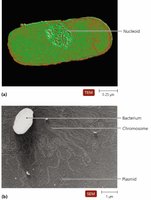
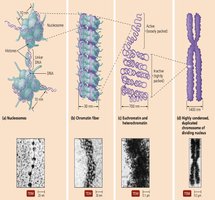
DNA is composed of four bases: adenine (A), thymine (T), cytosine (C), and guanine (G), with a sugar-phosphate backbone using deoxyribose. Bacterial DNA is typically haploid and circular, located in the nucleoid, while eukaryotic DNA is diploid and linear, organized in chromosomes within the nucleus.
Haploid: Single set of chromosomes (bacteria).
Diploid: Two sets of chromosomes (eukaryotes).
Circular DNA: Closed loop (bacterial chromosomes).
Linear DNA: Two ends (eukaryotic chromosomes).
Plasmids and Their Types
Plasmids are small, circular, double-stranded DNA molecules independent of the bacterial chromosome. They are not essential for normal metabolism, growth, or reproduction, but confer important traits.
Fertility factors: F plasmid enables conjugation.
Resistance factors: Provide resistance to antibiotics or heavy metals.
Bacteriocin factors: Encode proteinaceous toxins (e.g., nisin).
Virulence factors: Encode structures, enzymes, or toxins for pathogenicity.
DNA Replication in Bacteria
DNA replication is semi-conservative, meaning each new molecule contains one old and one new strand. It begins at the origin of replication and involves several enzymes.
Origin of replication: Specific sequence where replication starts.
Primase: Synthesizes RNA primer.
Helicase: Unwinds DNA helix.
DNA polymerase III: Main enzyme for DNA synthesis.
DNA polymerase I: Removes RNA primer and fills gaps.
Ligase: Seals nicks in DNA.
Leading strand: Synthesized continuously.
Lagging strand: Synthesized discontinuously (Okazaki fragments).
Energy source: Nucleotide triphosphates (e.g., dATP, dGTP).
Equation:
Transcription in Bacteria
Transcription is the process of synthesizing RNA from DNA, involving initiation, elongation, and termination.
Initiation: RNA polymerase binds to promoter.
Elongation: RNA strand is synthesized.
Termination: RNA synthesis ends; RNA is released.
Key Components of Transcription
Promoter: DNA sequence for RNA polymerase binding.
RNA polymerase: Enzyme synthesizing RNA.
Template strand: DNA strand used for RNA synthesis.
Coding strand: DNA strand with same sequence as RNA (except T/U).
Rho-dependent termination: Requires rho protein.
Self-termination: Due to RNA structure (hairpin loop).
Coupled transcription/translation: Occurs simultaneously in bacteria.
Polysomes: Multiple ribosomes translating a single mRNA.
Post-Transcriptional Modifications in Eukaryotes
Eukaryotic mRNA undergoes three key modifications before translation:
5’ capping: Addition of a methylated guanine cap.
3’ polyadenylation: Addition of a poly-A tail.
Splicing: Removal of introns and joining of exons.
Translation in Bacteria
Translation is the process of protein synthesis from mRNA, involving ribosomes, tRNA, and various sites and sequences.
Ribosome: Composed of rRNA and proteins; site of protein synthesis.
tRNA: Transfers amino acids to ribosome.
mRNA: Carries genetic code.
Shine-Dalgarno sequence: Ribosome binding site on mRNA.
E, P, A sites: Sites for tRNA binding and peptide bond formation.
Codon/anticodon: mRNA/tRNA base triplets.
Ribozyme: Catalytic RNA molecule.
GTP: Energy source for translation.
Release factors: Terminate translation.
Operons and Gene Regulation
An operon is a cluster of genes under control of a single promoter. Genes can be constitutive, inducible, or repressible.
Constitutive genes: Expressed continuously.
Inducible genes/operons: Usually off, can be turned on (e.g., lac operon).
Repressible genes/operons: Usually on, can be turned off (e.g., trp operon).
Type | Expression | Example |
|---|---|---|
Constitutive | Always on | Housekeeping genes |
Inducible | Usually off, turned on by substrate | lac operon |
Repressible | Usually on, turned off by end product | trp operon |
Gene Expression and Regulation
Gene expression is the process by which information from a gene is used to synthesize a functional product. Regulation occurs via operons, allowing cells to respond to environmental changes.
Inducible operon: Activated by substrate (catabolic pathways).
Repressible operon: Inactivated by end product (anabolic pathways).
Importance: Efficient regulation of metabolism.
Point Mutations and Their Effects
A point mutation is a change in a single nucleotide base pair. Effects include silent, missense, and nonsense mutations.
Substitution: One base replaced by another.
Insertion: Addition of a base.
Deletion: Removal of a base.
Mutagen: Agent increasing mutation rate.
Wild-type: Typical gene form.
Mutant: Altered gene form.
Mutation Type | Effect |
|---|---|
Silent | No change in protein |
Missense | Change in one amino acid |
Nonsense | Premature stop codon |
Genetic Recombination and Gene Transfer
Genetic recombination is the exchange of genetic material between DNA molecules. Gene transfer can be horizontal or vertical.
Horizontal gene transfer: Between organisms, not parent-offspring.
Vertical gene transfer: Parent to offspring.
Homologous Recombination
Homologous recombination is the exchange of genetic material between similar DNA sequences, crucial for horizontal gene transfer.
Methods of Horizontal Gene Transfer in Bacteria
Transformation: Uptake of naked DNA from environment.
Conjugation: Direct DNA transfer via cell contact, often involving plasmids.
Transduction: DNA transfer by bacteriophage.
Transformation, Conjugation, and HFR Cells
Transformation: Uptake of naked DNA.
Conjugation: DNA transfer via direct contact.
HFR cells: High-frequency recombination cells with integrated F plasmid.
Impact on human health: Spread of antibiotic resistance and virulence factors.
Transduction
Transduction is the process by which bacterial DNA is transferred from one bacterium to another by a virus (bacteriophage).
Additional info: Generalized and specialized transduction details are covered in Chapter 13.
