 Indietro
Microbial Metabolism: An Overview of Energy Production and Fermentation
Guida di studio - Note intelligenti
 Appunti personalizzati basati sui tuoi materiali, ampliati con definizioni chiave, esempi e contesto.
Microbial Metabolism
Metabolism: Definitions and Overview
Metabolism encompasses all the chemical reactions occurring within a microorganism, divided into two fundamental processes: catabolism and anabolism. Catabolic reactions break down complex molecules to release energy, while anabolic reactions use energy to build complex molecules from simpler ones.
Catabolism: Breakdown of large molecules (e.g., starch, proteins, lipids) into smaller units, releasing energy.
Anabolism: Synthesis of macromolecules (e.g., DNA, proteins) from smaller precursors, requiring energy input.
Metabolic Pathway: A series of enzymatically catalyzed reactions in a cell.
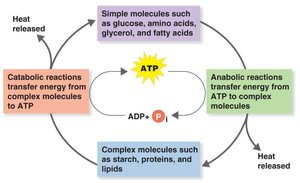
ATP: The Energy Currency of the Cell
ATP (adenosine triphosphate) acts as the primary energy carrier, linking catabolic and anabolic reactions. Energy released from catabolism is stored in ATP, which is then used to drive anabolic processes.
ATP Structure: Consists of adenosine and three phosphate groups.
ATP Formation: Energy from catabolic reactions is used to add a phosphate to ADP, forming ATP.
Role: ATP is hydrolyzed to ADP and phosphate, releasing energy for cellular work.
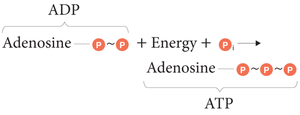
Catabolic and Anabolic Reactions: Fundamental Differences
Catabolism: Provides energy and building blocks for anabolism; heat is released.
Anabolism: Uses ATP to build complex molecules; heat is released.
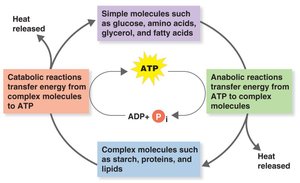
Enzymes and Metabolic Pathways
Enzymes: Biological Catalysts
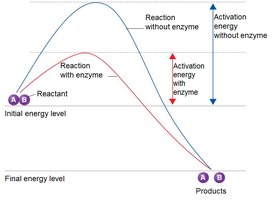
Enzymes are proteins (with some exceptions, such as ribozymes) that accelerate chemical reactions by lowering the activation energy required.
Catalyst: Substance that increases reaction rate without being consumed.
Activation Energy (AE): The energy barrier that must be overcome for a reaction to proceed.
Enzyme Function: All cellular reactions are catalyzed by enzymes.
Factors Affecting Enzyme Activity
Enzyme activity is influenced by several factors, including temperature, pH, substrate concentration, enzyme concentration, and inhibitors.
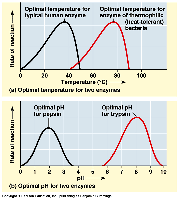
Temperature: Each enzyme has an optimal temperature; extreme temperatures can denature enzymes.
pH: Enzymes function best at specific pH values.
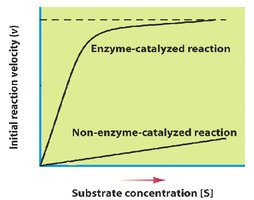
Substrate Concentration: Reaction rate increases with substrate concentration until saturation is reached.
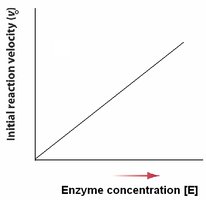
Enzyme Concentration: Reaction rate increases linearly with enzyme concentration.
Inhibitors: Chemicals that reduce enzyme activity.
Metabolic Pathways of Energy Production
Overview of Cellular Respiration
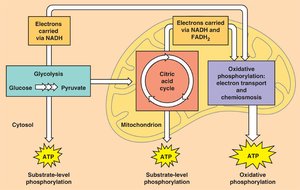
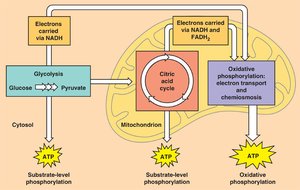
Cellular respiration is the process by which cells extract energy from glucose and other carbohydrates. It consists of three major stages: glycolysis, the Krebs cycle, and the electron transport chain (ETC).
Glycolysis: Breakdown of glucose to pyruvic acid, producing ATP and NADH.
Krebs Cycle: Complete oxidation of acetyl CoA to CO2, generating ATP, NADH, and FADH2.
Electron Transport Chain: Uses NADH and FADH2 to produce ATP via oxidative phosphorylation.
ATP Generation: Phosphorylation Mechanisms
ATP is produced by two main mechanisms:
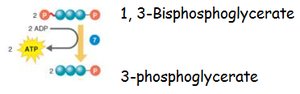
Substrate-Level Phosphorylation: Direct transfer of a phosphate group to ADP from a high-energy substrate.
Oxidative Phosphorylation: Energy from electron transport is used to generate a proton gradient, which drives ATP synthesis.
Carbohydrate Catabolism
Glycolysis: The First Step
Glycolysis is a series of reactions that convert glucose into pyruvic acid, yielding ATP and NADH.
Net Reaction:
Products: 2 pyruvic acid, 2 ATP (net), 2 NADH
Intermediate Step: Pyruvic Acid to Acetyl CoA
Pyruvic acid is oxidized to acetyl CoA and CO2, producing NADH. This step connects glycolysis to the Krebs cycle. 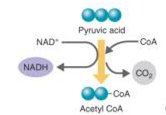
Krebs Cycle (Citric Acid Cycle)
Acetyl CoA enters the Krebs cycle, where it is completely oxidized to CO2, generating ATP, NADH, and FADH2. 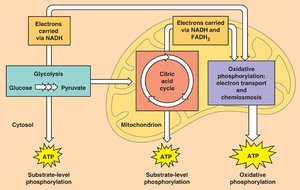
Electron Transport Chain (ETC)
The ETC uses electrons from NADH and FADH2 to generate a proton gradient, which powers ATP synthesis by chemiosmosis. Oxygen is the final electron acceptor, forming water. 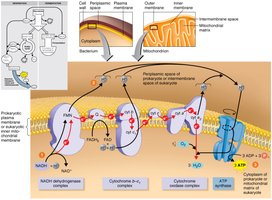
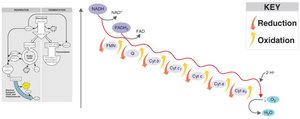
Energy Yield from Aerobic Respiration
Complete oxidation of one glucose molecule via aerobic respiration yields up to 38 ATP.
NADH: Each yields 3 ATP
FADH2: Each yields 2 ATP
Fermentation
Fermentation: Definition and Process
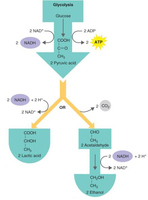
Fermentation is an anaerobic process that releases energy from organic molecules without using oxygen, the Krebs cycle, or the ETC. The final electron acceptor is an organic molecule (e.g., pyruvic acid).
Occurs in: Both prokaryotes and eukaryotes
Products: Organic acids, alcohols, gases
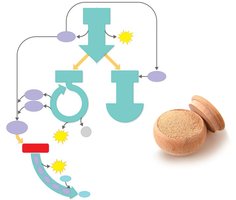
Types of Fermentation
Alcoholic Fermentation: Produces ethanol and CO2
Lactic Acid Fermentation: Produces lactic acid
Homolactic Fermentation: Produces only lactic acid
Heterolactic Fermentation: Produces lactic acid and other compounds
Industrial Uses of Fermentation
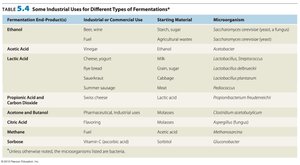
Fermentation is utilized in various industries for the production of food, beverages, and chemicals.
Fermentation End Product(s) | Industrial/Commercial Use | Starting Material | Microorganism |
|---|---|---|---|
Ethanol | Beer, wine | Sugar, agricultural waste | Saccharomyces cerevisiae |
Acetic Acid | Vinegar | Ethanol | Acetobacter |
Lactic Acid | Yogurt, sauerkraut | Milk, cabbage | Lactobacillus |
Propionic Acid and Carbon Dioxide | Swiss cheese | Lactic acid | Propionibacterium |
Acetone and Butanol | Pharmaceuticals, industrial uses | Molasses | Clostridium |
Citric Acid | Flavoring, industrial uses | Molasses | Aspergillus |
Methane | Waste treatment, fuel | Sewage | Methanobacterium |
Microbial Diversity and Fermentation
Different microorganisms utilize various fermentation pathways, resulting in diverse end products. 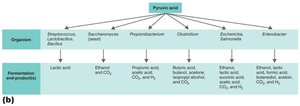
Summary Table: Respiration vs. Fermentation
Process | Oxygen Requirement | Pathways Used | End Products | ATP Yield |
|---|---|---|---|---|
Respiration | Requires O2 | Glycolysis, Krebs cycle, ETC | CO2, H2O | ~38 ATP |
Fermentation | Does not require O2 | Glycolysis only | Organic acids, alcohols, gases | 2 ATP |
Additional info: Ribozymes are RNA molecules with catalytic activity, distinct from protein enzymes. The electron transport chain in prokaryotes occurs in the plasma membrane, while in eukaryotes it occurs in the mitochondrial membrane.
