 Indietro
Lecture 9 Microbio
Guida di studio - Note intelligenti
 Appunti personalizzati basati sui tuoi materiali, ampliati con definizioni chiave, esempi e contesto.
Microbial Metabolism
Key Players in Microbial Metabolism
Microbial metabolism involves a series of biochemical reactions that allow cells to extract energy from organic and inorganic compounds. Several molecules play crucial roles in these processes:
NADH/NAD+: Nicotinamide adenine dinucleotide acts as a mobile electron carrier, shuttling electrons between metabolic reactions.
FADH2/FAD: Flavin adenine dinucleotide is another organic electron carrier involved in redox reactions.
CO2: Carbon dioxide is released during the oxidation of carbon substrates.
ATP: Adenosine triphosphate is the primary energy currency of the cell.
GTP: Guanosine triphosphate is another nucleotide used for energy transfer.
Electrons: Reducing power is transferred via redox reactions, often as hydrogen ions.
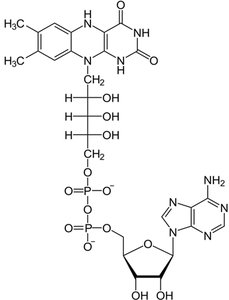
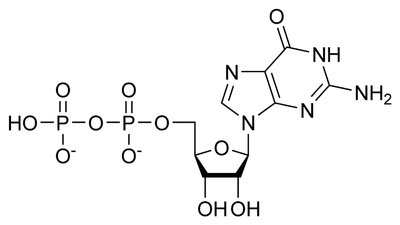

Energy-Rich Molecules
Cells conserve energy by synthesizing compounds with energy-rich bonds, primarily phosphate or sulfur bonds. The hydrolysis of these bonds releases energy to drive endergonic reactions, such as ATP synthesis.
ATP contains two energy-rich phosphate bonds, with hydrolysis releasing .
Other energy-rich compounds include phosphoenolpyruvate, acetyl phosphate, and acetyl-CoA.
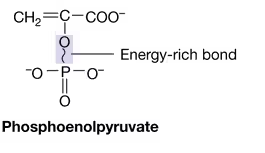
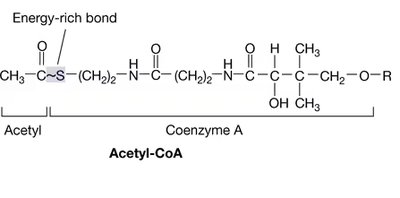
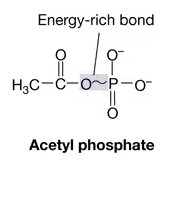
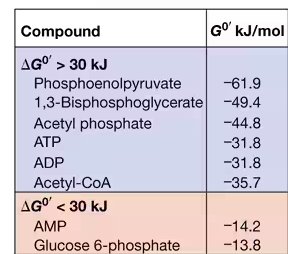
Table: Free Energy of Hydrolysis for Energy-Rich Compounds
Compound | ΔG0' (kJ/mol) |
|---|---|
Phosphoenolpyruvate | -61.9 |
1,3-Bisphosphoglycerate | -49.4 |
Acetyl phosphate | -44.8 |
ATP | -31.8 |
ADP | -31.8 |
Acetyl-CoA | -35.7 |
AMP | -14.2 |
Glucose 6-phosphate | -13.8 |
Mechanisms of Energy Conservation
Microbial cells generate ATP through three fundamental mechanisms:
Substrate-Level Phosphorylation: Direct transfer of a phosphate group from a substrate to ADP, forming ATP. Dominant in fermentative organisms. Example: Hydrolysis of phosphoenolpyruvate.
Oxidative Phosphorylation: Chemical energy generates a proton motive force (PMF), which powers ATP synthesis. Defining feature of respiration.
Photophosphorylation: Light energy is used to generate PMF, driving ATP synthesis in phototrophic organisms.
Enzymes in Metabolism
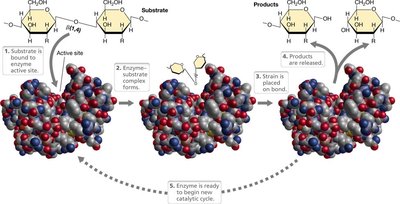
Enzymes are biological catalysts that lower the activation energy of reactions, enabling metabolic processes to occur efficiently within cells. The catalytic cycle of lysozyme illustrates how enzymes facilitate substrate transformation.
Metabolism of Organic Carbon Molecules
Chemoorganotrophy: Pathways for Energy Generation
Chemoorganotrophs utilize organic carbon molecules to fuel metabolism, generating energy in the form of reducing power (NADH, FADH2) or ATP. The main pathways include:
Glycolysis
Transition Reaction
Tricarboxylic Acid Cycle (TCA/Citric Acid/Krebs Cycle)
Electron Transport Chain
Fermentation
Glycolysis
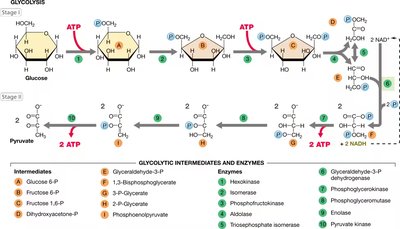
Glycolysis is a central metabolic pathway that breaks down glucose into pyruvate, generating ATP and NADH. It consists of two stages:
Stage I: Preparatory Phase – No redox reactions; energy is not released.
Stage II: Pay-off Phase – Redox reactions occur; energy is conserved as ATP and NADH.
From one molecule of glucose:
2 ATP (net gain)
2 NADH
2 pyruvate
Transition Reaction
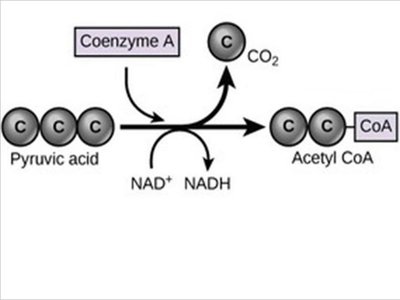
Pyruvate produced by glycolysis cannot directly enter the TCA cycle. During the transition step, pyruvate is decarboxylated and oxidized to form acetyl-CoA, NADH, and CO2.
For 2 pyruvate molecules: +2 NADH, +2 CO2, +2 Acetyl-CoA
Citric Acid Cycle (TCA/Krebs Cycle)
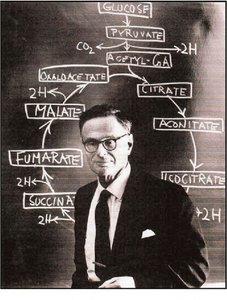
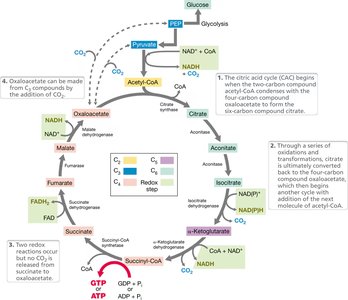
The citric acid cycle oxidizes acetyl-CoA to CO2, generating NADH, FADH2, GTP (or ATP), and biosynthetic precursors. The acetyl group combines with oxaloacetate to form citric acid, initiating the cycle.
For 2 acetyl-CoA molecules:
+6 NADH
+2 FADH2
+2 GTP (ATP)
+4 CO2
Provides precursors for amino acids, cytochromes, chlorophyll, and fatty acids.
Net Balance of Catabolism (per glucose molecule)
Molecule | Amount Produced | Cycle |
|---|---|---|
NADH | 2 | Glycolysis |
NADH | 2 | Transition Reaction |
NADH | 6 | TCA Cycle |
FADH2 | 2 | TCA Cycle |
CO2 | 2 | Transition Reaction |
CO2 | 4 | TCA Cycle |
ATP | 2 (Net) | Glycolysis (SLP) |
GTP | 2 | TCA Cycle (SLP) |
Role of the Citric Acid Cycle in Biosynthesis
The citric acid cycle not only generates energy but also provides raw materials for biosynthesis:
α-ketoglutarate and oxaloacetate: Precursors for amino acids.
Succinyl-CoA: Needed for cytochromes, chlorophyll, and related molecules.
Acetate: Raw material for fatty acid biosynthesis.
Other Pathways for Chemoorganotrophs: Glyoxylate Cycle
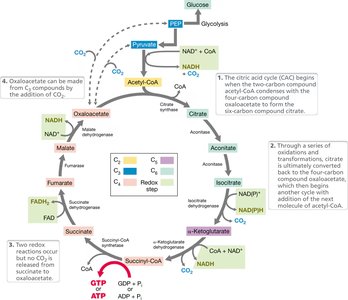
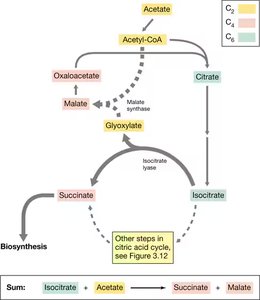
Chemoorganotrophs can oxidize various organic compounds. When growing on two-carbon electron donors (e.g., acetate), the glyoxylate cycle regenerates oxaloacetate from malate, maintaining an acetyl acceptor for the citric acid cycle.
Redox Reactions and Energy Calculations
Redox Tower and Calculating Free Energy
Microbial cells use redox reactions to generate energy and reducing power. The redox tower ranks compounds by their reduction potential (E0'), indicating their tendency to donate or accept electrons.
Electron donors have lower (more negative) E0' values.
Electron acceptors have higher (more positive) E0' values.
The free energy change (ΔG) for a redox reaction can be calculated using:
n = number of electrons transferred
F = Faraday constant
ΔE0' = difference in reduction potential between donor and acceptor
Example: Redox Reaction Calculation
Given two redox couples:
MnO2/Mn3+ (E0' = +0.40 V)
FeOOH/Fe2+ (E0' = +0.17 V)
Identify the electron donor (lower E0') and acceptor (higher E0'). Set up the equation for ΔG as above.
Summary Questions
How will the cell reach redox balance?
Are 4 molecules of ATP (and GTP) per molecule of glucose produced through substrate-level phosphorylation sufficient for maintaining life?
Additional info: Redox balance is achieved through further oxidation of NADH and FADH2 via the electron transport chain, generating additional ATP through oxidative phosphorylation.
