 Indietro
Microbial Metabolism: Enzymes, Pathways, and Catabolism
Guida di studio - Note intelligenti
 Appunti personalizzati basati sui tuoi materiali, ampliati con definizioni chiave, esempi e contesto.
Microbial Metabolism
Introduction to Microbial Metabolism
Microbial metabolism encompasses all the biochemical reactions that occur within microorganisms, enabling them to grow, reproduce, and respond to their environments. These reactions are broadly categorized into catabolic (energy-releasing) and anabolic (biosynthetic) pathways.

Genus: Bacillus
Characteristics of Bacillus
The genus Bacillus includes rod-shaped, Gram-positive bacteria that are often found in pairs or chains. They are motile by peritrichous flagella and form highly resistant endospores. Bacillus species are chemoorganotrophs, capable of both fermentative and respiratory metabolism, and are usually catalase positive. They inhabit diverse environments, with some species being pathogenic.

Metabolism
Definition and Overview
Metabolism refers to the sum of all chemical reactions within a cell. These reactions are divided into two main types:
Catabolism: The breakdown of complex molecules into simpler ones, releasing energy.
Anabolism: The synthesis of complex molecules from simpler ones, requiring energy input.

Enzymes in Metabolism
Nature and Function of Enzymes
Enzymes are biological catalysts, usually proteins, that speed up chemical reactions without being consumed. They lower the activation energy required for reactions, allowing metabolic processes to occur efficiently at physiological temperatures.

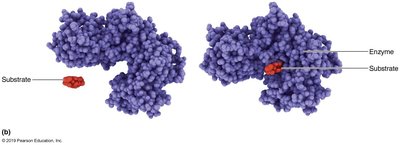
Four Roles of Enzymes
Assemble: Enzymes catalyze the assembly of molecules, such as during DNA replication or protein synthesis.
Disassemble: Enzymes break down molecules, as seen in digestive processes.
Transfer: Enzymes facilitate the transfer of functional groups or electrons between molecules.
Isomerize: Enzymes rearrange the structure of molecules without adding or removing atoms.

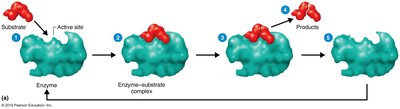

Enzyme Specificity and Optimum Conditions
Each enzyme has an optimum temperature, pH, and substrate concentration at which it functions most efficiently. Deviations from these conditions can reduce enzyme activity or denature the enzyme.

Reaction Coupling in Metabolism
Energy Transfer and ATP
Catabolic and anabolic pathways are interconnected through the molecule ATP (adenosine triphosphate). Catabolic reactions release energy, which is stored in ATP and then used to drive anabolic reactions.
Catabolism: Releases energy by oxidation of molecules (e.g., glucose to CO2 and H2O).
Anabolism: Uses energy from ATP to synthesize macromolecules (e.g., proteins from amino acids).

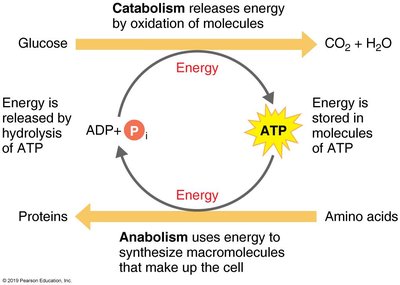
Oxidation and Reduction in Metabolism
Redox Reactions
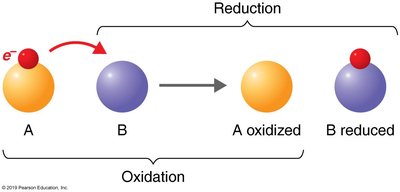
Oxidation-reduction (redox) reactions are central to energy transfer in cells. In these reactions, one molecule loses electrons (oxidized) while another gains electrons (reduced).
Oxidation: Loss of electrons.
Reduction: Gain of electrons.
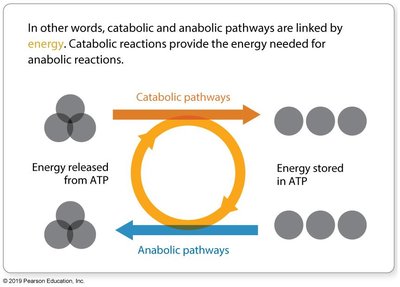
Electron Carriers
NAD+, NADP+, and FAD
Electron carriers are molecules that transport electrons during metabolic reactions. The main carriers are:
NAD+ (Nicotinamide adenine dinucleotide): Involved in catabolic reactions, carrying electrons to the electron transport chain.
NADP+ (Nicotinamide adenine dinucleotide phosphate): Functions mainly in anabolic reactions, such as biosynthesis.
FAD (Flavin adenine dinucleotide): Another important electron carrier, especially in the Krebs cycle.


Catabolism of Macromolecules
Overview of Macromolecule Breakdown
Microorganisms catabolize macromolecules such as starch, cellulose, proteins, and lipids to obtain energy and building blocks for growth. This process often involves hydrolysis, where water is used to break chemical bonds.
Hydrolysis of Starch
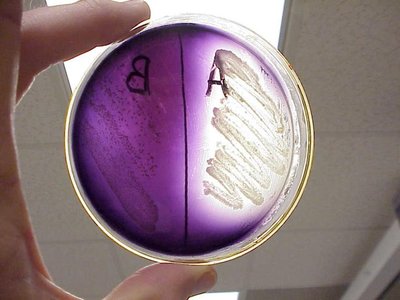
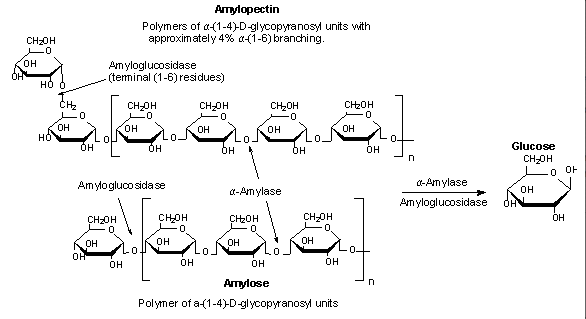
Starch is a polysaccharide composed of amylose and amylopectin. Microbes secrete enzymes like amylase to hydrolyze starch into glucose monomers, which can then enter metabolic pathways.
Hydrolysis of Cellulose
Cellulose is a major component of plant cell walls and consists of β-1,4-linked glucose units. Microbes produce cellulases to break down cellulose into cellobiose and glucose, which are then metabolized for energy.

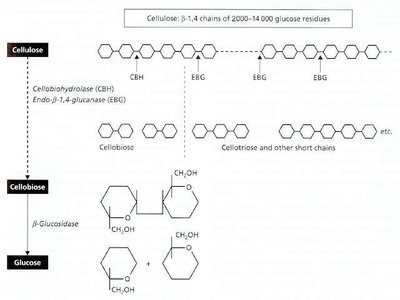
Example: Soil bacteria and fungi play a crucial role in decomposing plant material by hydrolyzing cellulose, thus recycling carbon in ecosystems.
Additional info: The breakdown of other macromolecules, such as proteins and lipids, follows similar principles, involving specific enzymes (proteases, lipases) that hydrolyze peptide bonds or ester bonds, respectively.
