 Indietro
Microbial Metabolism: Foundations and Mechanisms
Guida di studio - Note intelligenti
 Appunti personalizzati basati sui tuoi materiali, ampliati con definizioni chiave, esempi e contesto.
Chapter 5: Microbial Metabolism
Introduction to Microbial Metabolism
Microbial metabolism encompasses all the chemical reactions that occur within microorganisms, enabling them to grow, reproduce, maintain their structures, and respond to environments. These reactions are fundamental to life and are divided into two main categories: anabolism (building up) and catabolism (breaking down).
Metabolism: The sum of all chemical reactions in a cell.
Anabolism: Synthesis of complex molecules from simpler ones; requires energy input.
Catabolism: Breakdown of complex molecules into simpler ones; releases energy.
Redox Reactions: Chemical reactions involving the transfer of electrons, crucial for energy transfer.
Phosphorylation/Dephosphorylation: Addition/removal of phosphate groups, central to energy transfer (e.g., ATP cycle).
Example: The synthesis of proteins from amino acids (anabolism) and the breakdown of glucose during glycolysis (catabolism).
Learning Objectives
Explain how energy is converted between different forms through chemical reactions.
Distinguish among metabolism, anabolism, and catabolism as they relate to redox and phosphorylation/dephosphorylation.
Explain how enzymes accelerate chemical reactions and interpret reaction energy diagrams.
Contrast endergonic and exergonic reactions and define coupled reactions.

Basic Principles of Matter and Energy
Review of Matter
Matter is defined as anything that takes up space and has mass. In biological systems, matter is neither created nor destroyed but is rearranged through chemical reactions.
Law of Conservation of Matter: Matter can only change forms, not be created or destroyed.

Forms of Energy in Cells
Energy is the capacity to do work or supply heat. Cells utilize various forms of energy to perform essential functions such as building macromolecules and maintaining concentration gradients.
Potential Energy: Stored energy (e.g., in chemical bonds).
Kinetic Energy: Energy of motion.
Chemical Energy: Energy stored in molecular bonds.
Electrochemical Gradients: Energy stored across membranes.
Thermal Energy: Energy associated with heat.
Electromagnetic Energy: Light energy, important in photosynthesis.
First Law of Thermodynamics
The first law states that energy can neither be created nor destroyed, only transformed from one form to another. This principle underlies all metabolic processes in cells.
Example: Conversion of light energy to chemical energy during photosynthesis.
Second Law of Thermodynamics
The second law states that the entropy (disorder) of the universe tends to increase. Living systems maintain order (low entropy) by constantly using energy, and all chemical reactions release some energy as waste heat.
Entropy: A measure of disorder; increases spontaneously in the universe.
Living Systems: Require constant energy input to maintain order.
Gibbs Free Energy and Reaction Spontaneity
Gibbs Free Energy ()
Chemical reactions are characterized by changes in Gibbs free energy ():
at equilibrium
is spontaneous (exergonic); releases energy
is nonspontaneous (endergonic); requires energy input
Example: ATP hydrolysis is exergonic and powers many cellular processes.
Energy Profile Diagrams
Energy profile diagrams illustrate the energy changes during chemical reactions. Exergonic reactions release energy, while endergonic reactions require energy input.
Activation Energy (): The energy required to initiate a reaction.
ATP and Cellular Energy Transfer
ATP: The Universal Energy Carrier
ATP (adenosine triphosphate) is the primary energy currency of the cell. Its hydrolysis releases energy (~7.3 kcal/mol) that drives endergonic reactions.
Phosphorylation: Addition of a phosphate group to a molecule, storing energy.
Dephosphorylation: Removal of a phosphate group, releasing energy.
ATP Cycle: ATP is continuously regenerated from ADP and Pi.
Example: Muscle contraction, active transport, and biosynthesis all require ATP.
Other Energy Carriers
NADH/NAD+: Electron carrier; oxidation releases 52.6 kcal/mol.
FADH2/FAD: Electron carrier; oxidation releases 47.8 kcal/mol.
Enzymes and Biological Catalysis
Role of Enzymes
Enzymes are biological catalysts that accelerate chemical reactions by lowering the activation energy () required. They do not alter the overall of a reaction.
Specificity: Enzymes are highly specific for their substrates.
Induced Fit: Enzyme changes shape to better fit the substrate.
Holoenzyme: Complete, active enzyme with all necessary cofactors.
Apoenzyme: Protein portion of an enzyme, inactive without cofactors.
Cofactors: Non-protein helpers (inorganic ions or organic coenzymes).
Factors Affecting Enzyme Activity
Temperature: Increases reaction rate up to a point; too high denatures enzyme.
pH: Each enzyme has an optimal pH; extremes can denature enzyme.
Substrate Concentration: Higher concentration increases rate until saturation.
Enzyme Regulation
Competitive Inhibition: Inhibitor mimics substrate and binds active site.
Allosteric Regulation: Molecule binds elsewhere, changing enzyme shape and activity (activation or inhibition).
Feedback Inhibition: End-product of a pathway inhibits an earlier enzyme, preventing overproduction.
Metabolic Pathways
Pathway Organization
Enzymes function in organized metabolic pathways, where the product of one reaction becomes the substrate for the next. Pathways are regulated to ensure efficiency and balance in cellular metabolism.
Sequential Activation: Each step is catalyzed by a specific enzyme.
Feedback Inhibition: Maintains homeostasis by shutting down pathways when products are abundant.
Summary Table: Key Energy Carriers in Metabolism
Carrier | Reaction | Energy Released (kcal/mol) |
|---|---|---|
ATP → ADP + Pi | Dephosphorylation | 7.3 |
NADH → NAD+ | Oxidation | 52.6 |
FADH2 → FAD | Oxidation | 47.8 |
Study Strategies for Microbial Metabolism
Effective Learning Approaches
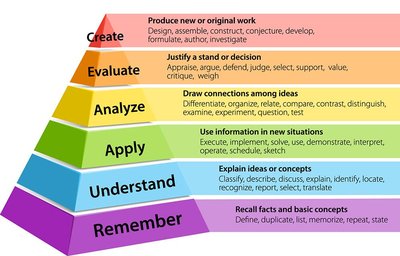
Focus on comprehension, not just memorization.
Use active recall, concept maps, and practice questions.
Review objectives and rework class activities for deeper understanding.
Example Study Schedule
Monday: Review notes, prepare questions, read textbook.
Tuesday: Attend class, take notes, review lab handout.
Wednesday: Review notes, concept mapping, attend lab.
Thursday: Attend class, start assignments, review notes.
Friday: Organize notes, finish assignments, build study aids.
Key Equations
Gibbs Free Energy:
ATP Hydrolysis:
Additional info: These notes are based on lecture slides, textbook references, and standard microbiology curriculum for microbial metabolism. For further study, refer to textbook Chapter 5 (pp. 124-156) and practice with provided flashcards and assignments.
