 Indietro
Microbial Metabolism: Foundations and Pathways
Guida di studio - Note intelligenti
 Appunti personalizzati basati sui tuoi materiali, ampliati con definizioni chiave, esempi e contesto.
Microbial Metabolism
Introduction to Metabolism
Metabolism encompasses all the chemical reactions that occur within a living cell, including both the breakdown and synthesis of molecules. These reactions provide energy and essential building blocks for cellular processes, sustaining life.
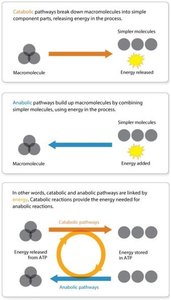
Catabolism: The breakdown of complex molecules into simpler ones, releasing energy.
Anabolism: The synthesis of complex molecules from simpler ones, requiring energy input.
Metabolic pathways are sequences of enzymatically catalyzed reactions, determined by specific enzymes encoded by genes.
Catabolic and Anabolic Reactions
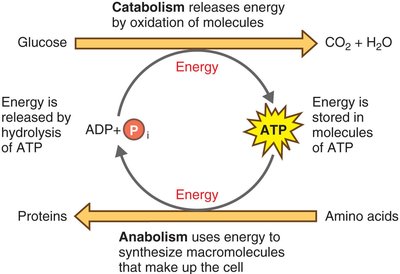
Catabolic and anabolic reactions are interconnected through the molecule ATP, which acts as an energy currency in the cell.
Catabolic reactions are typically hydrolytic and exergonic (energy-releasing).
Anabolic reactions are biosynthetic, often involving dehydration synthesis, and are endergonic (energy-consuming).
Energy released from catabolism is used to generate ATP, which then powers anabolic reactions.
Enzymes and Chemical Reactions
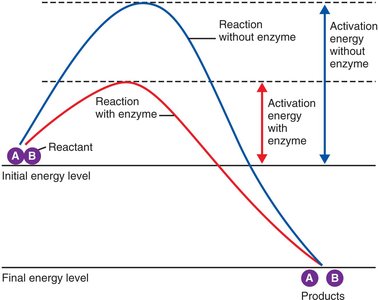
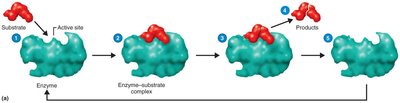
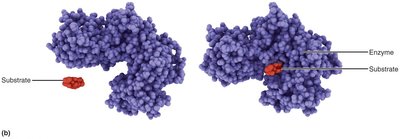
Enzymes are biological catalysts that speed up chemical reactions by lowering the activation energy required. They are highly specific for their substrates and are not consumed in the reaction.
Activation energy: The minimum energy required for a reaction to occur.
Enzyme-substrate complex: The temporary association between an enzyme and its substrate during a reaction.
Enzyme Structure and Classification
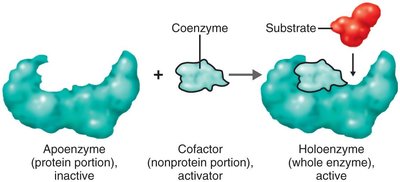
Enzymes are composed of a protein portion (apoenzyme) and may require a nonprotein cofactor for activity. The complete, active enzyme is called a holoenzyme.
Apoenzyme: Inactive protein portion.
Cofactor: Nonprotein component (can be inorganic or organic, the latter called a coenzyme).
Holoenzyme: Apoenzyme plus cofactor (active form).
Enzymes are named based on the reactions they catalyze (e.g., oxidoreductase, transferase, hydrolase, lyase, isomerase, ligase).
Factors Influencing Enzyme Activity
Enzyme activity is affected by several factors, including temperature, pH, substrate concentration, and the presence of inhibitors.
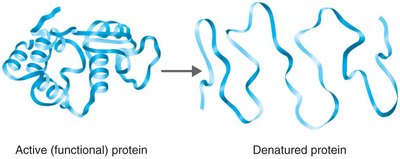
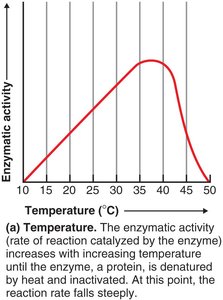
Temperature: Enzyme activity increases with temperature up to an optimum, then decreases due to denaturation.
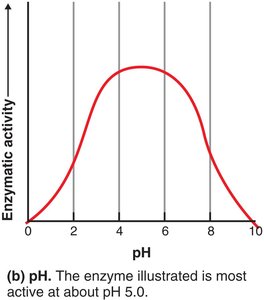
pH: Each enzyme has an optimal pH; extreme pH values can denature the enzyme.
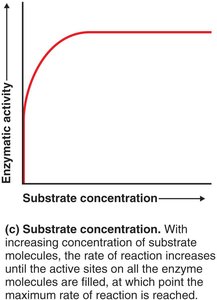
Substrate concentration: Activity increases with substrate concentration until the enzyme is saturated.
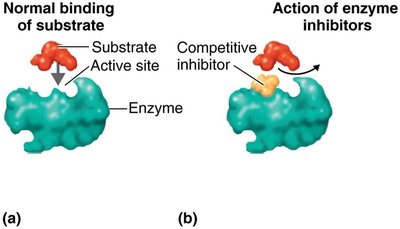
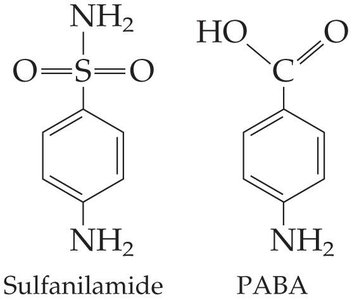
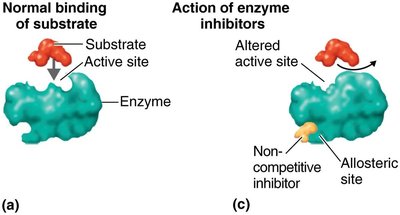
Inhibitors: Can be competitive (compete with substrate for active site) or noncompetitive (bind elsewhere, altering enzyme function).
Enzyme Inhibition and Regulation
Enzyme activity can be regulated by inhibitors and feedback mechanisms.
Competitive inhibitors: Bind to the active site, blocking substrate access.
Noncompetitive inhibitors: Bind to an allosteric site, changing the enzyme's shape and function.
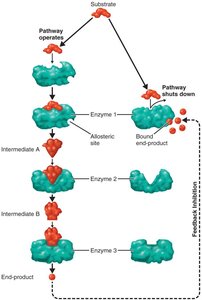
Feedback inhibition: The end-product of a pathway inhibits an enzyme involved earlier in the pathway, regulating metabolic flux.
Energy Production and ATP
Oxidation-Reduction Reactions
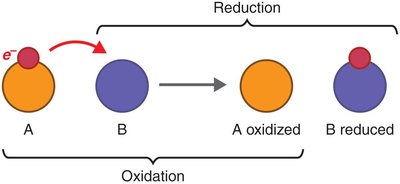
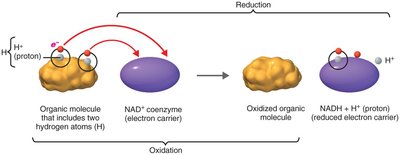
Energy production in cells involves oxidation-reduction (redox) reactions, where electrons are transferred from one molecule to another.
Oxidation: Loss of electrons.
Reduction: Gain of electrons.
In biological systems, these often involve the transfer of hydrogen atoms (dehydrogenation).
ATP Generation Mechanisms
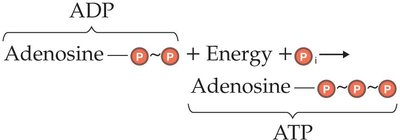
ATP is generated by the phosphorylation of ADP, using energy from catabolic reactions. There are three main mechanisms:
Substrate-level phosphorylation: Direct transfer of a phosphate group to ADP from a phosphorylated intermediate.
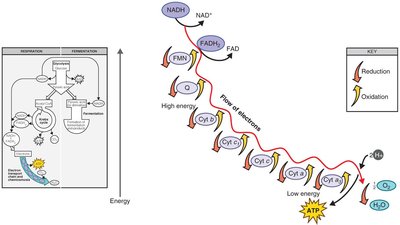
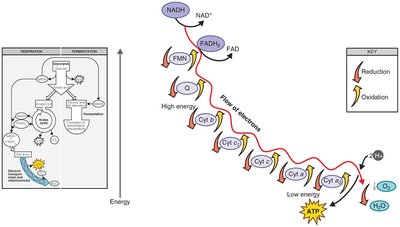
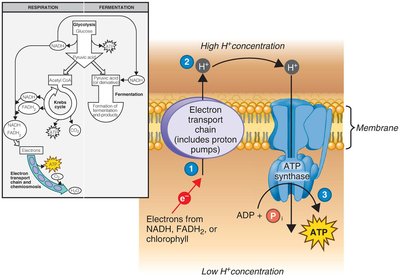
Oxidative phosphorylation: Electrons are transferred through an electron transport chain, generating a proton gradient used to synthesize ATP (chemiosmosis).
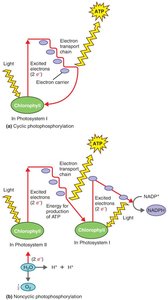
Photophosphorylation: Light energy is used to generate ATP in photosynthetic cells.
Carbohydrate Catabolism
Overview of Carbohydrate Catabolism
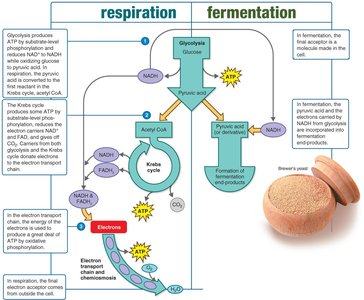
Microorganisms primarily oxidize carbohydrates, especially glucose, to obtain energy. The two main processes are cellular respiration and fermentation.
Cellular respiration: Includes glycolysis, the Krebs cycle, and the electron transport chain.
Fermentation: Incomplete oxidation of glucose, yielding less ATP.
Glycolysis
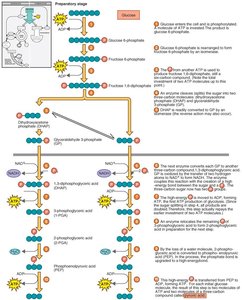
Glycolysis is the oxidation of glucose to pyruvic acid, producing ATP and NADH. It consists of two stages: the preparatory stage and the energy-conserving stage.
Preparatory stage: 2 ATP are used to split glucose into two three-carbon molecules.
Energy-conserving stage: The three-carbon molecules are oxidized to pyruvic acid, generating 4 ATP and 2 NADH.
Net gain: 2 ATP per glucose molecule.
Additional Pathways
Pentose phosphate pathway: Breaks down five-carbon sugars and produces NADPH for biosynthesis.
Entner-Doudoroff pathway: Alternative to glycolysis, producing NADPH, NADH, and ATP; found in some bacteria.
Cellular Respiration
Cellular respiration involves the complete oxidation of substrates, with electrons transferred to an inorganic final electron acceptor (oxygen in aerobic respiration).
Aerobic respiration: Oxygen is the final electron acceptor.
Anaerobic respiration: Other inorganic molecules (e.g., nitrate, sulfate) serve as final electron acceptors.
Krebs Cycle
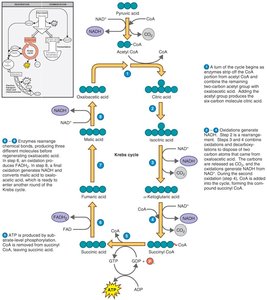
The Krebs cycle oxidizes acetyl CoA to CO2, generating NADH, FADH2, and ATP (or GTP).
Occurs in the cytoplasm of prokaryotes and mitochondria of eukaryotes.
Produces electron carriers for the electron transport chain.
Electron Transport Chain and Chemiosmosis
Electrons from NADH and FADH2 are transferred through a series of carriers, creating a proton gradient across the membrane. ATP synthase uses this gradient to generate ATP.
Anaerobic Respiration
In anaerobic respiration, the final electron acceptor is not oxygen but another inorganic molecule, such as nitrate, sulfate, or carbonate. This process yields less ATP than aerobic respiration.
Electron Acceptor | Products |
|---|---|
NO3- | NO2-, N2, H2O |
SO42- | H2S, H2O |
CO32- | CH4, H2O |
Fermentation
Fermentation is an anaerobic process that generates ATP by substrate-level phosphorylation, using an organic molecule as the final electron acceptor. It produces less ATP than respiration.
Lactic acid fermentation: Produces lactic acid (homolactic or heterolactic).
Alcohol fermentation: Produces ethanol and CO2.
Industrial Uses of Fermentation
Fermentation End-product(s) | Industrial Use | Starting Material | Microorganism |
|---|---|---|---|
Ethanol | Beer, Wine | Starch, sugar | Saccharomyces cerevisiae |
Acetic Acid | Vinegar | Ethanol | Acetobacter |
Lactic Acid | Cheese, yogurt | Milk | Lactobacillus, Streptococcus |
Propionic Acid, CO2 | Swiss cheese | Lactic acid | Propionibacterium freudenreichii |
Acetone, Butanol | Pharmaceutical, industrial | Molasses | Clostridium acetobutylicum |
Methane | Fuel | Acetic acid | Methanosarcina |
Lipid and Protein Catabolism
Lipid Catabolism
Lipids are hydrolyzed by lipases into glycerol and fatty acids. Fatty acids undergo beta-oxidation to generate acetyl CoA, which enters the Krebs cycle.
Protein Catabolism
Proteins are degraded by proteases and peptidases into amino acids, which are deaminated, decarboxylated, or desulfurized to enter central metabolic pathways.
Photosynthesis
Light-Dependent and Light-Independent Reactions
Photosynthesis consists of light-dependent reactions (producing ATP and NADPH) and light-independent reactions (Calvin-Benson cycle, fixing CO2 into sugar).
Oxygenic photosynthesis: Produces O2 (plants, algae, cyanobacteria).
Anoxygenic photosynthesis: Does not produce O2 (purple and green sulfur bacteria).
Metabolic Diversity Among Organisms
Nutritional Classification
Nutritional Type | Energy Source | Carbon Source | Example |
|---|---|---|---|
Photoautotroph | Light | CO2 | Cyanobacteria, plants |
Photoheterotroph | Light | Organic compounds | Green bacteria, purple nonsulfur bacteria |
Chemoautotroph | Inorganic chemicals | CO2 | Iron-oxidizing bacteria |
Chemoheterotroph | Chemicals | Organic compounds | Animals, fungi, most bacteria |
Summary: Microbial metabolism is the sum of all chemical reactions in a cell, involving energy transfer through catabolic and anabolic pathways, mediated by enzymes. Energy is primarily stored and transferred as ATP, generated through substrate-level, oxidative, and photophosphorylation. Microbes display diverse metabolic strategies, enabling them to thrive in various environments.
