 Indietro
Microbial Nutrition and Growth: Requirements, Media, and Growth Dynamics
Guida di studio - Note intelligenti
 Appunti personalizzati basati sui tuoi materiali, ampliati con definizioni chiave, esempi e contesto.
Microbial Nutrition and Growth Requirements
Introduction
Microbial nutrition and growth are foundational concepts in microbiology, focusing on the chemical and physical requirements for microbial life, the types of culture media, and the dynamics of microbial population growth. Understanding these principles is essential for culturing, identifying, and controlling microorganisms in laboratory and clinical settings.
How Microbes Feed
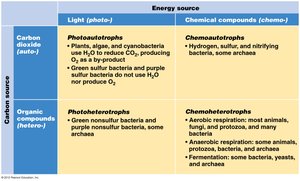
Classification by Energy and Carbon Source
Microorganisms are classified based on their energy and carbon sources, which determine their metabolic strategies and ecological roles.
Photoautotrophs: Use light as an energy source and carbon dioxide as a carbon source (e.g., plants, algae, cyanobacteria).
Chemoautotrophs: Obtain energy from inorganic chemical compounds and use carbon dioxide as a carbon source (e.g., hydrogen, sulfur, and nitrifying bacteria).
Photoheterotrophs: Use light for energy but require organic compounds for carbon (e.g., green nonsulfur bacteria).
Chemoheterotrophs: Obtain both energy and carbon from organic compounds (e.g., most animals, fungi, protozoa, and many bacteria).
Bacterial Growth Requirements
Chemical Requirements
Carbon: Essential for all organic molecules and cellular structures.
Oxygen: Required for aerobic metabolism but toxic to some anaerobes due to reactive oxygen species.
Nitrogen, Sulfur, Phosphorus: Needed for synthesis of amino acids, nucleic acids, ATP, and vitamins.
Trace Elements: Inorganic elements (e.g., Fe, Zn, Mg) required in small amounts for enzyme function and stability.
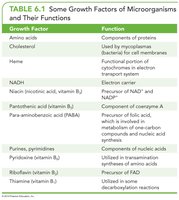
Vitamins and Growth Factors: Organic compounds required in small amounts; some microbes synthesize their own, others require supplementation.
Physical Requirements
Temperature: Microbes are classified as psychrophiles, mesophiles, thermophiles, or hyperthermophiles based on their optimal growth temperatures.
pH: Acidophiles, neutrophiles, and alkalinophiles grow best at acidic, neutral, or alkaline pH, respectively.
Osmotic Pressure: Halophiles require or tolerate high salt concentrations; osmotic balance is crucial for cell survival.
Culture Media and Culturing Microbes
Types of Culture Media
Synthetic (Chemically Defined) Media: Composed of precise amounts of pure chemicals; used for specific nutritional studies.
Complex Media: Contain extracts from natural sources (e.g., beef, yeast, blood); composition is not precisely known.
Selective Media: Inhibit the growth of some organisms while allowing others to grow (e.g., Mannitol Salt Agar for Staphylococcus).
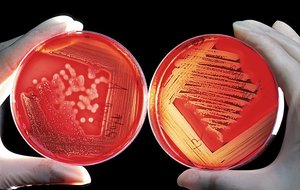
Differential Media: Distinguish between organisms based on metabolic reactions (e.g., blood agar for hemolysis patterns).
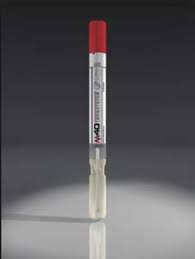
Transport Media: Used to preserve and transport clinical specimens without overgrowth or contamination.
Common Culture Techniques
Streak Plate: Used to isolate pure colonies from a mixed sample.
Pour Plate: Used for counting viable cells and isolating colonies.
Special Techniques: Some microbes require animal or cell culture for growth.
The Basis of Population Growth: Binary Fission
Binary Fission Process
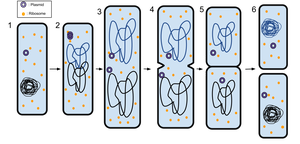
Bacteria reproduce asexually by binary fission, a process in which one cell divides into two genetically identical daughter cells. This process does not involve a spindle fiber apparatus and is the primary means of population increase in prokaryotes.
Bacterial Growth Curves
Phases of the Bacterial Growth Curve
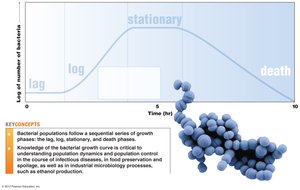
Bacterial populations in batch culture display a predictable growth curve with four distinct phases:
Lag Phase: Cells adjust to new environment; no immediate increase in cell number.
Log (Exponential) Phase: Rapid cell division and population growth; cells are most metabolically active.
Stationary Phase: Growth rate slows as nutrients are depleted and waste accumulates; cell division equals cell death.
Death Phase: Cells die at a logarithmic rate due to lack of nutrients and accumulation of toxic products.
Population Number Calculation
The number of cells in a population can be calculated using the formula:
: Final number of cells
: Initial number of cells
: Number of generations (doublings)
Example: If you start with 100 cells and the population doubles every 30 minutes, after 3 hours (6 generations), the final number of cells is:
Preserving Microbial Cultures
Methods of Preservation
Refrigeration: Short-term storage at low temperatures.
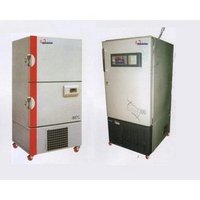
Deep-Freezing: Long-term storage at –50° to –95°C.
Lyophilization (Freeze-Drying): Long-term preservation by freezing and dehydrating in a vacuum.
Biosafety Levels
Laboratory Safety for Microbial Work
BSL-1: Basic precautions; suitable for non-pathogenic microbes.
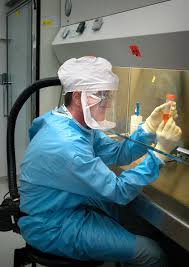
BSL-2: Lab coat, gloves, eye protection; for moderate-risk agents.
BSL-3: Biosafety cabinets to prevent airborne transmission; for pathogens that can cause serious disease.
BSL-4: Sealed, negative pressure labs with double air filtration; for highly dangerous and exotic pathogens.
Summary of Key Concepts
Microbial growth depends on specific chemical and physical requirements.
Culture media and aseptic techniques are essential for isolating and studying microbes.
Bacterial populations grow by binary fission, following a characteristic growth curve.
Proper preservation and biosafety practices are critical for laboratory work with microorganisms.
