 Indietro
Microbial Nutrition and Metabolism: Structured Study Notes
Guida di studio - Note intelligenti
 Appunti personalizzati basati sui tuoi materiali, ampliati con definizioni chiave, esempi e contesto.
Chapter 5: Nutrition and Metabolism
I. Nutrition and Culture Media
5.1 Nutrition
Microbial nutrition involves the acquisition of essential elements and compounds required for growth and cellular function. These nutrients are classified as macronutrients and micronutrients based on their required quantities.
Macronutrients: Carbon (C), Oxygen (O), Nitrogen (N), Hydrogen (H), Phosphorus (P), Sulfur (S), Potassium (K), Magnesium (Mg), Calcium (Ca), Sodium (Na)
Carbon: Constitutes ~50% of cell dry weight; serves as the backbone of biomolecules. Sources include organic compounds (heterotrophs) and inorganic compounds (autotrophs).
Oxygen & Hydrogen: Derived from organic molecules, CO2, or H2O; not directly from O2.
Nitrogen: ~12% of cell dry weight; found in amino acids, nucleic acids, and other cell constituents. Sources include organic (amino acids, urea) and inorganic (NH3, NO3-, N2).
Phosphorus: Essential for phospholipids, nucleic acids, ATP, and other high-energy biomolecules.
Sulfur: Present in S-containing amino acids (cysteine, methionine), vitamins, coenzyme A, and antioxidants.
Potassium & Magnesium: Required for enzyme activity and stabilization of ribosomes, membranes, and nucleic acids.
Sodium: Usually required by marine microorganisms.
Micronutrients: Iron (Fe) and other metals (Cu, Mn, Mo, Ni, Se, W, Zn) are needed in trace amounts, often as cofactors in redox enzymes.
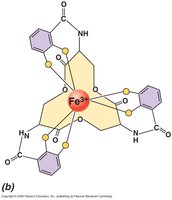
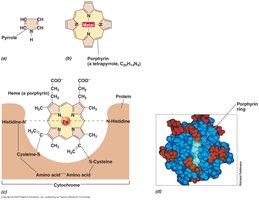
Iron: Major role in cellular respiration (cytochromes, FeS proteins). Exists as Fe2+ (soluble, anoxic) or Fe3+ (insoluble, oxic). Microbes produce siderophores to acquire iron from insoluble minerals.
Growth Factors: Organic compounds required in small amounts (vitamins, amino acids, purines, pyrimidines).
5.2 Culture Media
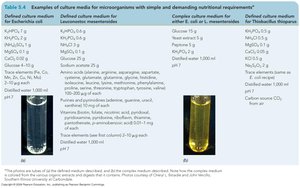
Culture media are nutrient mixtures used to grow microorganisms in the laboratory. They are classified based on their chemical composition and purpose.
Liquid Media: Used for growing large volumes of microbes.
Solid Media: Contains solidifying agents (e.g., agar) for isolating colonies.
Complex Media: Contains digests of chemically undefined substances (e.g., yeast and meat extracts).
Defined Media: Precise chemical composition is known.
Specialty Media: Includes selective media (inhibits growth of some microbes) and differential media (contains indicators to detect specific reactions).
Successful cultivation requires understanding and supplying macronutrients, micronutrients, and trace elements in proper form and proportions.
II. Energetics and Enzymes
5.4 Bioenergetics
Bioenergetics studies the energy transformations in biological systems. Free energy (G) is the energy available to do work, and its change (ΔG) determines whether a reaction is spontaneous.
Free Energy Change: Where R is the gas constant, T is temperature in Kelvin, and k is the equilibrium constant.
Endergonic Reactions: (requires energy)
Exergonic Reactions: (releases energy)
5.5 Catalysis and Enzymes
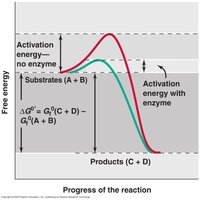
Catalysts lower the activation energy of reactions, increasing their rate without affecting equilibrium. Enzymes are biological catalysts, typically proteins, that are highly specific and efficient.
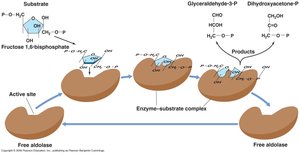
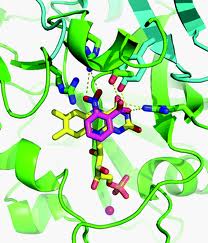
Active Site: Region of enzyme that binds substrate and facilitates reaction.
Enzyme Catalysis:
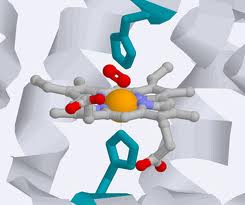
Prosthetic Groups: Tightly bound, often covalent (e.g., heme in cytochromes).
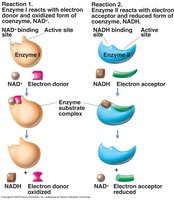
Coenzymes: Loosely bound, often vitamin derivatives (e.g., NAD+/NADH).
III. Redox Reactions and Energy Conservation
5.6 Redox Reaction
Redox (oxidation-reduction) reactions are central to energy conservation in cells. They involve electron transfer between donor and acceptor molecules, often coupled to ATP synthesis.
Electron Donor: Substance oxidized (loses electrons).
Electron Acceptor: Substance reduced (gains electrons).
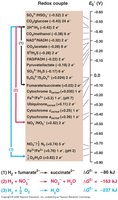
Reduction Potential (Eo'): Tendency to be oxidized or reduced, measured in volts.
Redox Tower: Visualizes reduction potentials; greater distance between donor and acceptor yields more energy.


5.7 Electron Carrier: NAD
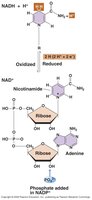
Electron carriers like NAD+/NADH facilitate redox reactions by shuttling electrons between intermediates. They are recycled and not consumed in the process.
Prosthetic Groups: Attached to enzymes.
Coenzymes: Diffusible (e.g., NAD+, NADP+).
5.8 Energy-Rich Compounds and Energy Storage
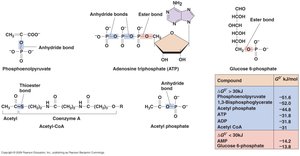
Energy released in redox reactions is conserved in phosphorylated compounds such as ATP and acetyl-CoA. Long-term energy storage involves polymers like glycogen, polyhydroxyalkanoates, and lipids.
ATP: Prime energy currency of the cell.
Coenzyme A: Important in acetyl group transfer.
Energy Storage: Glycogen, polyhydroxybutyrate, elemental sulfur, polyphosphate, starch, and lipids.
IV. Catabolism
5.9 Energy Conservation
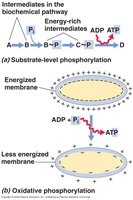
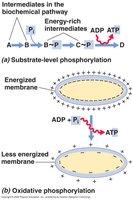
Microbial energy conservation occurs via substrate-level phosphorylation and oxidative phosphorylation. These processes are linked to ATP synthesis.
Substrate-Level Phosphorylation: ATP synthesized directly from metabolic intermediates.
Oxidative Phosphorylation: ATP produced from proton motive force generated by electron transport.
5.10 Glycolysis and Fermentation
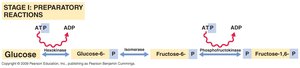
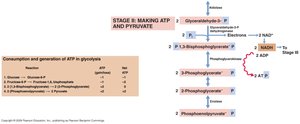
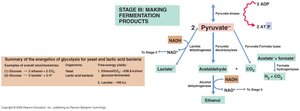
Glycolysis (Embden-Meyerhof pathway) is a common anaerobic pathway for glucose catabolism, leading to fermentation or respiration. It consists of three stages: preparatory reactions, ATP and pyruvate formation, and fermentation product formation.
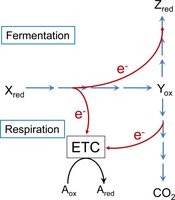
Fermentation: Regenerates NAD+ and produces ATP via substrate-level phosphorylation.
Respiration: Further oxidation of pyruvate, ATP production via electron transport chain.
5.11-12 Respiration
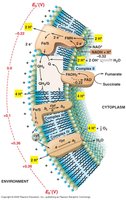
Respiration involves energy metabolism through oxidation-reduction reactions linked to ATP production. The electron transport chain (ETC) consists of redox-active enzymes and carriers, facilitating electron flow and proton pumping.
Fermentation: Terminal electron acceptor is a metabolic intermediate.
Respiration: Terminal electron acceptor is O2 (aerobic) or another compound (anaerobic).
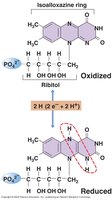
ETC Components: NADH dehydrogenases, flavoproteins, iron-sulfur proteins, cytochromes, quinones.
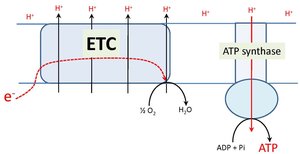
Proton Motive Force: Generated by alternation of H carriers and electron carriers, resulting in H+ pumping across the membrane.
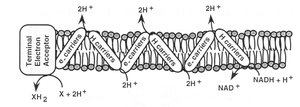
Proton Motive Force and ATP Synthase
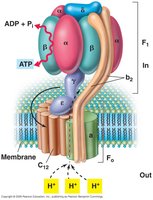
The proton motive force consists of a chemical (pH) gradient and an electrical gradient across the membrane. ATP synthase is a proton-driven motor protein that synthesizes ATP from ADP and Pi.
Complex I-IV: Series of ETC complexes that transfer electrons and pump protons.
ATP Synthase: F1 and F0 subunits; rotation of c protein leads to ATP formation.
5.13 Carbon Flow in Respiration
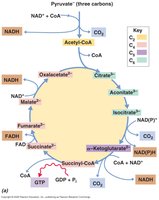
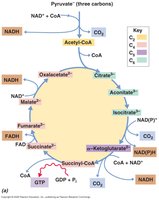
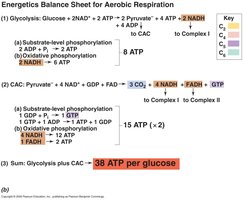
The tricarboxylic acid (TCA) cycle, also known as the Krebs or citric acid cycle, is central to carbon flow and energy production in respiration.
Catabolic Diversity
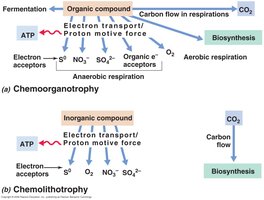
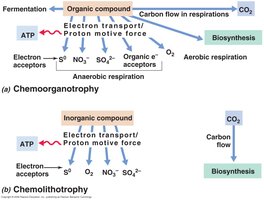
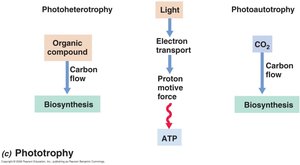
Microbes exhibit diverse catabolic strategies, including heterotrophy and autotrophy, to obtain energy and carbon.
V. Anabolism
5.15 Biosynthesis of Sugars and Polysaccharides
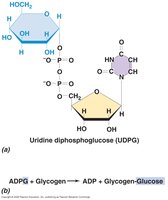
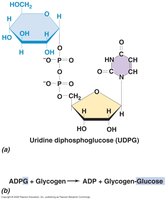
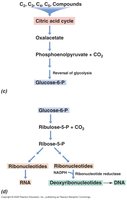
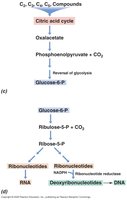
Prokaryotic polysaccharides are synthesized from active forms of glucose, such as ADPG and UDPG. Gluconeogenesis and pentose biosynthesis are essential for nucleic acid and cell wall formation.
ADPG: Precursor for glycogen biosynthesis.
UDPG: Precursor for glucose derivatives in polysaccharide biosynthesis.
Gluconeogenesis: PEP derived from oxalacetate in TCA cycle.
Pentose Biosynthesis: Removal of one carbon from hexose; required for nucleic acid synthesis.
5.16 Biosynthesis of Amino Acids and Nucleotides
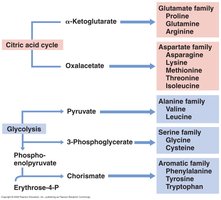
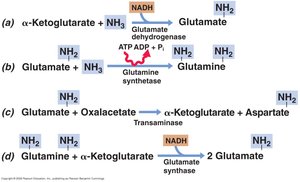
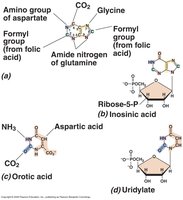
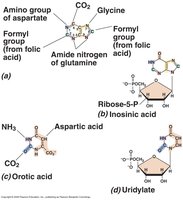
Amino acids are synthesized from carbon sources (glycolysis and TCA cycle) and nitrogen sources (inorganic nitrogen via glutamate or glutamine). Nucleic acids are synthesized from purine and pyrimidine rings derived from multiple sources.
Transamination: Transfer of amino groups via glutamate or glutamine.
Purine and Pyrimidine Synthesis: Rings assembled from various precursors.
5.17 Biosynthesis of Fatty Acids and Lipids
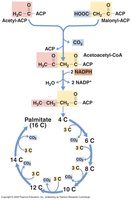
Fatty acids are biosynthesized two carbons at a time, with acyl carrier protein (ACP) holding the growing chain. Lipids are assembled from glycerol and fatty acids.
5.18 Regulation
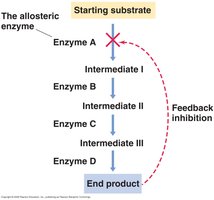
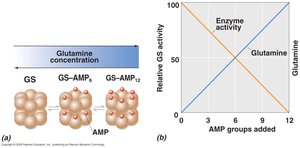
Enzyme regulation occurs at the level of amount (gene expression) and activity (temporary inactivation). Feedback inhibition and covalent modifications are key regulatory mechanisms.
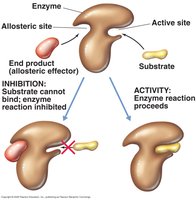
Feedback Inhibition: End product inhibits the first enzyme in the pathway (allosteric enzyme).
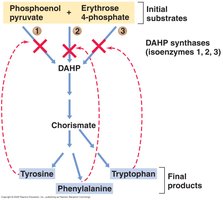
Isoenzymes: Different enzymes catalyzing the same reaction, subject to different regulatory controls.
Covalent Modifications: Attachment/removal of small molecules (AMP, ADP, phosphate, methyl groups) alters enzyme activity.
Additional info: These notes expand on brief points with academic context, definitions, and examples to ensure completeness and clarity for exam preparation.
