 Indietro
Microbial Nutrition, Growth, and Cultivation: Study Notes
Guida di studio - Note intelligenti
 Appunti personalizzati basati sui tuoi materiali, ampliati con definizioni chiave, esempi e contesto.
Bacterial Culture, Growth, and Development
Microbial Nutrition and Energy Acquisition
Microbes, including bacteria and fungi, thrive in diverse environments due to their ability to obtain nutrients and energy from various sources. Their metabolic versatility allows them to utilize both organic and inorganic compounds for growth and survival.
Organic sources: Dead organisms, waste products, and decaying matter provide carbon and energy.
Inorganic sources: Carbon dioxide (CO2) and minerals are used by certain microbes.
Energy generation: Microbes use chemical reactions involving electron transfer to produce ATP, the universal energy currency of cells.
Ecological impact: Microbes contribute to nutrient cycling, soil fertility, and ecosystem functioning.
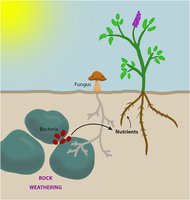
Example: Bacteria and fungi participate in rock weathering and nutrient transfer to plants.
Carbon Acquisition in Microbes
Microbes are classified based on their carbon source, which is fundamental to their metabolism and ecological roles.
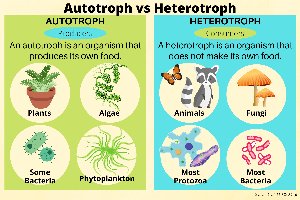
Autotrophs: "Self-feeders" that synthesize organic molecules from CO2. Examples include plants, algae, some bacteria, and phytoplankton.
Heterotrophs: "Other-feeders" that require pre-formed organic molecules. Examples include animals, fungi, most protozoa, and most bacteria.
Nitrogen Acquisition and Cycling
Nitrogen is essential for microbial growth, as it is a key component of proteins, DNA, and RNA. Microbes play critical roles in the nitrogen cycle, converting nitrogen into forms usable by living organisms.
Nitrogen fixation: Certain bacteria convert atmospheric N2 into ammonia (NH3), making nitrogen accessible to plants and other organisms.
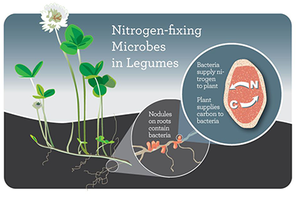
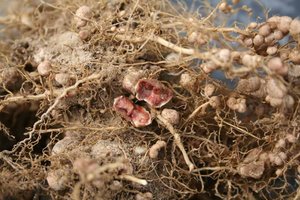
Symbiotic relationships: Nitrogen-fixing bacteria often form partnerships with legumes, exchanging nitrogen for sugars.
Free-living bacteria: Some fix nitrogen independently in soil or water.
Ecological importance: Nitrogen fixation enriches soils and reduces reliance on chemical fertilizers.
Nitrogen Assimilation and Transport
Microbes assimilate inorganic nitrogen (NH4+ or NO3-) through specialized transport proteins and metabolic pathways.
Transport proteins: Ammonium transporters facilitate the uptake of ammonia.
Conversion: Nitrate is reduced to ammonium inside the cell, which is then incorporated into amino acids and nucleic acids.
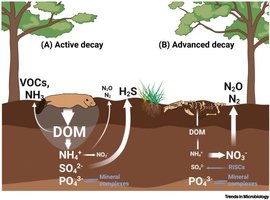
Mineralization: Microbes recycle organic nitrogen by breaking down proteins and releasing ammonium.
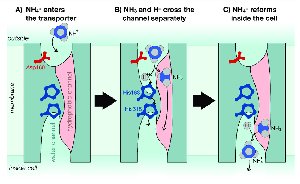
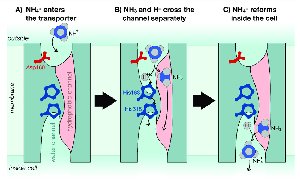
Mineralization (Ammonification)
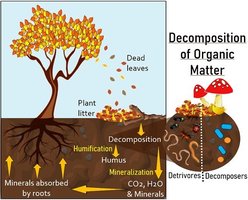
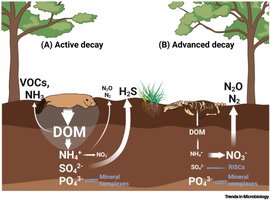
Microbes act as recyclers by decomposing organic matter and releasing nitrogen back into the environment.
Extracellular enzymes: Proteins are broken down into amino acids outside the cell.
Deamination: Nitrogen is removed from amino acids, producing ammonium (NH4+).
Ecological role: Mineralization returns nitrogen from dead organisms to the soil, supporting plant growth.
Nutrient Uptake Mechanisms in Microbes
Passive Transport
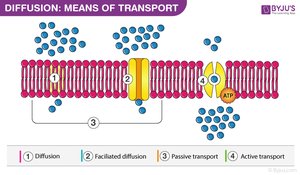
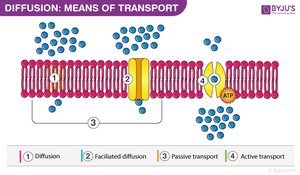
Passive transport is the movement of substances across the cell membrane without energy expenditure, driven by concentration gradients.
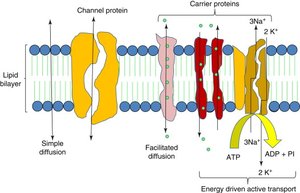
Simple diffusion: Small, non-polar molecules (e.g., O2, CO2) pass directly through the phospholipid bilayer.
Facilitated diffusion: Larger or charged molecules move via channel or carrier proteins.
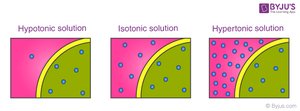
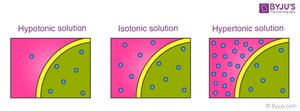
Osmosis: Water diffuses across a semi-permeable membrane, maintaining osmotic balance.
Cell lysis risk: In hypotonic environments, cells may burst if protective structures are absent.
Active Transport
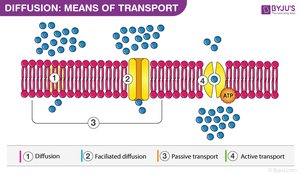
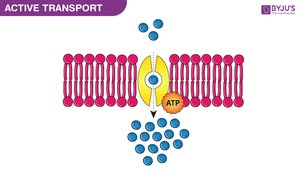
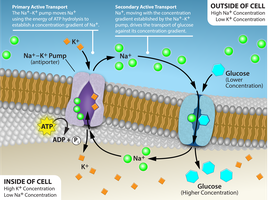
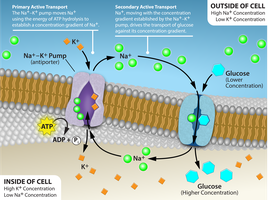
Active transport requires energy (usually ATP) to move substances against their concentration gradient, enabling microbes to thrive in nutrient-poor environments.
Primary active transport: ATP-driven pumps (e.g., ABC transporters) import essential nutrients.
Secondary active transport: Utilizes proton gradients to move substances without direct ATP use.
Group translocation: Nutrients are chemically modified during transport, preventing their exit from the cell.
Iron Acquisition and Siderophores
Siderophore-Mediated Iron Uptake
Iron is vital for microbial metabolism but often scarce in the environment. Microbes secrete siderophores, which bind iron with high affinity and facilitate its uptake.
Siderophores: Iron-chelating molecules secreted by bacteria and fungi.
Iron–siderophore complex: Recognized by cell surface receptors and transported into the cell via active transport.
Virulence factor: Siderophore production enhances pathogenicity by overcoming host nutritional immunity.
Microbial Cultivation and Laboratory Techniques
The Five I's of Microbial Cultivation
Microbial cultivation in the laboratory involves a systematic workflow to isolate, propagate, and identify microorganisms. The Five I's summarize this process:
Inoculation: Introduction of a microbial sample into sterile nutrient media using aseptic technique.
Incubation: Growth under controlled conditions (temperature, oxygen, humidity).
Isolation: Separation of individual species to obtain pure cultures, often using the streak plate method.
Inspection: Examination of cultures for colony morphology and microscopic characteristics.
Identification: Determination of microbial identity using biochemical, genetic, and microscopic analyses.
Standard Techniques for Optimal Microbial Growth
Successful cultivation requires matching environmental conditions to microbial requirements.
Atmospheric conditions: Aerobic, anaerobic, and CO2-enriched environments support different microbes.
Temperature control: Incubators maintain stable temperatures for reproducible growth.
Enumeration of Microbes
Quantifying viable bacteria involves dilution and plating methods to estimate cell numbers.
Serial dilution: Stepwise reduction of cell density for accurate counting.
Spread plating: Distribution of diluted samples on agar plates to produce discrete colonies.
Colony-forming units (CFUs): Each colony represents one viable cell or cluster; results are expressed as CFU/mL.
Statistical reliability: Only plates with 30–300 colonies are considered reliable.
Microbial Growth Cycle
Stages of Microbial Growth
The microbial growth curve describes population changes over time in a closed system.
Lag phase: Cells adapt to new conditions, synthesizing necessary components but not dividing.
Log (exponential) phase: Rapid, constant cell division; population doubles at regular intervals.
Stationary phase: Cell division equals cell death; population size plateaus due to resource limitation.
Death (decline) phase: Cell death exceeds division; population decreases, some cells enter VBNC state.
Growth Phase | Characteristics |
|---|---|
Lag | Metabolic activity, adaptation, no division |
Log | Maximum division rate, uniform physiology |
Stationary | Division equals death, stress responses |
Death | Death exceeds division, population decline |
Additional info: The notes expand on basic points with academic context, definitions, and examples to ensure completeness and clarity for microbiology students.
