 Indietro
Mini-Textbook Study Notes: Viruses, Viroids, and Prions
Guida di studio - Note intelligenti
 Appunti personalizzati basati sui tuoi materiali, ampliati con definizioni chiave, esempi e contesto.
Characteristics of Viruses
Definition and General Properties
Viruses are miniscule, acellular infectious agents that possess either DNA or RNA as their genetic material. They are responsible for numerous infections in humans, animals, plants, and bacteria, and cause many diseases prevalent in the industrialized world. - Virus: An infectious agent lacking cellular structure, containing either DNA or RNA. - Acellular: Not composed of cells; viruses lack cytoplasmic membrane, cytosol, and organelles (with rare exceptions). - Metabolism: Viruses cannot carry out metabolic pathways, grow, or respond to the environment independently. - Reproduction: Viruses depend on host cell machinery for replication. - States: Viruses exist in extracellular (virion) and intracellular (nucleic acid) states. 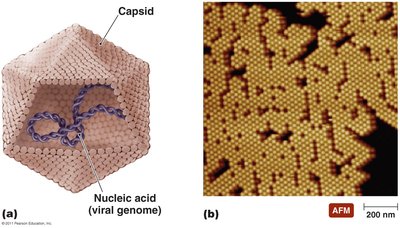
Extracellular and Intracellular States
- Virion: The extracellular form of a virus, consisting of a protein coat (capsid) surrounding the nucleic acid. - Nucleocapsid: The combination of nucleic acid and capsid. - Envelope: Some virions possess a phospholipid envelope derived from the host cell. - Intracellular State: The capsid is removed, and the virus exists as nucleic acid within the host cell.
Genetic Material of Viruses
Viruses display remarkable diversity in their genetic material, which is a primary basis for their classification. - Genome Types: DNA or RNA, but never both. - Forms: Double-stranded (dsDNA, dsRNA) or single-stranded (ssDNA, ssRNA); linear, segmented, or circular. - Size: Viral genomes are much smaller than those of cells. 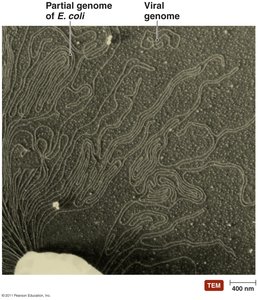
Hosts of Viruses
Most viruses infect only specific host cells due to the affinity between viral surface proteins and host cell receptors. - Specificity: Some viruses infect only a particular cell type in a specific host. - Generalists: Viruses that infect multiple cell types across different hosts. 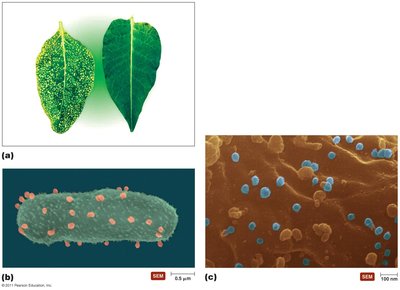
Size and Morphology of Virions
Virions vary greatly in size and shape, from smallpox virus to bacteriophages and plant viruses. - Capsid: Protein coat providing protection and attachment capability. - Capsomeres: Protein subunits composing the capsid; may be single or multiple types of proteins. 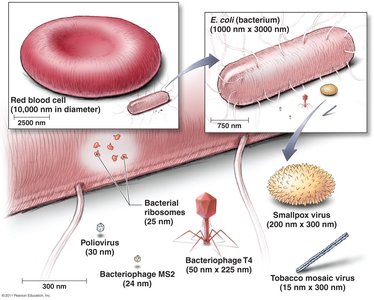
Capsid Morphology
Viruses exhibit diverse capsid shapes, including helical, polyhedral, and complex forms. 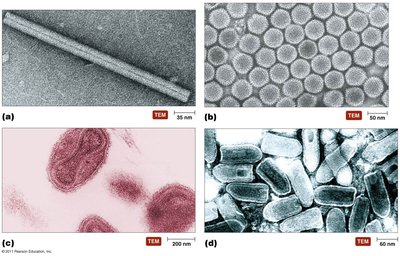
Bacteriophage Structure
Bacteriophages have a complex structure with a head, tail, tail fibers, and base plate. 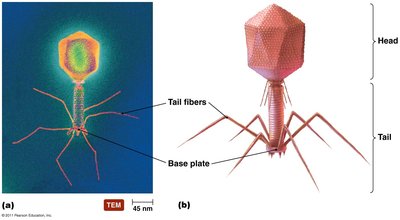
The Viral Envelope
- Origin: Acquired from the host cell membrane during replication or release. - Composition: Phospholipid bilayer and proteins, including virally coded glycoproteins (spikes). - Function: Envelope proteins and glycoproteins are crucial for host recognition. 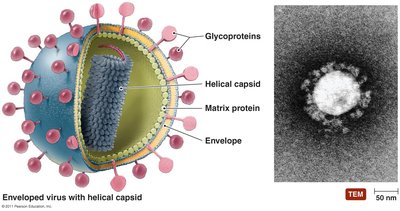
Classification of Viruses
Viruses are classified based on their genetic material, structure, and host range.
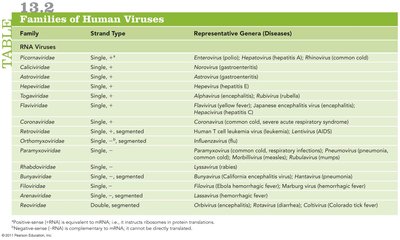
Families of Human Viruses
Family | Strand Type | Representative Genera (Diseases) |
|---|---|---|
Orthopoxviridae | Double | Smallpox |
Herpesviridae | Double | Herpes simplex, Varicella-zoster, Epstein-Barr |
Papillomaviridae | Double | Human papillomavirus |
Parvoviridae | Single | Erythrovirus |
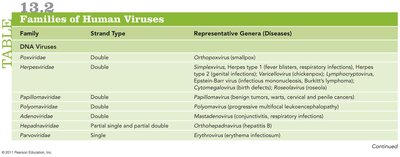
Family | Strand Type | Representative Genera (Diseases) |
|---|---|---|
Picornaviridae | Single, + | Enterovirus (polio), Hepatovirus (hepatitis A) |
Orthomyxoviridae | Single, - segmented | Influenza virus |
Retroviridae | Single, + | Lentivirus (HIV/AIDS) |
Viral Replication
Lytic Replication Cycle
The lytic cycle results in the destruction of the host cell and release of new virions. - Stages: Attachment, Entry, Synthesis, Assembly, Release. - Outcome: Host cell lysis and death. 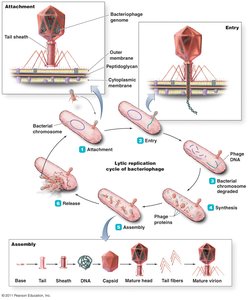
Pattern of Virion Abundance
The number of infective virions increases sharply after host cell lysis. 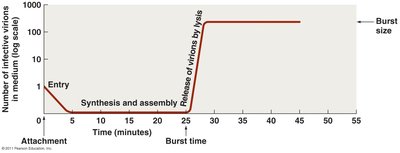
Lysogenic Replication Cycle
Lysogeny is a modified cycle where the viral genome integrates into the host chromosome and replicates passively. - Temperate Phages: Phages capable of lysogeny. - Prophage: Inactive phage genome within host DNA. - Lysogenic Conversion: Alteration of host phenotype due to prophage genes. 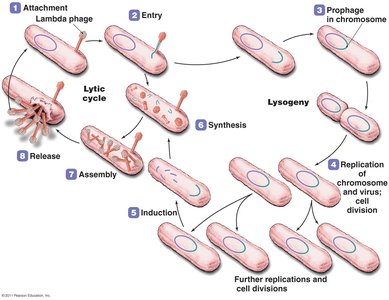
Replication of Animal Viruses
Animal viruses follow similar replication pathways as bacteriophages, with differences due to the presence of envelopes and the eukaryotic nature of host cells.
Attachment and Entry
Animal viruses attach via glycoprotein spikes or other molecules, and enter by direct penetration, membrane fusion, or endocytosis. 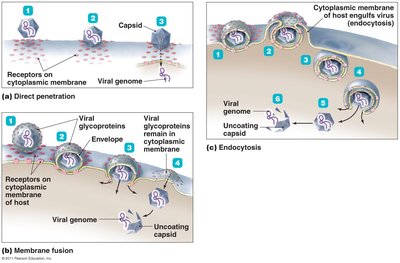
Synthesis of Animal Viruses
The strategy for synthesis depends on the type of nucleic acid. - DNA Viruses: Often replicate in the nucleus. - RNA Viruses: Usually replicate in the cytoplasm. - Key Considerations: How mRNA is synthesized and what serves as the template for replication. 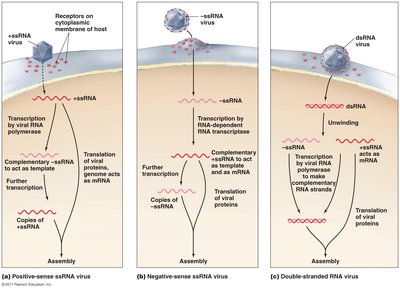
Assembly and Release
- DNA Viruses: Assemble in the nucleus. - RNA Viruses: Assemble in the cytoplasm. - Enveloped Viruses: Released by budding, causing persistent infections. - Naked Viruses: Released by exocytosis or lysis. 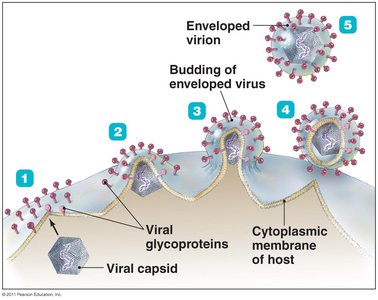
Persistent Infections
Enveloped viruses can cause persistent infections, with gradual release of virions. 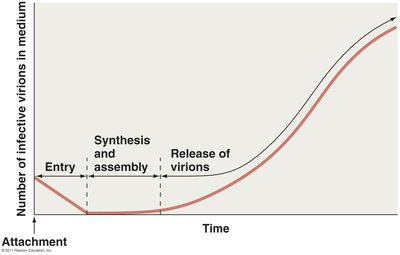
Latency of Animal Viruses
Some animal viruses remain dormant (latent) in host cells for years, with or without integration into the host genome. - Provirus: Viral genome permanently incorporated into host DNA.
The Role of Viruses in Cancer
Viruses can contribute to cancer by activating oncogenes, promoting existing oncogenes, or interfering with tumor repression. - Neoplasia: Uncontrolled cell division resulting in tumor formation. - Oncogene Theory: Viral insertion can disrupt normal regulation of cell division, leading to cancer. 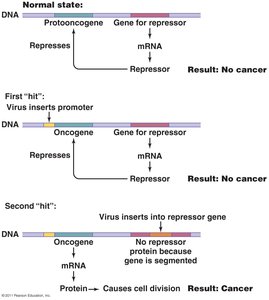
Viruses and Human Cancers
- Contribution: Viruses cause 20–25% of human cancers. - Examples: Burkitt’s lymphoma, Hodgkin’s disease, Kaposi’s sarcoma, cervical cancer.
Culturing Viruses in the Laboratory
Viruses can be cultured in mature organisms, embryonated chicken eggs, or cell (tissue) cultures.
Viral Plaques
Plaques are clear zones in a bacterial lawn caused by viral lysis. 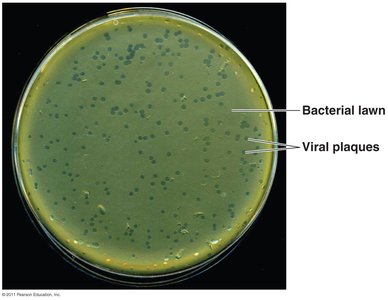
Embryonated Chicken Eggs
Eggs provide a large, contaminant-free environment for viral culture. 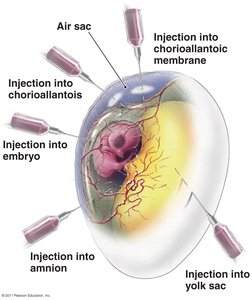
Cell (Tissue) Culture
Cells isolated from organisms are grown in media or broth for viral culture. - Diploid Cell Cultures: Finite lifespan, normal cells. - Continuous Cell Cultures: Immortalized cells, often cancerous. 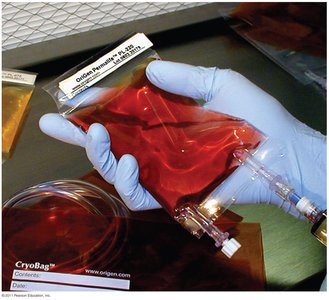
Other Parasitic Particles: Viroids and Prions
Viroids
Viroids are extremely small, circular RNA molecules that infect plants. - Capsid: Absent in viroids. - Structure: May appear linear due to hydrogen bonding.
Prions
Prions are infectious proteins that cause fatal neurological diseases. - Cellular PrP: Normal protein with α-helices. - Prion PrP: Disease-causing form with β-sheets; induces conformational change in cellular PrP. - Prion Diseases: Spongiform encephalopathies (BSE, vCJD, kuru), characterized by brain degeneration and spongy appearance. - Destruction: Prions are destroyed only by incineration or autoclaving in 1 N NaOH.
Additional info: Tables and some images were truncated for brevity; see original materials for full lists and details.
