 Indietro
Molecular Information Flow and Protein Processing in Microbial Cells Ch 6
Guida di studio - Note intelligenti
 Appunti personalizzati basati sui tuoi materiali, ampliati con definizioni chiave, esempi e contesto.
Ch. 6 – Molecular Information Flow and Protein Processing in Microbial Cells
Overview of Genetic Information Flow
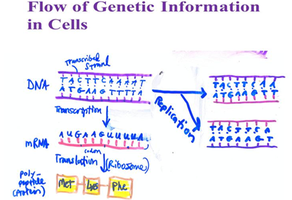
The flow of genetic information in microbial cells follows the central dogma: DNA is replicated, transcribed into RNA, and translated into protein. This process is fundamental to all living organisms and is highly conserved, with some variations among Bacteria, Archaea, and Eukarya.
DNA Structure and Organization in Prokaryotes
Bacterial Chromosomes and Plasmids
Bacteria typically possess a single, circular, haploid chromosome containing 1,500–10,000 essential genes. In addition, many bacteria harbor plasmids—small, circular DNA molecules with 20–500 genes, often encoding traits such as antibiotic resistance or virulence. Plasmids replicate independently of the chromosome and are also found in Archaea.
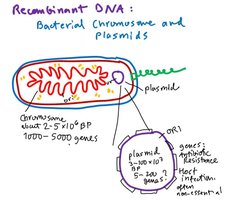
Chromosome: Contains essential genes for survival and reproduction.
Plasmid: Contains non-essential but advantageous genes (e.g., antibiotic resistance).
Supercoiling and Chromosome Structure
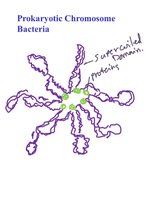
Prokaryotic chromosomes are organized into supercoiled domains, stabilized by proteins (not histones in Bacteria). Supercoiling compacts the DNA and is regulated by enzymes such as topoisomerases. In Eukarya and some Archaea, histones are present and play a role in DNA packaging.
Operons and Chromosome Mapping
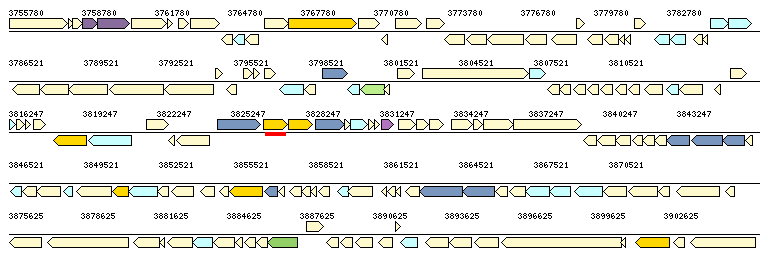
Genes in bacteria are often organized into operons—clusters of genes transcribed together. Chromosome maps, such as those of Nitrospira defluvii, show the arrangement of genes (open reading frames, ORFs) and operons. Archaeal chromosomes are similar in organization.
DNA Replication in Prokaryotes
Mechanism of DNA Synthesis
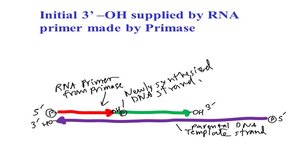
DNA replication requires a primer (providing a 3'-OH group), a template strand, deoxynucleoside triphosphates (dNTPs), and DNA polymerase. Synthesis always proceeds in the 5' to 3' direction.
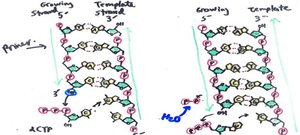
Primer: Short RNA segment synthesized by primase.
DNA Polymerase: Catalyzes the addition of nucleotides to the growing DNA strand.
Biochemistry of DNA Synthesis
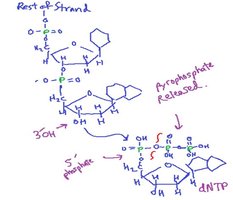
The 3'-OH group of the growing DNA strand attacks the 5'-phosphate of the incoming dNTP, extending the strand by one nucleotide and releasing pyrophosphate.
Bidirectional Replication and the Replisome
Replication begins at the origin of replication and proceeds bidirectionally. The replisome is a complex of enzymes that coordinates DNA synthesis on both the leading and lagging strands.
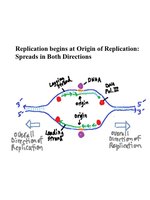
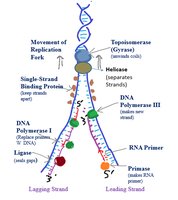
Leading Strand: Synthesized continuously.
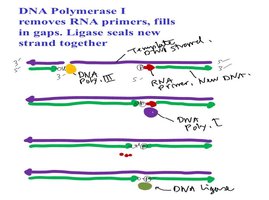
Lagging Strand: Synthesized discontinuously in Okazaki fragments.
Role of RNA Primers and DNA Polymerases
RNA primers, synthesized by primase, provide the initial 3'-OH for DNA polymerase to begin synthesis. DNA polymerase III extends the DNA, while DNA polymerase I removes RNA primers and fills in the gaps. DNA ligase seals the nicks between fragments.
Enzymes Involved in DNA Replication
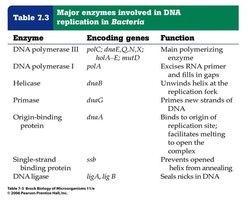
Enzyme | Encoding Genes | Function |
|---|---|---|
DNA polymerase III | polC, dnaE, Q, N, X; holA-E; mutD | Main polymerizing enzyme |
DNA polymerase I | polA | Excises RNA primer and fills in gaps |
Helicase | dnaB | Unwinds helix at replication fork |
Primase | dnaG | Primes new strands of DNA |
Origin-binding protein | dnaA | Binds to origin of replication; facilitates melting of complex |
Single-strand binding protein | ssb | Prevents opened helix from annealing |
DNA ligase | ligA, ligB | Seals nicks in DNA |
Proofreading and Fidelity
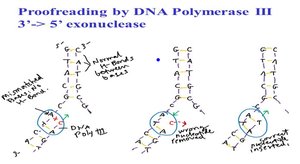
DNA polymerase III possesses 3' to 5' exonuclease activity, allowing it to remove mismatched bases and ensure high fidelity during replication.
Transcription: RNA Synthesis
RNA Polymerase Structure and Function
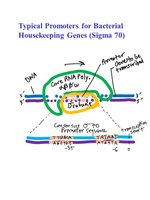
Bacterial RNA polymerase (RNAP) consists of four core subunits (α2ββ'ω) and a detachable sigma (σ) factor. The sigma factor recognizes promoter sequences, enabling RNAP to initiate transcription. In Archaea and Eukarya, RNAPs are more complex and require additional transcription factors.
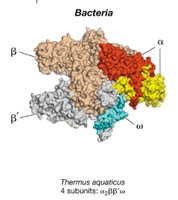
Promoter Recognition: Sigma factors bind specific promoter sequences (e.g., sigma 70 for housekeeping genes).
Transcription Initiation: RNAP binds to the promoter, unwinds DNA, and begins RNA synthesis.
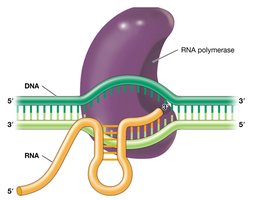
Transcription Elongation and Termination
During elongation, RNAP synthesizes RNA complementary to the DNA template. Termination occurs via two main mechanisms in bacteria: Rho-independent (stem-loop structure in mRNA) and Rho-dependent (Rho protein binds terminator sequence).
Transcription in Archaea and Eukarya
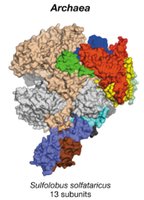
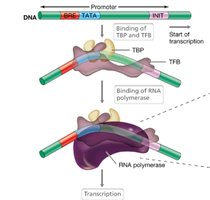
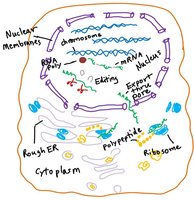
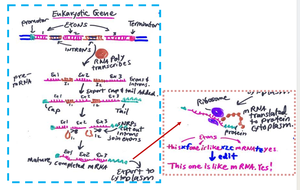
Archaeal transcription involves a complex RNAP and general transcription factors (e.g., TBP, TFB), with promoters containing TATA-box and BRE elements. Eukaryotic transcription is further complicated by mRNA processing (capping, polyadenylation, splicing).
Translation: Protein Synthesis
The Genetic Code
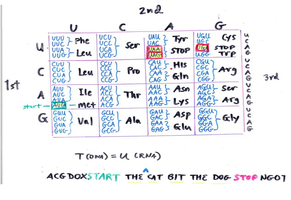
The genetic code is composed of codons—triplets of nucleotides—each specifying an amino acid. The code is degenerate (most amino acids have multiple codons). AUG serves as the start codon (methionine), and three codons signal translation termination.
tRNAs and Aminoacyl-tRNA Synthetases
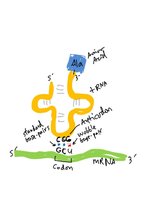
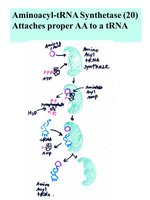
Transfer RNAs (tRNAs) deliver amino acids to the ribosome, matching codons in mRNA via their anticodon loop. Aminoacyl-tRNA synthetases attach the correct amino acid to each tRNA, using ATP for energy.
Ribosome Structure and Function
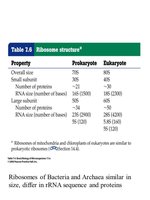
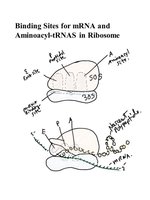
Prokaryotic ribosomes (70S) differ from eukaryotic ribosomes (80S) in size and composition. Both have three tRNA binding sites: A (aminoacyl), P (peptidyl), and E (exit).
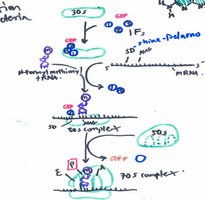
Translation Initiation, Elongation, and Termination
Initiation involves assembly of the ribosome on the mRNA near the start codon, with initiator tRNA (fMet-tRNA in Bacteria, Met-tRNA in Archaea and Eukarya). Elongation adds amino acids to the growing polypeptide, and termination releases the completed protein at a stop codon.
Protein Folding and Secretion
Molecular Chaperones
Molecular chaperones (e.g., GroEL, GroES, HSP60s) assist in the proper folding of newly synthesized polypeptides and prevent misfolding, especially under stress conditions such as heat shock.
Protein Secretion Systems
Bacteria use several systems to secrete proteins. The Sec (Type II) system transports proteins across the plasma membrane, while the Type III secretion system (injectosome) delivers proteins directly into host cells, often as virulence factors.
Summary Table: Key Differences in Information Flow Among Domains
Feature | Bacteria | Archaea | Eukarya |
|---|---|---|---|
Chromosome Structure | Circular, haploid | Circular, haploid | Linear, diploid |
Histones | No | Some (Euarchaeota) | Yes |
RNA Polymerase | 1 type, σ factor | 1 type, general TFs | 3 types, general TFs |
Transcription/Translation | Coupled | Coupled | Separated (nucleus/cytoplasm) |
Ribosome Size | 70S | 70S | 80S |
Translation Initiator tRNA | fMet-tRNA | Met-tRNA | Met-tRNA |
mRNA Processing | None | None | 5' cap, poly-A tail, splicing |
Discussion Questions
Why do many bacteria have both a chromosome and a plasmid? What sorts of genes are most often found on each?
What is the size of the genome and number of genes in Escherichia coli, Homo sapiens, and Tetrahymena pyriformis?
Why are two DNA polymerases required for DNA replication in bacteria, rather than only one?
How is DNA supercoiling regulated in bacteria, and how is this related to chromosome structure? What is the medical importance of this?
Define the term “Gene.” What are the main types of genes?
Why is the DNA polymerase from Thermus aquaticus used in PCR, rather than that from E. coli? What other molecular adaptations does T. aquaticus have for its habitat?
What is the subunit structure of bacterial RNA polymerase? How does the subunit structure relate to promoter recognition and transcription initiation/elongation? How does this differ from Eukarya and Archaea?
How do Bacteria differ from Eukarya in terms of ribosome structure? Which Eukaryotic rRNAs have counterparts in Bacteria? Why is this medically important?
Highlight differences between translation initiation in Bacteria, Archaea, and Eukarya.
How might the level of expression of molecular chaperones in Bacteria be related to environmental conditions? What are some common bacterial chaperone proteins?
Contrast protein secretion via the SecA system in Bacteria with protein secretion in Eukarya. How might protein secretion differ in gram-negative and gram-positive bacteria? How does the “Type III” system differ? What does the latter system resemble?
