 Indietro
Principles of Disease and Epidemiology: Microbiology Study Notes
Guida di studio - Note intelligenti
 Appunti personalizzati basati sui tuoi materiali, ampliati con definizioni chiave, esempi e contesto.
Principles of Disease and Epidemiology
Definitions and Key Concepts
Understanding disease in microbiology requires precise terminology and concepts. Pathology is the study of disease, while etiology refers to the study of the cause of a disease. Pathogenesis describes the manner in which disease develops. Infection is the invasion or colonization of the body by pathogenic organisms. Epidemiology is the study of the frequency and distribution of disease, and disease is an abnormal state in which the body is not functioning properly.
Historical Epidemiologists
Early epidemiologists made significant contributions to disease control:
John Snow (1848–1849): Mapped cholera cases in London, pioneering descriptive epidemiology.
Ignaz Semmelweis (1846–1848): Demonstrated that handwashing reduced puerperal fever.
Florence Nightingale (1858): Showed improved sanitation decreased epidemic typhus.
Types of Epidemiology
Epidemiology is divided into three main types:
Descriptive epidemiology: Collection and analysis of data (e.g., John Snow).
Analytical epidemiology: Analyzes a particular disease to determine its probable cause (e.g., Florence Nightingale).
Experimental epidemiology: Involves hypothesis testing and controlled experiments (e.g., Ignaz Semmelweis).
CDC and Disease Surveillance
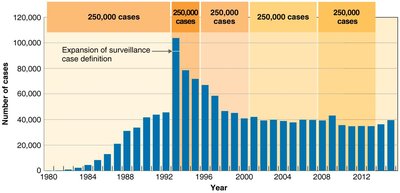
The Centers for Disease Control and Prevention (CDC) collects and analyzes epidemiological information in the United States. It publishes the Morbidity and Mortality Weekly Report (MMWR) and tracks notifiable infectious diseases, which must be reported by physicians. Key rates include:
Morbidity rate: Number of people affected in relation to the total population in a given time period.
Mortality rate: Number of deaths from a disease in relation to the population in a given time.
Normal Microbiota and Human Biome
Normal and Transient Microbiota
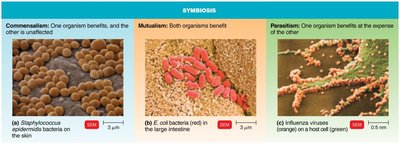
The human body hosts a vast array of microorganisms. Normal microbiota permanently colonize the host and are generally harmless, while transient microbiota may be present for days, weeks, or months. Symbiosis describes the relationship between normal microbiota and the host, which can be mutualistic, commensal, or parasitic. Some pathogens are opportunistic, causing disease only under altered conditions.
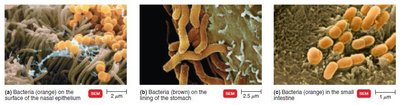
Distribution of Normal Microbiota
The composition of normal microbiota varies by body region and is influenced by nutrients, physical and chemical factors, host defenses, and mechanical factors. Representative microbiota include:
Skin: Propionibacterium, Staphylococcus, Corynebacterium, Micrococcus, Candida, Malassezia
Eyes: Staphylococcus epidermidis, S. aureus, diphtheroids
Nose and Throat: Staphylococcus aureus, S. epidermidis, Streptococcus pneumoniae, Haemophilus
Mouth: Streptococcus, Lactobacillus, Actinomyces, Candida
Large Intestine: Escherichia coli, Bacteroides, Fusobacterium, Lactobacillus
Urinary and Reproductive Systems: Staphylococcus, Micrococcus, Enterococcus, Lactobacillus, Candida albicans
Symbiotic Relationships
Normal microbiota interact with the host in various ways:
Commensalism: One organism benefits, the other is unaffected.
Mutualism: Both organisms benefit.
Parasitism: One organism benefits at the expense of the other.
Koch’s Postulates and Disease Classification
Koch’s Postulates
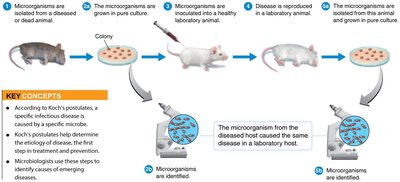
Koch’s postulates are a set of criteria used to establish the causative relationship between a microbe and a disease:
The same pathogen must be present in every case of the disease.
The pathogen must be isolated from the diseased host and grown in pure culture.
The pathogen from the pure culture must cause the disease when inoculated into a healthy, susceptible laboratory animal.
The pathogen must be isolated from the inoculated animal and shown to be the original organism.
Classifying Infectious Diseases
Symptoms: Changes in body function felt by the patient.
Signs: Changes that can be measured or observed.
Syndrome: Specific group of signs and symptoms that accompany a disease.
Occurrence and Spread of Disease
Types of Disease Occurrence
Endemic: Constantly present in a population (e.g., cold, influenza).
Epidemic: Unusually large number of cases in a population.
Pandemic: Epidemic that spreads worldwide (e.g., AIDS).
Sporadic: Occurs only occasionally.
Herd immunity: Immunity in most of a population.
Incidence and Prevalence
Incidence: Number of new cases during a particular time period.
Prevalence: Total number of cases at a specified time, including old and new cases.
Disease Rate Terms
Morbidity rate:
Mortality rate:
Incidence rate:
Prevalence rate:
Seroprevalence: Number of individuals antibody positive for a particular infection.
Severity and Duration of Disease
Acute disease: Rapid onset, short duration.
Chronic disease: Slow development, long duration.
Subacute disease: Intermediate between acute and chronic.
Latent disease: Inactive for a time, then activates.
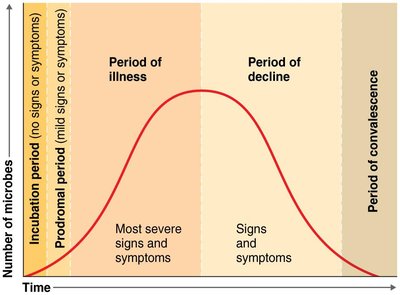
Stages of Disease Development
Incubation period: Interval between initial infection and first signs/symptoms.
Prodromal period: Early, mild symptoms.
Period of illness: Disease is most severe.
Period of decline: Signs and symptoms subside.
Period of convalescence: Body returns to prediseased state.
Transmission of Disease
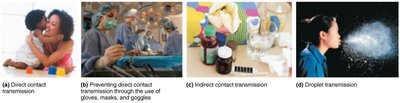
Contact Transmission
Direct contact: Close association between infected and susceptible host (e.g., handshaking, kissing).
Congenital transmission: From mother to fetus or newborn.
Indirect contact: Transfer via fomites (inanimate objects).
Droplet transmission: Airborne droplets less than 1 meter.
Vehicle Transmission
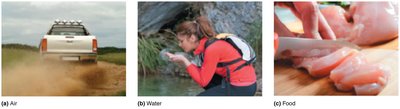
Airborne: Pathogens carried by dust or droplets suspended in air.
Waterborne: Pathogens transmitted via contaminated water.
Foodborne: Pathogens transmitted via contaminated food.
Arthropod Transmission
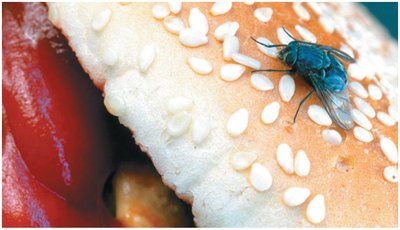
Mechanical transmission: Arthropod carries pathogen on feet.
Biological transmission: Pathogen reproduces in vector.
Examples: Malaria, plague, Lyme disease (mosquitoes, ticks, fleas).
Healthcare-Associated Infections (HAIs)
Nosocomial Infections
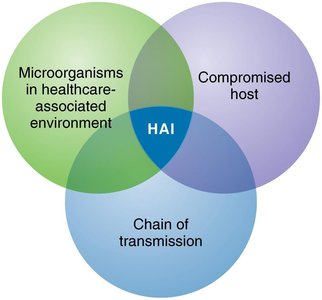
Healthcare-associated infections (HAIs) are acquired while receiving treatment in a healthcare facility. They affect 1 in 25 hospital patients, with over 2 million infections and 70,000 deaths annually. HAIs result from:
Microorganisms in the hospital environment
Weakened status of the host
Chain of transmission in the hospital
Principal Sites of HAIs
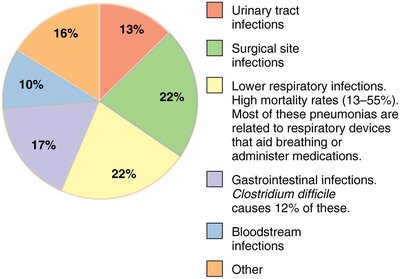
Urinary tract infections
Surgical site infections
Lower respiratory infections
Gastrointestinal infections
Bloodstream infections
Control of HAIs
Universal precautions: Standard and transmission-based precautions
Reduce number of pathogens: Handwashing, disinfecting, cleaning instruments, using disposables
Infection control committees
Emerging Infectious Diseases
Factors Contributing to Emerging Diseases
Population growth and urbanization
International travel
Transport and migration of animals and food
Changes in food processing, agriculture
Human behavior, technology, industry
Encroachment on wilderness habitats
Microbial evolution and resistance
Ecological and climate changes
Modern medicine (immunosuppression)
Inadequacy of vaccination, public health
Social unrest and war
Bioterrorism
Virulence enhancing mechanisms
Examples of Emerging Diseases
Genetic recombination: Escherichia coli O157, avian influenza (H5N1)
Evolution of new strains: Vibrio cholerae O139
Antibiotic-resistant strains
Changes in weather patterns: Hantavirus
Modern transportation: Zika virus, Chikungunya, West Nile encephalitis
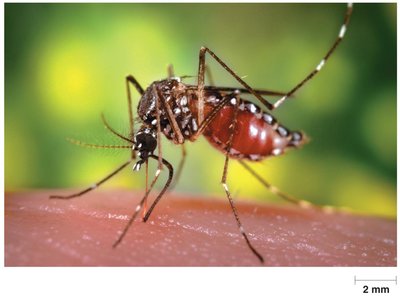
Insect vectors: Aedes aegypti, A. albopictus
Ecological disaster, war, expanding human settlement: Coccidioidomycosis
Animal control measures: Lyme disease
Summary Table: Representative Normal Microbiota by Body Region
Region | Principal Components | Comments |
|---|---|---|
Skin | Propionibacterium, Staphylococcus, Corynebacterium, Micrococcus, Candida, Malassezia | Antimicrobial properties of skin, low pH, low moisture |
Eyes | Staphylococcus epidermidis, S. aureus, diphtheroids | Tears and blinking eliminate microbes |
Nose and Throat | Staphylococcus aureus, S. epidermidis, Streptococcus pneumoniae, Haemophilus | Microbial antagonism, nasal secretions |
Mouth | Streptococcus, Lactobacillus, Actinomyces, Candida | Moisture, warmth, food support diverse populations |
Large Intestine | Escherichia coli, Bacteroides, Fusobacterium, Lactobacillus | Largest numbers of resident microbiota |
Urinary/Reproductive | Staphylococcus, Micrococcus, Enterococcus, Lactobacillus, Candida albicans | Acid-tolerant population, urine flow removes microbes |
Summary Table: Selected Zoonoses
Disease | Causative Agent | Reservoir | Transmission |
|---|---|---|---|
Influenza (some types) | Influenzavirus | Swine, birds | Direct contact |
Rabies | Lyssavirus | Bats, skunks, foxes, dogs, raccoons | Direct contact (bite) |
Malaria | Plasmodium spp. | Monkeys | Anopheles mosquito bite |
Plague | Yersinia pestis | Rodents | Flea bites |
Ringworm | Trichophyton, Microsporum, Epidermophyton | Domestic mammals | Direct contact; fomites |
Summary Table: Representative Arthropod Vectors
Disease | Causative Agent | Arthropod Vector |
|---|---|---|
Malaria | Plasmodium spp. | Anopheles (mosquito) |
African trypanosomiasis | Trypanosoma brucei | Glossina (tsetse fly) |
Chagas' disease | T. cruzi | Triatoma (kissing bug) |
Yellow fever | Alphavirus | Aedes (mosquito) |
Lyme disease | B. burgdorferi | Ixodes spp. (tick) |
Summary Table: Microorganisms Involved in Healthcare-Associated Infections
Microorganism | Most Common Infection Type | Percentage of Total Infections | Percentage Resistant to Antibiotics |
|---|---|---|---|
Coagulase-negative staphylococci | Bloodstream | 11% | Not reported |
Staphylococcus aureus | Surgical wound | 16% | 55% |
Clostridium difficile | Diarrhea after abdominal surgery | 15% | Not reported |
Enterococcus spp. | Bloodstream | 14% | 83% |
Candida spp. (fungus) | Urinary tract infections | 9% | Not reported |
Escherichia coli | Urinary tract infections | 12% | 20% |
Additional info: These notes expand on brief points with academic context, definitions, and examples to provide a comprehensive study guide for exam preparation in microbiology.
