 Indietro
Principles of Infectious Disease and Epidemiology: Microbiology Study Guide
Guida di studio - Note intelligenti
 Appunti personalizzati basati sui tuoi materiali, ampliati con definizioni chiave, esempi e contesto.
Principles of Infectious Disease and Epidemiology
Causes of Infectious Diseases
Infectious diseases are caused by a variety of pathogens, and understanding their classification is fundamental to microbiology and epidemiology.
Pathogens: Include viruses, prions, bacteria, protozoans, helminths, and fungi.
Opportunistic pathogens: Cause disease only when the host is weakened (e.g., immunocompromised individuals).
True pathogens: Can cause disease in healthy hosts.
Emerging pathogens: Newly identified or previously sporadic agents with expanded distribution (e.g., SARS-CoV-2).
Reemerging pathogens: Previously controlled agents now resurfacing (e.g., antibiotic-resistant bacteria).
Disease Terminology
Microbiologists use specific terms to describe the occurrence and transmission of diseases.
Sporadic disease: Isolated infections in a population (e.g., Ebola).
Endemic disease: Routinely detected in a population or region (e.g., common cold).
Epidemic: Widespread outbreak in a region during a specific time.
Pandemic: Epidemic that spreads across multiple countries.
Communicable disease: Transmitted from human to human.
Non-communicable disease: Not passed person-to-person; some zoonoses are microbial and non-communicable.
Contagious disease: Easily transmitted between hosts.
Acute disease: Rapid onset and progression.
Chronic disease: Slow onset and progression.
Latent infection: Pathogen remains dormant; host is asymptomatic.
Koch’s Postulates
Koch’s postulates are a set of criteria used to identify the causative agent of infectious diseases, though they have limitations.
Postulates:
The same organism must be present in every case of the disease.
The organism must be isolated and grown in pure culture.
The isolated organism should cause disease when inoculated into a susceptible host.
The organism must be re-isolated from the inoculated, diseased animal.
Limitations: Not applicable to noninfectious diseases, obligate intracellular pathogens, latent infections, or agents that cannot be cultured.
Infectious Disease Transmission and Stages
Reservoirs, Sources, and Transmission
Pathogens originate from various sources and are transmitted through different modes.
Reservoir: Natural habitat (animate or inanimate) where the pathogen is found.
Source: Disseminates the infectious agent from the reservoir to new hosts.
Endogenous source: Pathogen originates from the host’s own body.
Exogenous source: Pathogen is external to the host.
Modes of Transmission
Transmission is categorized as direct or indirect, each with specific examples.
Direct contact: Physical contact with the source (e.g., touching, kissing, animal bites).
Vertical transmission: Mother to offspring (pregnancy, delivery, breastfeeding).
Indirect contact: No direct physical contact; includes airborne, vehicle, and vector transmission.
Biological vector: Vector is integral to pathogen’s life cycle (e.g., mosquitoes for malaria).
Mechanical vector: Vector spreads disease without being part of pathogen’s life cycle (e.g., flies contaminating food).
Stages of Infectious Disease
Infections progress through five general stages, which vary by pathogen and present epidemiological challenges.
Incubation period: Time between infection and symptom development.
Prodromal phase: Mild symptoms begin.
Acute phase: Full-blown symptoms; patient is symptomatic.
Period of decline: Pathogen replication decreases; patient recovers.
Convalescent phase: Pathogen eliminated; patient may become a chronic or asymptomatic carrier.
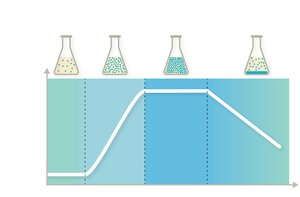
Example: The bacterial growth curve in batch culture mirrors the stages of infectious disease, with lag, log, stationary, and death phases.
Epidemiology Essentials
Definition and Goals
Epidemiology is the study of disease occurrence in populations, aiming to understand and prevent illness.
Goals:
Describe the nature, cause, and extent of diseases.
Intervene to protect and improve population health.
The Epidemiological Triangle
The triangle links the host, etiological agent, and environment, highlighting factors influencing disease spread.
Host factors: Health, age, nutrition, immune status.
Agent factors: Pathogen characteristics, virulence.
Environmental factors: Climate, sanitation, population density.
Breaking the triangle: Public health strategies (education, quarantine, vector control) can disrupt disease transmission.
Public Health Strategies
Effective public health measures are essential for disease prevention and control.
Education: Vaccination campaigns, prenatal care, STD awareness.
Quarantine: Isolation to prevent spread; effective for diseases with short incubation periods.
Vector control: Reducing populations of disease-spreading arthropods.
Epidemiological Measures and Studies
Measures of Frequency
Frequency measures describe disease occurrence in populations.
Population: Defined group of people.
Morbidity: Existence of disease.
Prevalence: Morbidity in a population during a specified time.
Mortality: Death rate, often per 1,000 or 1,000,000 population.
Incidence rate: Number of new cases in a defined population during a defined time frame.
Formula for Prevalence Rate:
Formula for Incidence Rate:
Measures of Association
Association measures identify risk factors and help guide public health interventions.
Risk ratio: Probability of outcome in exposed vs. unexposed groups.
Odds ratio: Odds of outcome in exposed vs. unexposed individuals.
Prevalence ratio: Prevalence of outcome between exposure groups.
Correlation vs. Causation
Correlation does not imply causation; associations must be carefully interpreted.
Example: Ice cream sales and polio cases both rise in summer, but one does not cause the other.
Types of Epidemiological Studies
Studies are categorized as descriptive or analytical, each with distinct purposes.
Descriptive studies: Characterize health problems, identify at-risk populations, and map resource allocation. Includes correlation studies, case reports, and cross-sectional studies.
Analytical studies: Investigate causes and risk factors, test hypotheses, and include observational and experimental designs.
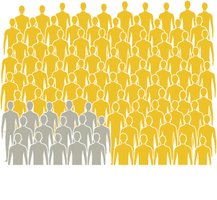
Example: Cross-sectional study showing 85% of cervical cancer patients had evidence of HPV infection, guiding vaccine development.
Epidemiology in Clinical Settings
Healthcare-Acquired Infections (HAIs)
HAIs are infections acquired during healthcare interventions and are a major concern for hospital epidemiology.
Common sources: Contaminated medical devices, healthcare workers’ hands.
Common HAIs: Clostridium difficile gastrointestinal infections, catheter-associated urinary tract infections, surgical wound infections, MRSA bacteremia, ventilator-associated pneumonia.
Pathogens: Gram-negative bacteria (Escherichia coli, Klebsiella, Pseudomonas), Gram-positive bacteria (staphylococci, streptococci), yeasts, and true pathogens (Mycobacterium tuberculosis, Salmonella, hepatitis B, influenza).
Antibiotic resistance: Bacteria causing HAIs are increasingly resistant to antibiotics.
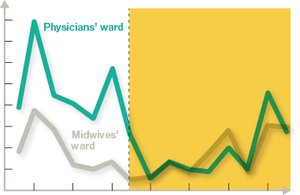
Example: Semmelweis’s hand washing intervention in the 1840s significantly reduced maternal mortality rates in hospitals.
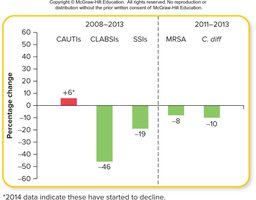
Example: Federal policies have reduced rates of certain HAIs, such as CLABSIs and SSIs, but not CAUTIs.
Preventing HAIs
Prevention strategies include surveillance, aseptic technique, universal precautions, and environmental controls.
Hand washing: Most effective preventive measure.
Personal protective equipment: Gloves, masks, gowns.
Environmental sanitization: Sterilization of equipment, limiting patient transport, isolation.
Surveillance: Monitoring transmission patterns and antibiotic resistance.
Surveillance, Eradication, and Ethics in Epidemiology
Surveillance Programs
Surveillance is essential for monitoring, controlling, and preventing disease outbreaks.
National Notifiable Diseases Surveillance System (NNDSS): Network of hospitals, labs, and providers reporting certain diseases.
Reportable diseases: Diagnosed cases are documented and reported to local, state, and national authorities.
CDC: Compiles national statistics and publishes the Morbidity and Mortality Weekly Report (MMWR).
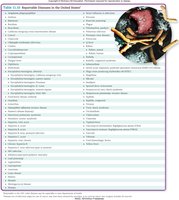
Example: Healthcare providers and laboratories are required to report certain disease cases to health authorities.
Emerging and Reemerging Diseases
Emerging diseases are new or newly identified, while reemerging diseases were previously controlled but are now increasing.
Factors: Population crowding, poverty, tropical climates, urbanization, antibiotic resistance, increased immune-suppressed populations.
Eradication
Eradication is the complete elimination of a disease worldwide; only smallpox has been eradicated so far.
Best candidates: Easily identifiable, treatable/preventable, human-specific.
Challenges: Latent infections, animal reservoirs, incomplete vaccination coverage.
Ethical Issues in Epidemiology
Ethical considerations are central to epidemiological research and public health policy.
Informed consent: Essential for analytical studies.
Balancing individual rights and public good: Quarantine, vaccination mandates, and genetic privacy.
Historical context: Tuskegee syphilis experiment highlighted the need for ethical standards.
Genetic Information Nondiscrimination Act (GINA): Protects against health insurance discrimination based on genetics.
Herd immunity: Achieved when a high percentage of the population is immune, protecting those who cannot be vaccinated.
Clinical Case Example: Listeriosis Outbreak
Case Summary
A pregnant patient experienced fever, muscle aches, and diarrhea, leading to a diagnosis of listeriosis caused by Listeria monocytogenes. The outbreak was linked to contaminated cantaloupe.
Source: Contaminated food (cantaloupe).
Mode of transmission: Foodborne.
Incidence rate calculation:
Epidemiological challenges: Asymptomatic carriers, long incubation period, food distribution networks.
Study design: Most likely a descriptive epidemiological study to identify the outbreak source.
Tables
Six Groups of Pathogens
Pathogen Type | Example |
|---|---|
Viruses | Influenza virus |
Prions | Creutzfeldt-Jakob disease |
Bacteria | Staphylococcus aureus |
Protozoans | Plasmodium (malaria) |
Helminths | Ascaris (roundworm) |
Fungi | Candida albicans |
Examples of Exogenous and Endogenous Sources of Infection
Source Type | Example |
|---|---|
Exogenous | Contaminated water, infected person |
Endogenous | Normal flora becoming pathogenic |
Common HAIs and Pathogens
HAI Type | Common Pathogens |
|---|---|
Urinary tract infection | Escherichia coli |
Gastrointestinal infection | Clostridium difficile |
Surgical wound infection | Staphylococcus aureus |
Bloodstream infection | MRSA, Pseudomonas aeruginosa |
Pneumonia | Klebsiella, Streptococcus pneumoniae |
Notifiable and Reportable Diseases (Partial List)
Disease | Type |
|---|---|
Anthrax | Bacterial |
Cholera | Bacterial |
HIV/AIDS | Viral |
Measles | Viral |
Salmonellosis | Bacterial |
Syphilis | Bacterial |
Tuberculosis | Bacterial |
West Nile virus | Viral |
Yellow fever | Viral |
Additional info: See image_6 for a more comprehensive list. |
Additional info: Academic context was added to clarify definitions, provide examples, and expand on brief points for completeness. Tables were recreated and expanded based on logical inference and standard microbiology knowledge.
