 Indietro
Principles of Infectious Disease, Epidemiology, and Immunity
Guida di studio - Note intelligenti
 Appunti personalizzati basati sui tuoi materiali, ampliati con definizioni chiave, esempi e contesto.
Principles of Infectious Disease and Epidemiology
Basic Disease Terminology
Understanding infectious diseases and their spread is fundamental in microbiology. Infectious disease refers to illness caused by a pathogen, while epidemiology is the study and control of disease occurrence in populations to promote public health.
Koch’s Postulates
Koch’s postulates are criteria used to establish a causative relationship between a microbe and a disease:
The same organism must be present in every case of the disease.
The organism must be isolated and grown in pure culture.
The cultured organism should cause disease in a healthy host.
The organism must be re-isolated from the experimentally infected host.
Limitations: Not all pathogens can be cultured, some only infect humans, and latent diseases complicate application.
Sources and Transmission of Pathogens
Pathogens originate from various sources:
Reservoirs: Natural habitats (animate or inanimate) where pathogens are found.
Endogenous: Pathogen comes from the host’s own body.
Exogenous: Pathogen is external to the host.
Transmission modes include direct contact, airborne, vehicle (fomites, food, water), vector (biological/mechanical), and vertical (mother to child).
Stages of Infectious Disease
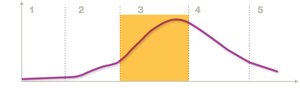
Infections progress through five general stages:
Incubation period: Time between infection and earliest symptoms.
Prodromal phase: Early, mild symptoms appear.
Acute phase: Peak of disease; most severe symptoms.
Period of decline: Symptoms resolve as pathogen is controlled.
Convalescent phase: Recovery; pathogen may remain latent.
The Epidemiological Triangle
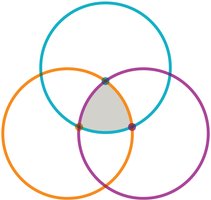
The epidemiological triangle links three factors: host, etiological agent, and environment. Disease results from the interaction of these components.
Host factors: General health, age, sex, lifestyle, genetics.
Etiological agent: Type of microbe (bacteria, virus, fungus, parasite, prion).
Environmental factors: Climate, geography, vectors, water/food sources.
Host–Microbe Interactions and Pathogenesis
Five Steps to Infection
To establish infection, a pathogen must:
Enter the host
Adhere to host tissues
Invade tissues and obtain nutrients
Replicate while evading immune defenses
Transmit to a new host
Exotoxins are further classified by their mechanism of action (Type I, II, III).
Immune Evasion Strategies
Pathogens evade the immune system by:
Hiding inside host cells (intracellular lifestyle, latency)
Antigenic masking, mimicry, and variation
Interfering with phagocytosis
Suppressing immune responses
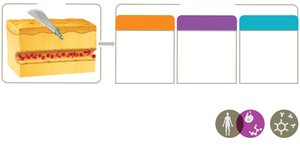
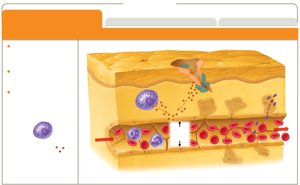
Innate and Adaptive Immunity
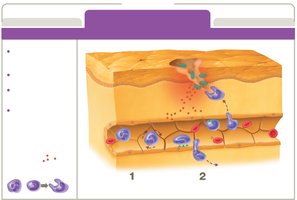
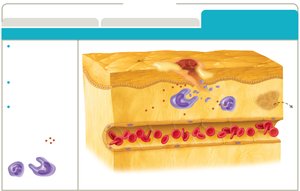
Fever
Fever is a systemic innate response that enhances immune function, inhibits pathogen growth, and promotes tissue repair.
Immune System Disorders
Immunodeficiencies
Primary immunodeficiencies: Genetic defects affecting immune function (e.g., SCID, DiGeorge syndrome).
Secondary immunodeficiencies: Acquired due to aging, infections, medical interventions, or systemic disorders.
Autoimmunity and Hypersensitivities
Autoimmunity is an immune attack against self-tissues, leading to chronic disorders (e.g., lupus, rheumatoid arthritis, type I diabetes).
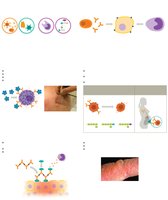
Hypersensitivities are inappropriate immune responses classified as:
Type I: Allergy (IgE-mediated)
Type II: Cytotoxic (IgG/IgM-mediated)
Type III: Immune complex (IgG/IgM complexes)
Type IV: Delayed (T cell-mediated)
Transplantation and Immune Reactions
Transplant rejection: Mediated by T cells recognizing foreign MHC molecules.
Graft-versus-host disease: Donor immune cells attack recipient tissues.
Types of grafts: Autografts, isografts, allografts, xenografts.
Summary Table: Key Concepts
Concept | Definition | Example |
|---|---|---|
Pathogen | Microbe causing disease | Staphylococcus aureus |
Virulence Factor | Trait aiding infection | Toxin, capsule |
Innate Immunity | Non-specific, immediate defense | Skin, phagocytes |
Adaptive Immunity | Specific, memory-based defense | Antibodies, T cells |
Autoimmunity | Immune attack on self | Lupus |
Hypersensitivity | Inappropriate immune response | Allergy, asthma |
