 Indietro
Recombinant DNA Technology: Tools, Methods, and Applications
Guida di studio - Note intelligenti
 Appunti personalizzati basati sui tuoi materiali, ampliati con definizioni chiave, esempi e contesto.
Recombinant DNA Technology
Introduction to Biotechnology and Recombinant DNA
Biotechnology is the use of microorganisms to create practical products, while recombinant DNA technology involves the intentional modification of genomes for specific purposes. The main goals of recombinant DNA technology are to eliminate undesirable traits, combine beneficial traits, and create organisms that synthesize products needed by humans.
Elimination of undesirable phenotypic traits: Removing genes responsible for unwanted characteristics.
Combination of beneficial traits: Merging genes from different organisms to enhance functionality.
Production of useful products: Engineering organisms to produce vaccines, antibiotics, hormones, or enzymes.

Tools of Recombinant DNA Technology
Mutagens
Mutagens are physical or chemical agents that induce mutations in DNA. Scientists use mutagens to create genetic diversity and select for cells with beneficial characteristics. Mutated genes can be isolated for further study or application.
Physical mutagens: Radiation (UV, X-rays)
Chemical mutagens: Chemicals that alter DNA structure
Application: Used to increase mutation rates and select for desired traits
Additional info: The rate of mutation can be calculated by comparing the number of mutations before and after exposure to a mutagen.
Reverse Transcriptase
Reverse transcriptase is an enzyme that synthesizes complementary DNA (cDNA) from an RNA template. This enzyme, originally isolated from retroviruses, allows for the production of eukaryotic proteins in prokaryotic cells by removing introns from mRNA.
cDNA: DNA synthesized from mRNA, lacking introns
Application: Enables expression of eukaryotic genes in bacteria
Restriction Enzymes
Restriction enzymes (restriction endonucleases) are bacterial enzymes that cut DNA at specific sequences called restriction sites. They are categorized by the type of cut they produce: sticky ends or blunt ends. These enzymes are essential for creating recombinant DNA molecules.
Sticky ends: Overhanging sequences that facilitate the joining of DNA fragments
Blunt ends: Straight cuts without overhangs
Ligase: Enzyme that joins DNA fragments together

Vectors
Vectors are nucleic acid molecules used to deliver genes into cells. Common vectors include plasmids, viral genomes, and transposons. Vectors must be small, survive inside cells, contain genetic markers, and ensure gene expression.
Plasmids: Circular DNA molecules used in bacterial transformation
Genetic markers: Genes that allow identification of successful transformations
Gene Libraries
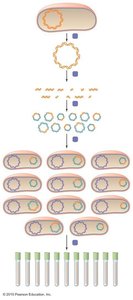
Gene libraries are collections of bacterial or phage clones, each containing a different gene from an organism's genome. Libraries can represent all genes from a chromosome or a set of cDNA complementary to mRNA.
Purpose: Facilitate the study and manipulation of individual genes
Polymerase Chain Reaction (PCR)
Principles and Steps of PCR
The polymerase chain reaction (PCR) is a technique used to amplify DNA in vitro, producing large quantities of identical DNA molecules. PCR is critical for diagnostics, research, and forensic applications. The process consists of three main steps: denaturation, priming, and extension, and can be automated using a thermocycler.
Denaturation: Heating DNA to separate strands
Priming: Cooling to allow primers to bind to target sequences
Extension: DNA polymerase synthesizes new DNA strands

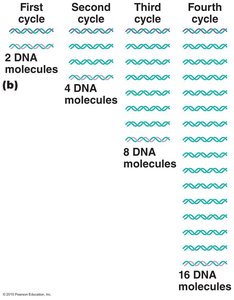
Additional info: The number of DNA molecules doubles with each cycle, following the formula , where is the final number of molecules, is the initial number, and is the number of cycles.
Inserting DNA into Cells
Methods of DNA Insertion
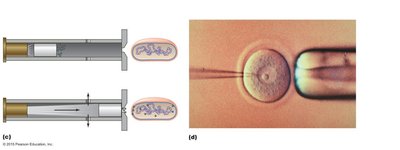
The goal of recombinant DNA technology is to insert DNA into cells. This can be achieved through natural methods (transformation, transduction, conjugation) or artificial methods (electroporation, protoplast fusion, gene gun, microinjection).
Transformation: Uptake of naked DNA by cells
Transduction: Transfer of DNA via bacteriophages
Conjugation: Direct transfer of DNA between cells
Electroporation: Use of electrical pulses to introduce DNA
Protoplast fusion: Fusion of cells lacking cell walls
Gene gun: Physical delivery of DNA-coated particles
Microinjection: Direct injection of DNA into cells
Genetic Mapping and Sequencing
Locating and Sequencing Genes
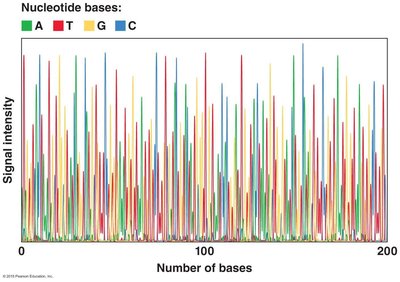
Genetic mapping involves locating genes on nucleic acid molecules, providing insights into metabolism, growth, and evolutionary relationships. Genomics is the sequencing and analysis of entire genomes, which is crucial for understanding pathogens and relating DNA sequences to protein functions.
Nucleotide sequencing: Determining the order of bases in DNA
Application: Used in research, diagnostics, and evolutionary studies
Applications of Recombinant DNA Technology
Environmental Studies
Many microorganisms cannot be cultured in the laboratory, but their DNA can be identified through molecular techniques. This has led to the discovery of hundreds of bacterial species in environments such as the human mouth and has helped address agricultural issues, such as methane production by archaea in rice fields.
Pharmaceutical and Therapeutic Applications
Recombinant DNA technology has revolutionized medicine by enabling the synthesis of proteins, development of safer vaccines, and new approaches to immunization. It also allows for genetic screening, DNA fingerprinting, gene therapy, and improved medical diagnostics.
Protein synthesis: Production of synthetic proteins in bacteria and yeast
Vaccines: Creation of subunit vaccines and new immunization strategies
Genetic screening: Use of DNA microarrays to detect inherited diseases
DNA fingerprinting: Identification of individuals by unique DNA sequences
Gene therapy: Replacement of defective genes with normal copies
Medical diagnosis: Detection of pathogen DNA in patient samples
Gene Therapy for Cancer Treatment
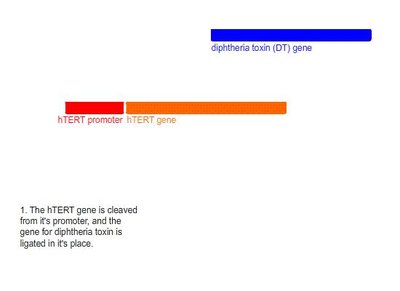
Gene therapy can be used to target cancer cells by manipulating genes such as the TERT gene, which encodes telomerase. Telomerase is highly active in rapidly dividing cells, including most cancer cells. By using the hTERT promoter to drive the expression of a toxin gene (e.g., diphtheria toxin), cancer cells can be selectively killed.
hTERT promoter: Active in tumor and immortal cells, inactive in somatic tissues
Application: Directing toxins to cancer cells for targeted therapy
Additional info: Some gene therapy approaches may trigger immune responses, and ongoing research aims to improve safety and efficacy.
