 Indietro
Survey of Microbial Diversity: Domains, Fungi, Protozoa, Helminths, and Viruses
Guida di studio - Note intelligenti
 Appunti personalizzati basati sui tuoi materiali, ampliati con definizioni chiave, esempi e contesto.
The Microbial Census
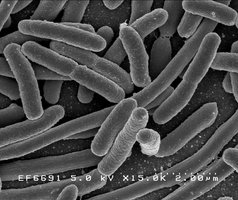
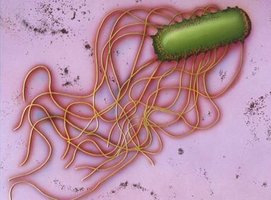
Organization of the Bacterial Domain
The classification and identification of bacteria is a dynamic field, with new species and genera being described regularly. The authoritative reference, Bergey's Manual of Systematic Bacteriology, is now updated online as Bergey's Manual of Systematics of Archaea and Bacteria. Bacterial taxonomy is based on genetic, morphological, and biochemical characteristics.
Proteobacteria: Includes Alpha, Beta, Gamma, Delta, and Epsilon classes.
Non-Proteobacteria (Gram Negative): Includes Cyanobacteria, Chlorobi, Chloroflexi.
Gram Positive Bacteria: Divided into Low G+C (Firmicutes) and High G+C (Actinobacteria).
Other Groups: Planctomycetes, Chlamydiae, Spirochaetes, Bacteroidetes, Fusobacteria.
Definitions of Metabolic Types
Chemoheterotroph: Uses organic molecules as sources of both carbon and energy.
Photoautotroph: Uses light as its energy source and carbon dioxide as its carbon source.
Domain Archaea
Overview
Archaea are a distinct domain of prokaryotes, differing from bacteria in their genetic, biochemical, and structural features. They often inhabit extreme environments and are classified separately from bacteria.
Domain Eukarya
Fungi
Fungi are eukaryotic organisms studied in the field of mycology. They exist in various morphological forms and play significant roles in human health and ecology.
Yeasts: Single-celled fungi.
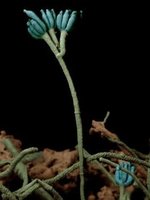
Molds: Filamentous fungi; a single filament is called a hypha (pl. hyphae), and a collection of hyphae forms a mycelium.
Spore: A reproductive structure, either sexual or asexual.
Dimorphic fungi: Can grow as yeast-like cells or as mycelia.
Fungal Diseases and Effects
Allergic reactions: Sensitization to fungal spores or mycelia can cause severe lung disease.
Toxin production: Some fungi produce toxins, such as aflatoxins from Aspergillus, which are potent carcinogens.
Mycoses: Fungal diseases, named after the causative fungus (e.g., histoplasmosis from Histoplasma capsulatum).
Food destruction: Fungi can spoil food supplies, leading to starvation.
Classification of Fungal Diseases (Mycoses)
Superficial mycoses: Affect hair, skin, or nails.
Subcutaneous mycoses: Affect respiratory tract and subcutaneous tissues.
Systemic mycoses: Affect deep tissues within the body.
Fungal Groups
Zygomycota: Sexual reproduction via zygospores.
Basidiomycota: Sexual reproduction via basidiospores.
Ascomycota: Sexual reproduction via ascospores.
Anamorphs (Deuteromycetes): Asexual fungi, often phases of ascomycetes or basidiomycetes.
Medically Important Fungi
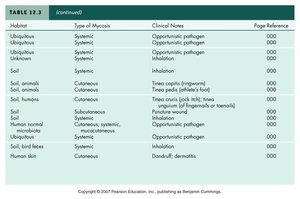
Habitat | Type of Mycosis | Clinical Notes |
|---|---|---|
Ubiquitous | Systemic | Opportunistic pathogen |
Soil, animals | Systemic | Inhalation |
Soil, humans | Cutaneous | Tinea capitis (scalp), tinea pedis (athlete's foot) |
Soil, animal | Subcutaneous | Opportunistic pathogen |
Human skin | Cutaneous | Dandruff, dermatitis |
Soil, bird feces | Systemic | Opportunistic pathogen |
Unknown | Systemic | Opportunistic pathogen |
Protozoa
Overview and Classification
Protozoa are unicellular, eukaryotic chemoheterotrophs. Their classification is based on rRNA and ultrastructural features, but is currently in flux. Only a few of the 20,000 known species cause human disease.
Protozoan Phyla
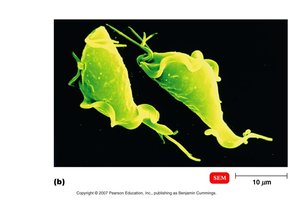
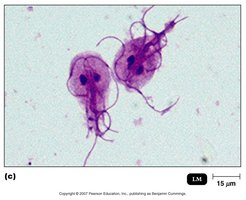
Archaezoa: Lack mitochondria but have mitosomes (mitochondrial remnants). Many live as symbionts in animal digestive tracts.
Examples: Trichomonas vaginalis, Giardia lamblia
Helminths
Overview
Helminths are parasitic worms from the phyla Nematoda and Platyhelminthes. They are significant causes of human disease, especially in tropical regions.
Nematodes (Roundworms)
Groups: Inhabit GI tract (e.g., Ascaris lumbricoides), blood, and other tissues (e.g., Enterobius vermicularis).
Characteristics: Non-segmented, round bodies, full digestive tract.

Platyhelminthes (Flatworms)
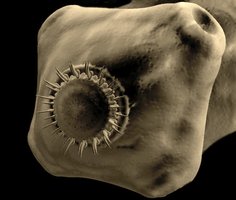
Cestodes (Tapeworms): Segmented, ribbon-shaped bodies. Segments (proglottids) contain reproductive structures. The head (scolex) may have suckers and hooks for attachment. No digestive system; nutrients absorbed directly.
Trematodes (Flukes): Flat, leaf-shaped bodies. Suckers hold organism in place and extract fluids from host. Complex life cycle with multiple hosts.
Arthropod Vectors of Human Disease
Overview
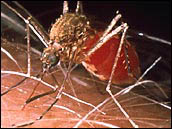
Arthropods such as mosquitoes, ticks, and fleas act as vectors, transmitting microbial pathogens between hosts. They play a crucial role in the epidemiology of many infectious diseases.
Viruses, Viroids, and Prions
Viruses
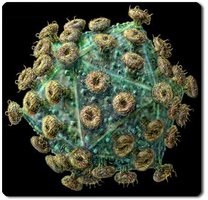
Viruses are acellular entities that do not fit into the three-domain system. They require host cells for replication and are classified based on morphology, genetic material, and ecological niche.
Viral species: Populations sharing similar characteristics and occupying a particular ecological niche.
Viroids and Prions
Viroids: Infectious pieces of RNA causing plant diseases.
Prions: Infectious protein particles, discovered in the 1980s, resulting from altered protein conformation. Cause neurodegenerative diseases.
Summary Table: Microbial Groups and Their Characteristics
Group | Cell Type | Reproduction | Diseases |
|---|---|---|---|
Bacteria | Prokaryotic | Binary fission | Various infections |
Archaea | Prokaryotic | Binary fission | Rarely pathogenic |
Fungi | Eukaryotic | Sexual/asexual spores | Mycoses, allergies, toxins |
Protozoa | Eukaryotic | Sexual/asexual | Malaria, giardiasis, trichomoniasis |
Helminths | Eukaryotic | Sexual | Ascariasis, tapeworm, fluke infections |
Viruses | Acellular | Host-dependent | Influenza, HIV, hepatitis |
Viroids | Acellular (RNA) | Host-dependent | Plant diseases |
Prions | Acellular (protein) | Host-dependent | Creutzfeldt-Jakob disease |
Key Terms and Concepts
Chemoheterotroph: Organism using organic molecules for carbon and energy.
Photoautotroph: Organism using light for energy and CO2 for carbon.
Mycoses: Fungal diseases.
Dimorphic fungi: Fungi capable of growing as yeast or mycelia.
Proglottid: Segment of a tapeworm containing reproductive organs.
Scolex: Head of a tapeworm, used for attachment.
Vector: Organism transmitting pathogens between hosts.
Viroid: Infectious RNA molecule affecting plants.
Prion: Infectious protein causing neurodegenerative disease.
Additional info:
Classification and taxonomy are continually updated as new species are discovered.
Fungal toxins such as aflatoxins are monitored in food safety programs due to their carcinogenicity.
Protozoan classification is evolving with advances in molecular biology.
