 Indietro
The Central Dogma and Protein Structure: Foundations of Microbial Genetics
Guida di studio - Note intelligenti
 Appunti personalizzati basati sui tuoi materiali, ampliati con definizioni chiave, esempi e contesto.
The Central Dogma of Molecular Biology
Overview
The Central Dogma describes the flow of genetic information within a biological system. It explains how DNA encodes instructions for life, which are then transcribed into RNA and translated into proteins. This process is fundamental to all living organisms, including microbes.
DNA is the hereditary material and blueprint for all cellular functions.
Replication ensures genetic information is passed to daughter cells.
Transcription converts DNA information into messenger RNA (mRNA).
Translation uses mRNA to synthesize proteins, the functional molecules of the cell.

Key Enzymes: DNA polymerase (replication), RNA polymerase (transcription), ribosomes (translation).
Proteins: Structure and Function
Introduction to Proteins
Proteins are essential macromolecules composed of amino acid chains. Their structure determines their diverse functions, including catalysis (enzymes), structural support, transport, and regulation.
Examples: Collagen (skin), keratin (hair/nails), pepsin (digestive enzyme), insulin (hormone).
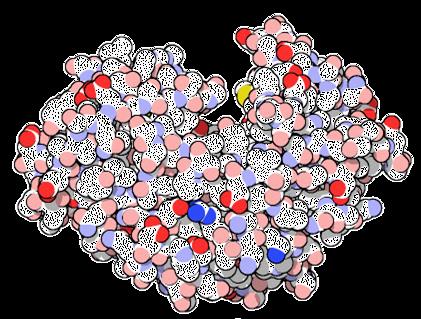
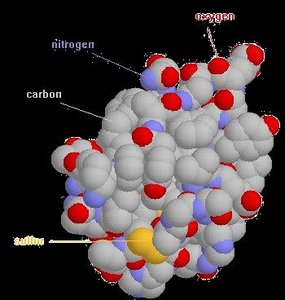
Amino Acids: Building Blocks of Proteins
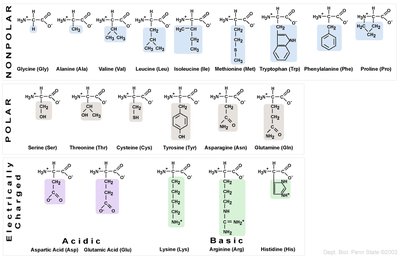
Proteins are polymers of amino acids. There are 20 naturally occurring amino acids, each with a unique side chain (R group) that determines its properties.
Structure: Central carbon (C), amino group (NH2), carboxyl group (COOH), hydrogen atom, and variable R group.
Classification: Nonpolar, polar, acidic, and basic amino acids.
Protein Structure Levels
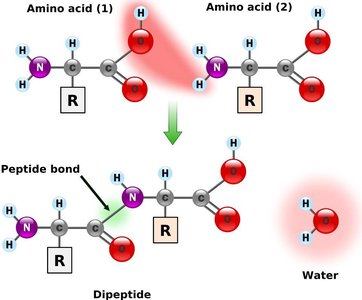
Primary Structure: Linear sequence of amino acids in a polypeptide chain.
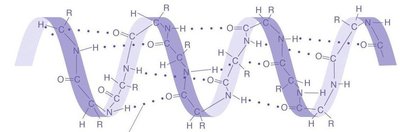
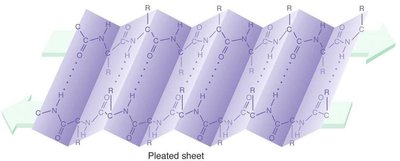
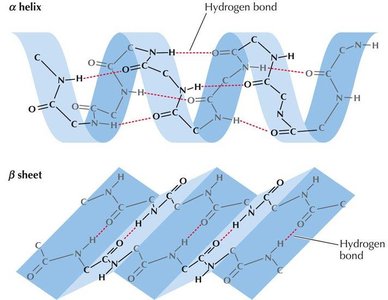
Secondary Structure: Local folding into alpha helices and beta sheets, stabilized by hydrogen bonds.
Tertiary Structure: Overall 3D shape formed by interactions among R groups (hydrophobic, ionic, disulfide bonds, hydrogen bonds).
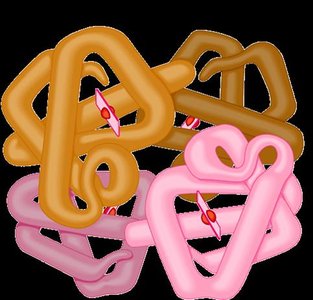
Quaternary Structure: Assembly of multiple polypeptide chains into a functional protein complex (e.g., hemoglobin).
Protein Denaturation
Denaturation is the loss of secondary, tertiary, or quaternary structure due to external stress (heat, pH, chemicals), resulting in loss of function.
Examples: Cooking an egg, autoclaving instruments, alcohol swabbing skin.
Nucleic Acids: DNA and RNA
DNA Structure and Function
DNA (deoxyribonucleic acid) is a double-stranded helix composed of nucleotides. Each nucleotide contains a deoxyribose sugar, a phosphate group, and a nitrogenous base (adenine, thymine, cytosine, guanine).
Base Pairing: A pairs with T, C pairs with G (Chargaff’s Rule).
Antiparallel Strands: Two strands run in opposite directions (5’ to 3’ and 3’ to 5’).
Genetic Code: Sequence of bases encodes genetic information.
RNA Structure and Function
RNA (ribonucleic acid) is typically single-stranded and contains ribose sugar. It uses uracil instead of thymine.
Types of RNA: mRNA (messenger), tRNA (transfer), rRNA (ribosomal).
Function: mRNA carries genetic code from DNA to ribosomes; tRNA brings amino acids; rRNA forms ribosome structure.
Gene Expression: Transcription and Translation
Transcription (DNA to RNA)
Transcription is the synthesis of RNA from a DNA template. RNA polymerase binds to the promoter, synthesizes RNA in the 5’ to 3’ direction, and stops at the terminator sequence.
Initiation: RNA polymerase binds to promoter.
Elongation: RNA strand is synthesized.
Termination: RNA polymerase releases the completed RNA transcript.
Translation (RNA to Protein)
Translation is the process by which ribosomes synthesize proteins using the mRNA template. Each set of three nucleotides (codon) codes for a specific amino acid.
Initiation: Ribosome assembles at the start codon (AUG).
Elongation: tRNAs bring amino acids to the ribosome, matching codons with anticodons.
Termination: Synthesis stops at a stop codon (UAA, UAG, UGA).
Regulation of Gene Expression
Operons in Prokaryotes
Operons are clusters of genes under the control of a single promoter and regulatory elements. They allow coordinated expression of related genes.
Lac Operon: Inducible system; activated in the presence of lactose and absence of glucose.
Trp Operon: Repressible system; repressed in the presence of tryptophan.
Mutations and Genetic Variation
Types of Mutations
Point Mutations: Affect a single nucleotide (substitution, insertion, deletion).
Frameshift Mutations: Insertions or deletions that shift the reading frame.
Chromosomal Mutations: Large-scale changes affecting multiple genes.
Effects: Silent (no change in protein), missense (change in amino acid), nonsense (early stop codon).
Genetic Recombination in Microbes
Horizontal Gene Transfer
Transformation: Uptake of free DNA from the environment.
Transduction: Transfer of DNA by bacteriophages (viruses).
Conjugation: Direct transfer of DNA between bacteria via pili (F plasmids).
Transposons: Movable DNA elements that can change position within the genome.
Microbial Impact and Biotechnology
Microbes are essential for environmental cycles, biotechnology, and health. Plasmids confer traits such as antibiotic resistance and pathogenicity. Restriction enzymes and other microbial tools are foundational in genetic engineering.
