 Indietro
The Control of Microbial Growth: Methods, Mechanisms, and Applications
Guida di studio - Note intelligenti
 Appunti personalizzati basati sui tuoi materiali, ampliati con definizioni chiave, esempi e contesto.
The Control of Microbial Growth
Key Terminology and Concepts
Understanding the terminology related to microbial control is essential for microbiology students. These terms describe various methods and levels of microbial reduction, from sterilization to sanitization.
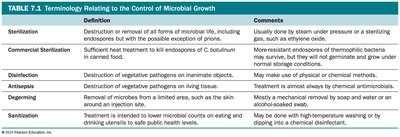
Sterilization: Removal or destruction of all forms of microbial life, including endospores and prions. Usually achieved by steam under pressure or sterilizing gas.
Commercial Sterilization: Sufficient heat treatment to kill endospores of Clostridium botulinum in canned food.
Disinfection: Destruction of vegetative pathogens on inanimate objects, using physical or chemical methods.
Antisepsis: Destruction of vegetative pathogens on living tissue, typically by chemical antimicrobials.
Degerming: Removal of microbes from a limited area, such as skin before injection, mostly mechanical.
Sanitization: Reduction of microbial counts on eating and drinking utensils to safe public health levels.
Rates of Microbial Death
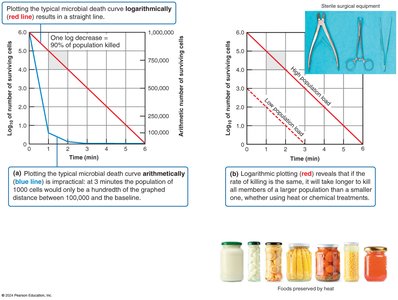
The effectiveness of microbial control methods is often measured by the rate of microbial death. This rate is typically plotted logarithmically, resulting in a straight line that represents a constant percentage of population killed per unit time.
Logarithmic Death Curve: Shows a straight line when plotted, indicating a constant rate of death.
One log decrease: Represents a 90% reduction in the microbial population.
D-value: The time required to kill 90% of the microbes at a given temperature.
Half-life: The time required for half of the microbial population to die.
Actions of Microbial Control
Membrane Disruption
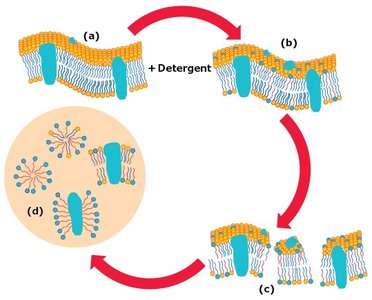
Many antimicrobial agents disrupt the cell membrane, leading to cell lysis and death. Detergents and surfactants are common agents that target membrane integrity.
Detergents: Disrupt lipid bilayers, causing leakage of cellular contents.
Surfactants: Lower surface tension, aiding in membrane disruption.
Protein Denaturing
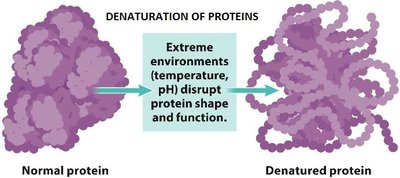
Extreme environmental conditions such as heat and pH can denature proteins, rendering them nonfunctional and leading to cell death.
Denaturation: Loss of protein structure and function due to disruption of bonds.
Agents: Heat, acids, bases, alcohols, and heavy metals.
Physical Methods of Microbial Control
Steam Sterilization and Autoclave
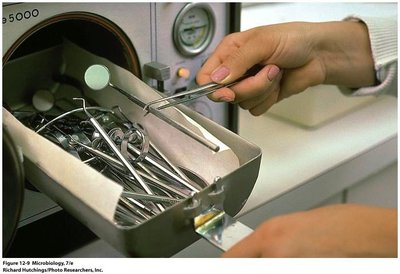
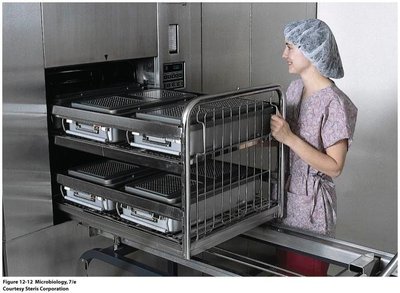
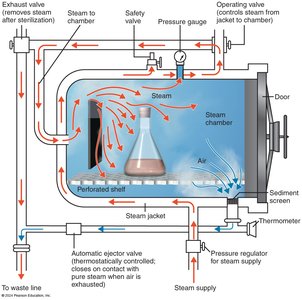
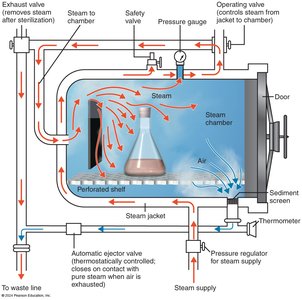
Steam sterilization is a highly effective method for killing all forms of microbial life, including spores. The autoclave uses pressurized steam to achieve sterilization.
Autoclave: Device that uses steam under pressure to sterilize equipment and media.
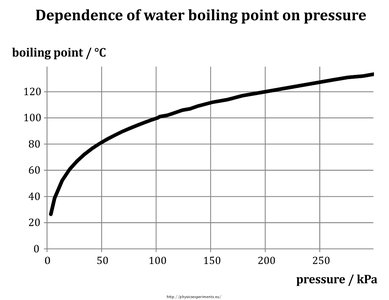
Pressure and Boiling Point: Increasing pressure raises the boiling point of water, allowing higher temperatures for sterilization.
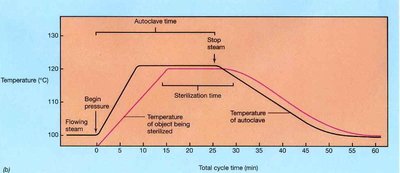
Steam Exposure Time: Proper exposure time is critical for effective sterilization.
Thermal Death Time and D-Value
Thermal death time is the minimum time required to kill all microbes at a given temperature. The D-value is a quantitative measure used in microbial control.
Thermal Death Time (TDT): Minimum time to kill all microbes at a specific temperature.
D-value: Time to reduce microbial population by 90% at a specific temperature.
Testing Autoclaves
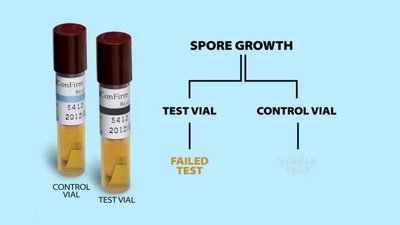
Autoclave effectiveness is tested using biological indicators, such as spore vials. Growth in the test vial indicates failed sterilization.
Spore Test: Used to confirm autoclave effectiveness.
Pasteurization
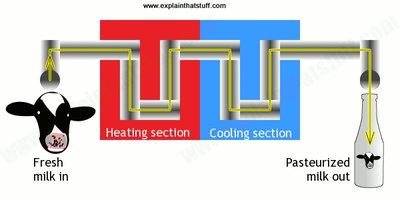
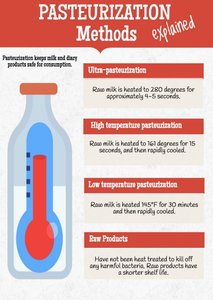
Pasteurization is a process that uses mild heat to reduce microbial load in food and beverages, especially milk, without affecting quality.
High-Temperature Short-Time (HTST): 72°C for 15 seconds.
Ultra-High Temperature (UHT): 140°C for 2 seconds.
Low-Temperature Long-Time (LTLT): 63°C for 30 minutes.
Dry Heat Sterilization
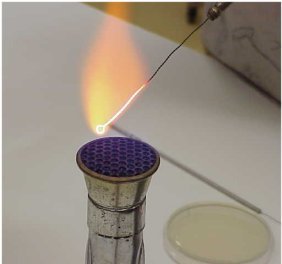
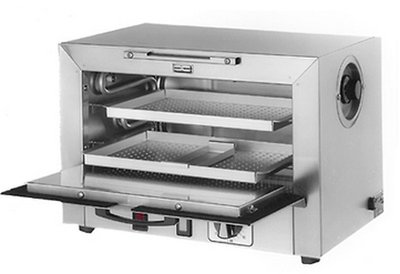
Dry heat sterilization involves the use of hot air ovens or direct flaming to kill microbes. It is suitable for materials that can withstand high temperatures.
Hot Air Oven: Used for glassware and metal instruments.
Direct Flaming: Used for inoculating loops in laboratories.
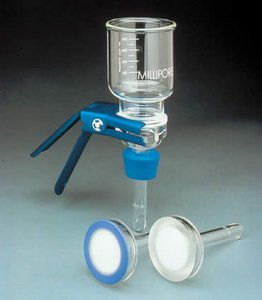
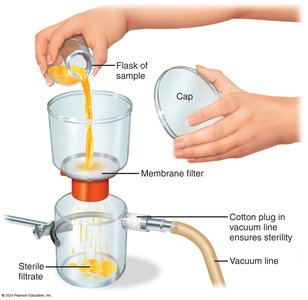
Filtration (Liquids)
Filtration is used to remove microbes from heat-sensitive liquids by passing them through membrane filters.
Membrane Filters: Pore sizes typically 0.22 µm or 0.45 µm.
Applications: Sterilization of vaccines, antibiotics, and culture media.
Desiccation
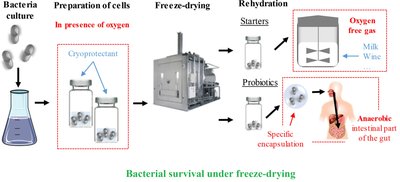
Desiccation removes water from microbes, inhibiting their growth. Freeze-drying (lyophilization) is a common method for preserving microbial cultures.
Freeze-Drying: Preserves bacteria and other microbes for long-term storage.
Osmotic Pressure
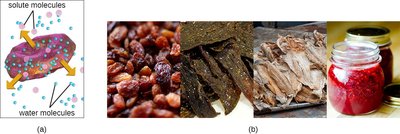
High concentrations of salt or sugar create osmotic pressure, drawing water out of microbial cells and inhibiting their growth.
Applications: Preservation of foods such as jams, jellies, and salted meats.
Radiation
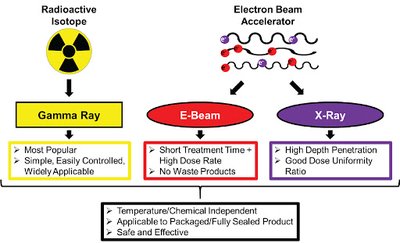
Radiation methods include ionizing (gamma rays, X-rays) and non-ionizing (UV) radiation. Ionizing radiation is used for sterilizing medical equipment and food.
Gamma Rays: Deep penetration, used for packaged products.
Electron Beams: Short treatment time, high dose rate.
X-rays: High depth penetration, good dose uniformity.
Chemical Methods of Microbial Control
Disinfection is Multistep
Effective disinfection requires multiple steps, including cleaning, application of disinfectant, and proper contact time.
Cleaning: Removal of organic matter before disinfection.
Contact Time: Sufficient exposure to disinfectant is necessary.
Common Chemical Control Agents
Various chemical agents are used for microbial control, each with specific mechanisms and applications.
Phenols and Bisphenols: Disrupt cell membranes and denature proteins.
Biguanides/Bisbiguanides: Affect cell membranes, used in antiseptics.
Essential Oils: Natural antimicrobials from plants.
Halogens: Chlorine, iodine, and bromine are effective disinfectants.
Alcohols: Denature proteins and dissolve lipids.
Heavy Metals: Oligodynamic effect, denature proteins by binding to reactive groups.
Chemical Food Preservatives: Inhibit microbial growth in foods.
Surface Active Agents: Lower surface tension, aid in cleaning and disinfection.
Aldehydes: Inactivate proteins and nucleic acids.
Chemical Sterilants: Used for high-level disinfection and sterilization.
Oxidizing Agents: Disrupt cellular components by oxidation.
Antibiotics: Used for selective microbial control in living tissues.
Summary Table: Terminology Relating to the Control of Microbial Growth
Term | Definition | Comments |
|---|---|---|
Sterilization | Destruction or removal of all forms of microbial life, including endospores and prions | Usually done by steam under pressure or sterilizing gas |
Commercial Sterilization | Sufficient heat treatment to kill endospores of C. botulinum in canned food | Ensures safety of canned foods |
Disinfection | Destruction of vegetative pathogens on inanimate objects | May use physical or chemical methods |
Antisepsis | Destruction of vegetative pathogens on living tissue | Usually chemical antimicrobials |
Degerming | Removal of microbes from a limited area | Mostly mechanical removal |
Sanitization | Reduction of microbial counts on eating/drinking utensils | High-temperature washing or chemical disinfectant |
Conclusion
The control of microbial growth is a fundamental aspect of microbiology, involving both physical and chemical methods. Understanding the mechanisms, terminology, and applications of these methods is essential for ensuring safety in healthcare, food production, and laboratory settings.
