 Indietro
The Microbial World: Introduction to Microbiology
Guida di studio - Note intelligenti
 Appunti personalizzati basati sui tuoi materiali, ampliati con definizioni chiave, esempi e contesto.
Chapter 1: The Microbial World
Introduction to Microbiology
Microbiology is the study of microorganisms, which are organisms too small to be seen with the naked eye. This field encompasses the structure, function, diversity, and roles of microbes in the environment, industry, and health. Microorganisms are found in virtually every habitat on Earth and play essential roles in ecological and biological processes.
Microbial Communities
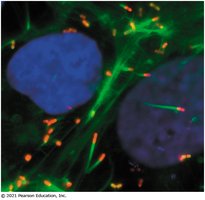
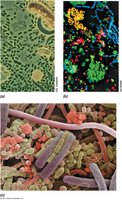
Microbes rarely exist as isolated cells in nature; instead, they form complex communities where they interact with each other and their environment. These communities can be found in soil, water, and within host organisms, including humans.
Applications of Microbiology
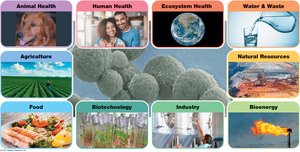
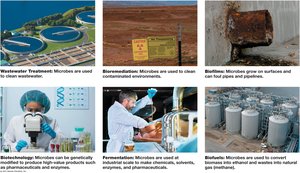
Microbiology has broad applications in various fields, including health, agriculture, industry, and environmental science. Microorganisms are used in biotechnology, food production, waste treatment, and the development of antibiotics and vaccines.
Animal and Human Health: Understanding pathogens, probiotics, and the human microbiome.
Ecosystem Health: Microbes drive nutrient cycles and maintain ecosystem balance.
Industry and Biotechnology: Production of enzymes, pharmaceuticals, and biofuels.
Agriculture: Nitrogen fixation, soil fertility, and pest control.
Microbial Cell Structure and Function
Microbial Growth and Colonies
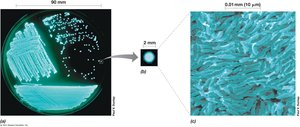
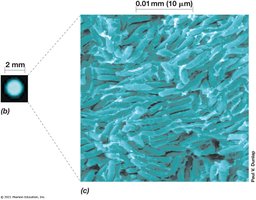
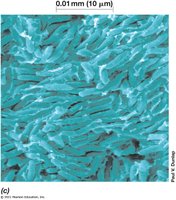
Microbial growth refers to the increase in the number of cells, typically through binary fission. Colonies on solid media originate from a single cell or colony-forming unit (CFU), and ideally, all cells in a colony are genetically identical.
Prokaryotic vs. Eukaryotic Cell Structure
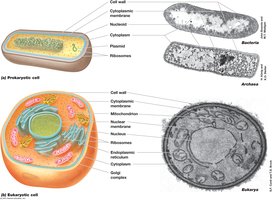
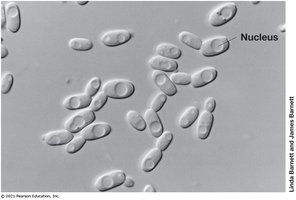
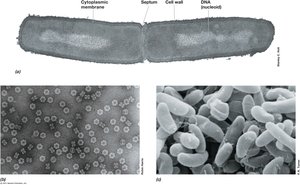
Microbial cells are classified as either prokaryotic (Bacteria and Archaea) or eukaryotic (Eukarya). Prokaryotes lack a membrane-bound nucleus, while eukaryotes possess a true nucleus and membrane-bound organelles.
Prokaryotes: No nucleus, DNA is not associated with histones (except Archaea have histone-like proteins), lack membrane-bound organelles.
Eukaryotes: Nucleus present, DNA associated with histones, contain organelles such as mitochondria, Golgi apparatus, and endoplasmic reticulum.
Plasmids: Extra-chromosomal DNA in bacteria, often carrying antibiotic resistance genes.
Cytoplasm: Site of metabolism, which is compartmentalized in eukaryotes.
Properties of Microbial Cells
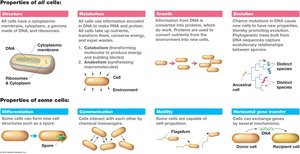
All cells share certain fundamental properties, including metabolism, growth, and evolution. Some cells have specialized properties such as differentiation, communication, motility, and horizontal gene transfer.
Metabolism: The sum of all chemical reactions in a cell.
Growth: Increase in cell number through division.
Evolution: Genetic changes over generations leading to adaptation and speciation.
Differentiation: Formation of new cell structures (e.g., spores).
Communication: Cells interact via chemical signals.
Motility: Movement using structures like flagella.
Horizontal Gene Transfer: Exchange of genes between cells.
Cell Size and Volume
Microbial cells vary greatly in size and volume. Cell size affects surface area-to-volume ratio, which influences nutrient uptake and metabolic rates. Most bacteria are between 0.5 and 5 μm in length, but some are much larger or smaller.
Organism | Characteristics | Morphology | Size (μm) | Cell Volume (μm³) | Volume Compared to E. coli |
|---|---|---|---|---|---|
Thiomargarita namibiensis | Sulfur chemolithotroph | Coccus in chains | 100–750 | 200,000–900,000 | 300,000–1,000,000 |
Epulopiscium fishelsoni | Chemoorganotroph | Rods with tapered ends | 80 × 600 | 30,000 | 30,000 |
Escherichia coli | Chemoorganotroph | Rods | 1 × 3 | 1 | 1 |
Prochlorococcus marinus | Phototroph | Coccus | 0.6 | 0.1 | 0.1 |
Mycoplasma pneumoniae | Chemoorganotroph | Pleomorphic | 0.2 × 0.3 | 0.004 | 0.004 |
"Additional info: Table includes more organisms and details." |

Surface Area-to-Volume Relationships
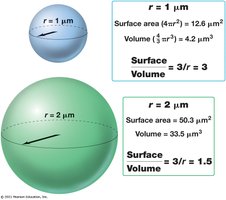
The surface area-to-volume ratio is a critical factor in cell physiology. Smaller cells have a higher ratio, allowing for more efficient nutrient uptake and waste elimination, which supports faster growth rates.
Surface area of a sphere: $4\pi r^2$
Volume of a sphere: $\frac{4}{3}\pi r^3$
Surface-to-volume ratio: $\frac{3}{r}$
Cell Morphologies
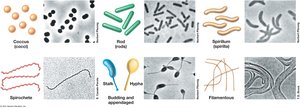
Microorganisms exhibit a variety of shapes, including cocci (spherical), bacilli (rod-shaped), spirilla (spiral), and more complex forms such as spirochetes, stalked, and filamentous cells. Morphology can influence motility, nutrient acquisition, and environmental adaptation.
Microbial Diversity and Evolution
Microbial Diversity in Size and Shape
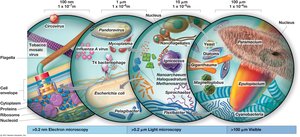
Microorganisms vary greatly in their size and shape, which reflects their adaptation to diverse environments and ecological niches.
Origin and Evolution of Cellular Domains
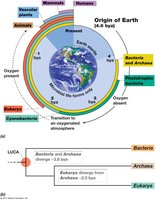
Life on Earth is classified into three domains: Bacteria, Archaea, and Eukarya. The evolutionary history of these domains is traced through molecular and fossil evidence, with the Last Universal Common Ancestor (LUCA) as the root of the tree of life.
Bacteria and Archaea: Diverged early in Earth's history.
Eukarya: Diverged from Archaea later, giving rise to complex multicellular life.
Phototrophic Microorganisms
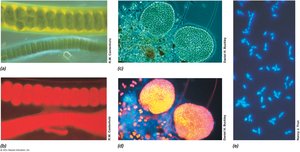
Phototrophic microorganisms use light as an energy source. They play a crucial role in primary production and the cycling of elements in ecosystems.
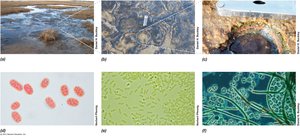
Extremophiles
Extremophiles are microorganisms that thrive in extreme environments, such as high temperature, acidity, salinity, or pressure. They are important for understanding the limits of life and have applications in biotechnology.
Extreme | Descriptive Term | Genus, Species | Domain | Habitat | Minimum | Optimum | Maximum |
|---|---|---|---|---|---|---|---|
High Temperature | Hyperthermophile | Archaeoglobus fulgidus | Archaea | Hydrothermal vents | 80°C | 95°C | 110°C |
Low pH | Acidophile | Picrophilus oshimae | Archaea | Acidic hot springs | 0.06 | 0.7 | 4 |
High Pressure | Barophile | Photobacterium profundum | Bacteria | Deep sea | 50 | 70 | 90 |
High Salt (NaCl) | Halophile | Halobacterium salinarum | Archaea | Salt lakes | 20% | 25% | 32% |
"Additional info: Table includes more examples and conditions." |

Microorganisms and Society
Microorganisms and Human Health
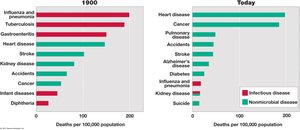
Microorganisms have a profound impact on human health, both as pathogens and as beneficial members of the human microbiome. Advances in microbiology have led to significant reductions in infectious disease mortality.
Microorganisms in Agriculture
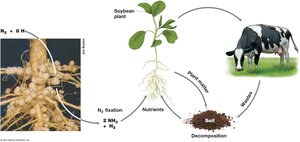
Microbes play essential roles in agriculture, including nitrogen fixation, decomposition, and nutrient cycling. Symbiotic relationships between plants and microbes enhance soil fertility and crop yields.
The Human Microbiome
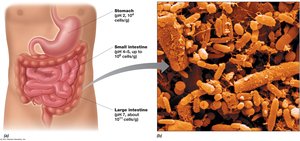
The human gastrointestinal tract harbors a vast community of microorganisms that aid in digestion, synthesize vitamins, and protect against pathogens. Disruptions to the microbiome can impact health and disease.
Microorganisms in Food and Industry
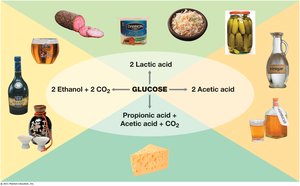
Microbes are used in the production of fermented foods (e.g., cheese, yogurt, beer) and industrial processes such as bioremediation, wastewater treatment, and the synthesis of pharmaceuticals and biofuels.
History and Methods of Microbiology
Early Microscopy and Discovery of Microbes
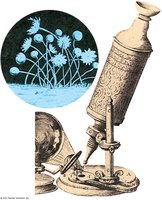
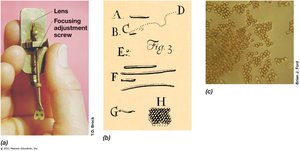
The development of the microscope by pioneers such as Robert Hooke and Antonie van Leeuwenhoek enabled the discovery and study of microorganisms. Early observations revealed the diversity and ubiquity of microbial life.
Microscopy Techniques
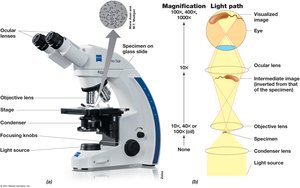
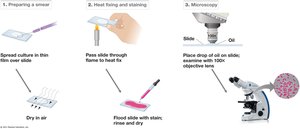
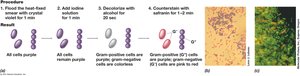
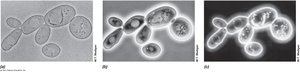
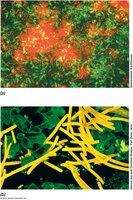
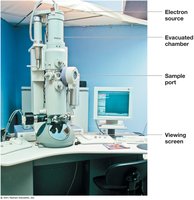
Modern microbiology relies on various microscopy techniques to visualize and study microorganisms, including bright-field, fluorescence, electron, and confocal microscopy. Staining methods, such as the Gram stain, differentiate bacterial types based on cell wall structure.
Key Experiments in Microbiology
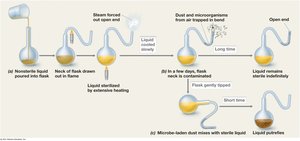
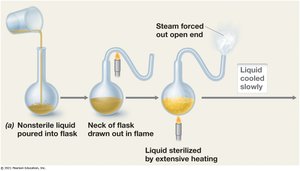
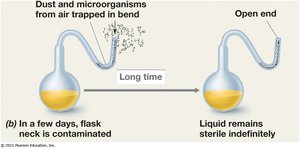
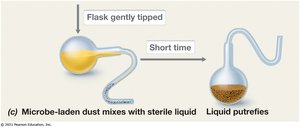
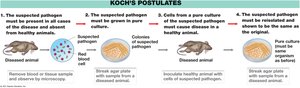
Louis Pasteur's experiments disproved the theory of spontaneous generation, demonstrating that life arises from pre-existing life. Robert Koch established methods for linking specific microbes to diseases, known as Koch's postulates.
Evolutionary Relationships and the Tree of Life
Phylogenetic Tree of Life
Modern phylogenetic analysis, based on ribosomal RNA (rRNA) sequences, has revealed the evolutionary relationships among all living organisms. The three domains—Bacteria, Archaea, and Eukarya—share a common ancestor known as LUCA (Last Universal Common Ancestor).
Carl Woese: Pioneered the use of rRNA for phylogenetic studies, leading to the three-domain system.
