 Indietro
Viral Replication and Diversity: Structure, Classification, and Life Cycles
Guida di studio - Note intelligenti
 Appunti personalizzati basati sui tuoi materiali, ampliati con definizioni chiave, esempi e contesto.
Viral Structure and Basic Concepts
Virion Structure
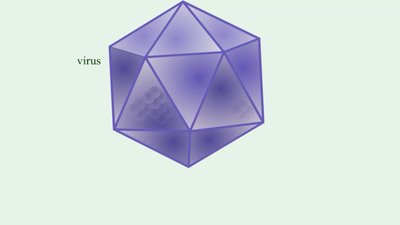
Viruses are acellular infectious agents composed of genetic material (DNA or RNA) surrounded by a protein coat called a capsid. Some viruses also possess an outer lipid envelope derived from the host cell membrane. The complete, infectious viral particle is known as a virion.
Capsid: Protein shell that encases the viral genome, often with geometric symmetry (e.g., icosahedral, helical).
Genome: Can be single- or double-stranded DNA or RNA.
Envelope: Present in some viruses, derived from host cell membranes, containing viral glycoproteins.
Viral Replication: General Steps
Overview of the Viral Replication Cycle
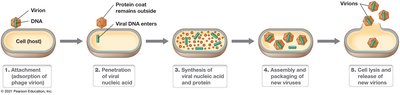
Viral replication involves a series of steps that allow the virus to enter a host cell, replicate its genome, produce new viral proteins, and assemble new virions for release. The general steps are:
Attachment (Adsorption): Virus binds to specific receptors on the host cell surface.
Penetration: Entry of the viral genome (or entire virion) into the host cell.
Synthesis: Host machinery is used to replicate viral nucleic acids and synthesize viral proteins.
Assembly and Packaging: New viral genomes and proteins are assembled into new virions.
Release: New virions exit the host cell, often by lysis or budding.
Attachment and Penetration
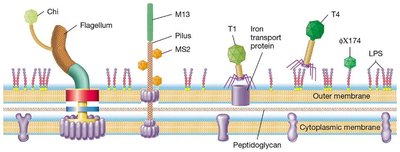
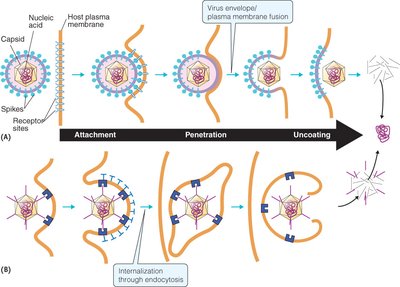
Attachment is mediated by interactions between viral surface proteins and specific host cell receptors, often membrane proteins. Penetration can involve direct injection of the genome (as in bacteriophages) or endocytosis/fusion (as in animal viruses).
Bacteriophage T4: Infection of E. coli
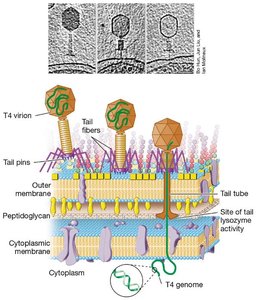
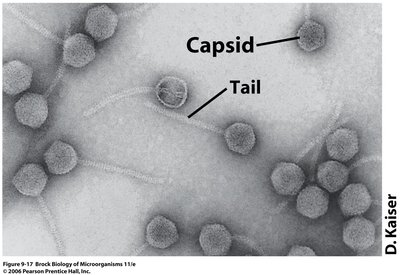
Bacteriophage T4 is a well-studied example of a virulent phage that infects Escherichia coli and kills the host by lysis. The infection process involves:
Attachment to the host cell via tail fibers.
Penetration of the cell wall and injection of phage DNA.
Degradation of host DNA and synthesis of phage components.
Self-assembly of new phage particles.
Release of progeny phages by lysis of the host cell.
Baltimore Classification of Viruses
Genome Types and mRNA Synthesis
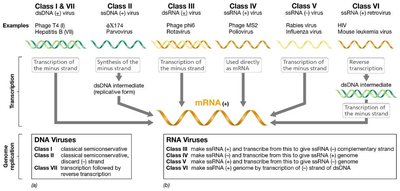
The Baltimore classification system groups viruses based on their genome type and the mechanism by which they produce mRNA. There are seven classes:
Class I: Double-stranded DNA (dsDNA) viruses
Class II: Single-stranded DNA (ssDNA) viruses
Class III: Double-stranded RNA (dsRNA) viruses
Class IV: (+) sense single-stranded RNA viruses
Class V: (−) sense single-stranded RNA viruses
Class VI: RNA reverse-transcribing viruses (retroviruses)
Class VII: DNA reverse-transcribing viruses
Viral Growth and One-Step Growth Curve
Phases of Viral Replication in a Population
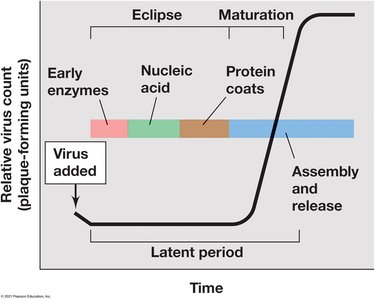
The one-step growth curve illustrates the replication of viruses in a host population. Key phases include:
Eclipse period: No infectious particles detected; viral genome and proteins are being synthesized.
Maturation period: Assembly of viral components into mature virions.
Release: Sudden increase in infectious particles as virions are released from lysed cells.
Bacterial Viruses: Diversity and Structure
Types of Bacteriophages
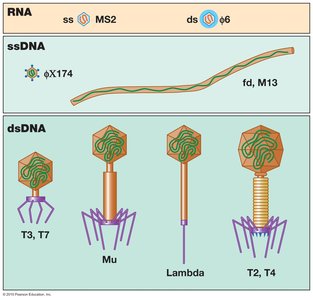
Bacteriophages (phages) are viruses that infect bacteria. They can have RNA or DNA genomes, and their structures vary:
ssRNA phages: e.g., MS2
dsRNA phages: e.g., φ6
ssDNA phages: e.g., φX174, fd, M13
dsDNA phages: e.g., T3, T7, Mu, Lambda, T2, T4
Virulent vs. Temperate Phages
Lytic and Lysogenic Cycles
Virulent phages (e.g., T4) only undergo the lytic cycle, resulting in host cell lysis. Temperate phages (e.g., Lambda) can choose between:
Lytic cycle: Immediate replication and lysis of the host.
Lysogenic cycle: Integration of phage genome into host DNA as a prophage, replicating passively with the host until induction triggers the lytic cycle.
Animal Viruses: Entry and Replication
Entry Mechanisms
Animal viruses can be enveloped or nonenveloped. Entry into host cells occurs via:
Fusion: Viral envelope fuses with host plasma membrane (e.g., herpesvirus).
Endocytosis: Virus is engulfed by the host cell (e.g., adenovirus).
Replication of Double-Stranded DNA Viruses
Herpesviruses are examples of dsDNA animal viruses. Their replication involves:
Attachment and entry into the host cell.
Uncoating of the viral genome.
Transcription and replication in the nucleus.
Assembly of new virions and release by budding or cell lysis.
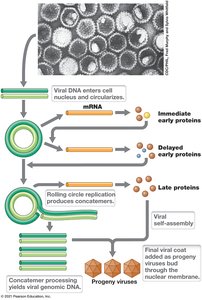
Table: Representative Viral Diseases of Humans
The following table summarizes major viral diseases, their causative viruses, genome types, and genome sizes.
Disease | Virus | Genome DNA or RNA | Size |
|---|---|---|---|
Cold sores/genital herpes | Herpes simplex | dsDNA | 152,000 |
Smallpox | Variola major | dsDNA | 190,000 |
Polio | Poliovirus | ssRNA (+) | 7,500 |
Rabies | Rabies virus | ssRNA (−) | 12,000 |
Influenza | Influenza A virus | ssRNA (−) | 13,600 |
Measles | Measles virus | ssRNA (−) | 15,900 |
Ebola hemorrhagic fever | Ebola virus | ssRNA (−) | 19,000 |
Severe acute respiratory syndrome (SARS) | SARS virus | ssRNA (+) | 29,800 |
Infant diarrhea | Rotavirus | dsRNA | 18,600 |
Acquired immunodeficiency syndrome (AIDS) | Human immunodeficiency virus (HIV) | ssRNA/dsDNA (a retrovirus) | 9,700 |
Additional info: The table above is a representative summary; actual genome sizes may vary slightly between strains.
