Ch. 20 - Antimicrobial Drugs
Tortora - Microbiology: An Introduction 14th Edition
Tortora14th EditionMicrobiology: An IntroductionISBN: 9780138200398Non è quello che usi tu?Cambia libro di testo
Capitolo 16, Problema 2

All of the following are modes of action of antiviral drugs except:
a. Inhibition of protein synthesis at 70S ribosomes
b. Inhibition of DNA synthesis
c. Inhibition of RNA synthesis
d. Inhibition of uncoating
e. All of the above are modes of action of antiviral drugs

Guida verificata passo dopo passo
1
Step 1: Understand the context of antiviral drug action. Antiviral drugs target specific stages in the viral life cycle to prevent virus replication without harming the host cells significantly.
Step 2: Review common modes of action of antiviral drugs, which include inhibition of viral DNA synthesis, inhibition of viral RNA synthesis, and inhibition of viral uncoating processes.
Step 3: Analyze the option related to inhibition of protein synthesis at 70S ribosomes. Recall that 70S ribosomes are found in prokaryotes (bacteria), not in eukaryotic cells or viruses, which rely on host cell machinery (80S ribosomes) for protein synthesis.
Step 4: Conclude that since viruses use the host's 80S ribosomes for protein synthesis, antiviral drugs do not target 70S ribosomes, making this option inconsistent with known antiviral mechanisms.
Step 5: Therefore, identify the option that does not represent a mode of action of antiviral drugs by excluding the inhibition of protein synthesis at 70S ribosomes.

Risposta video verificata per un problema simile:

Questa soluzione video è stata consigliata dai nostri tutor come utile per risolvere questo problema.
Durata del video:
2m

Concetti chiave

Ecco i concetti essenziali che devi comprendere per rispondere correttamente alla domanda.

Antiviral Drug Mechanisms

Antiviral drugs target specific stages of the viral life cycle to inhibit replication. Common mechanisms include blocking viral DNA or RNA synthesis, preventing viral entry or uncoating, and inhibiting viral enzymes essential for replication.
Video consigliato:
01:59
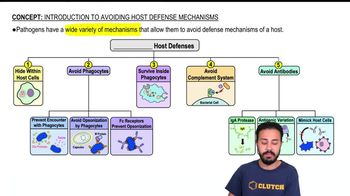
Introduction to Avoiding Host Defense Mechanisms

Protein Synthesis in Viruses vs. Bacteria

Viruses rely on host cell machinery for protein synthesis and do not have their own ribosomes. In contrast, bacteria have 70S ribosomes, which are targets for some antibiotics but not antiviral drugs, making inhibition of 70S ribosomes irrelevant for antiviral action.
Video consigliato:
04:26
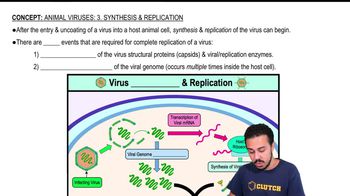
Animal Viruses: 3. Synthesis & Replication

Viral Uncoating Process

Uncoating is the step where the viral capsid is removed to release viral genetic material inside the host cell. Some antiviral drugs inhibit this process, preventing the virus from replicating by blocking access to its genome.
Video consigliato:
04:19
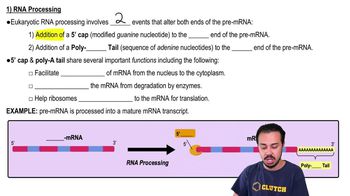
1) RNA Processing