Ch. 20 - Antimicrobial Drugs
Tortora - Microbiology: An Introduction 14th Edition
Tortora14th EditionMicrobiology: An IntroductionISBN: 9780138200398Non è quello che usi tu?Cambia libro di testo
Capitolo 16, Problema 1

Which of the following pairs is mismatched?
a. Antihelminthic—inhibition of oxidative phosphorylation
b. Antihelminthic—inhibition of cell wall synthesis
c. Antifungal—injury to plasma membrane
d. Antifungal—inhibition of mitosis
e. Antiviral—inhibition of DNA synthesis

Guida verificata passo dopo passo
1
Step 1: Understand the categories of antimicrobial agents mentioned: antihelminthic, antifungal, and antiviral. Each targets specific biological processes in the pathogens they act against.
Step 2: Recall the common mechanisms of action for antihelminthic drugs. Typically, these drugs affect the parasite's energy metabolism (such as inhibition of oxidative phosphorylation) or neuromuscular function, but they do not target cell wall synthesis because helminths are multicellular animals and lack a cell wall.
Step 3: Review antifungal drug mechanisms. Many antifungals cause injury to the plasma membrane (e.g., by binding to ergosterol) or inhibit mitosis by interfering with microtubule function.
Step 4: Consider antiviral drug mechanisms. Antiviral agents often inhibit viral DNA or RNA synthesis to prevent replication.
Step 5: Identify the mismatched pair by comparing each pair's mechanism with the typical target of the drug class. The pair that suggests antihelminthics inhibit cell wall synthesis is incorrect because helminths do not have cell walls.

Risposta video verificata per un problema simile:

Questa soluzione video è stata consigliata dai nostri tutor come utile per risolvere questo problema.
Durata del video:
2m

Concetti chiave

Ecco i concetti essenziali che devi comprendere per rispondere correttamente alla domanda.

Mechanisms of Action of Antihelminthic Drugs

Antihelminthic drugs target parasitic worms using specific mechanisms such as inhibiting energy metabolism (e.g., oxidative phosphorylation) or disrupting neuromuscular function. Understanding these mechanisms helps identify which drug actions are plausible against helminths.
Video consigliato:
01:59
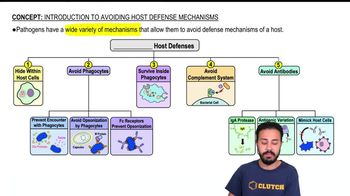
Introduction to Avoiding Host Defense Mechanisms

Cell Wall Synthesis in Microorganisms

Cell wall synthesis is a critical process in bacteria and fungi but absent in helminths, which are multicellular animals. Drugs inhibiting cell wall synthesis are effective against bacteria and fungi but not against helminths, making this distinction important for matching drug actions.
Video consigliato:
03:44
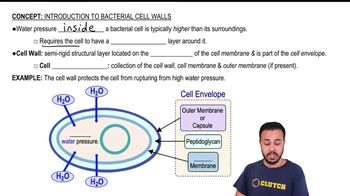
Introduction to Bacterial Cell Walls

Mechanisms of Antifungal and Antiviral Drugs

Antifungal drugs often target fungal plasma membranes or mitosis, while antiviral drugs inhibit viral DNA or RNA synthesis. Recognizing these specific targets clarifies which drug actions correspond to each pathogen type and helps identify mismatched pairs.
Video consigliato:
01:59
Introduction to Avoiding Host Defense Mechanisms